
Racing in Unique Places: 6 UNESCO World Heritage Triathlons
Six full-distance finishes in, and the thing that still drags me out of bed at 4 am on race morning is not the clock. It is where the race is about to take me. The best unique triathlon destinations double as history lessons, and a surprising number of them run straight through UNESCO World Heritage sites. Racing in unique places turns an ordinary swim, bike and run into something you actually remember years later, long after the finisher photo has gone fuzzy on your phone.
Several races on the global calendar pass directly through UNESCO World Heritage sites, among them Supertri Blenheim Palace, IRONMAN 70.3 Kraków, IRONMAN and IRONMAN 70.3 Vichy, IRONMAN 70.3 Campeche, the Cartagena races, and 5150 Iquique. Each one pairs a proper endurance test with centuries of culture, which gives age-group athletes a backdrop most local sportives can only envy.
Why race in a UNESCO World Heritage site?
There is a practical argument and a soft one. The soft argument is obvious. You get to spend a weekend somewhere genuinely special, and the swim, bike and run stop feeling like a to-do list. The practical argument is the one that surprises people: a beautiful course is a performance aid. When the wheels come off at 30km of a marathon, a medieval square or a volcanic coastline gives you something to look at other than your own suffering.
Destination racing also earns its keep as a trip. Bring the family, tack on a few rest days, and the whole thing becomes a holiday with a hard 90 minutes to five hours in the middle. My coach, Nathalie Lawrence, and my clubmates at Berkshire Tri Squad will tell you I am a soft touch for a race that comes with a decent post-race meal and somewhere worth walking off the DOMS. Plant-based travel is easier than it used to be too, and colonial market towns tend to do fresh produce very well.
Six races that double as history lessons
These are the events whose own descriptions name a UNESCO World Heritage site. I have not raced all of them, so treat this as a shortlist worth researching rather than six reports. Distances and dates below are drawn from each event’s current listing, so always confirm on the official page before you enter.
Blenheim Palace, England: a UNESCO race on home soil
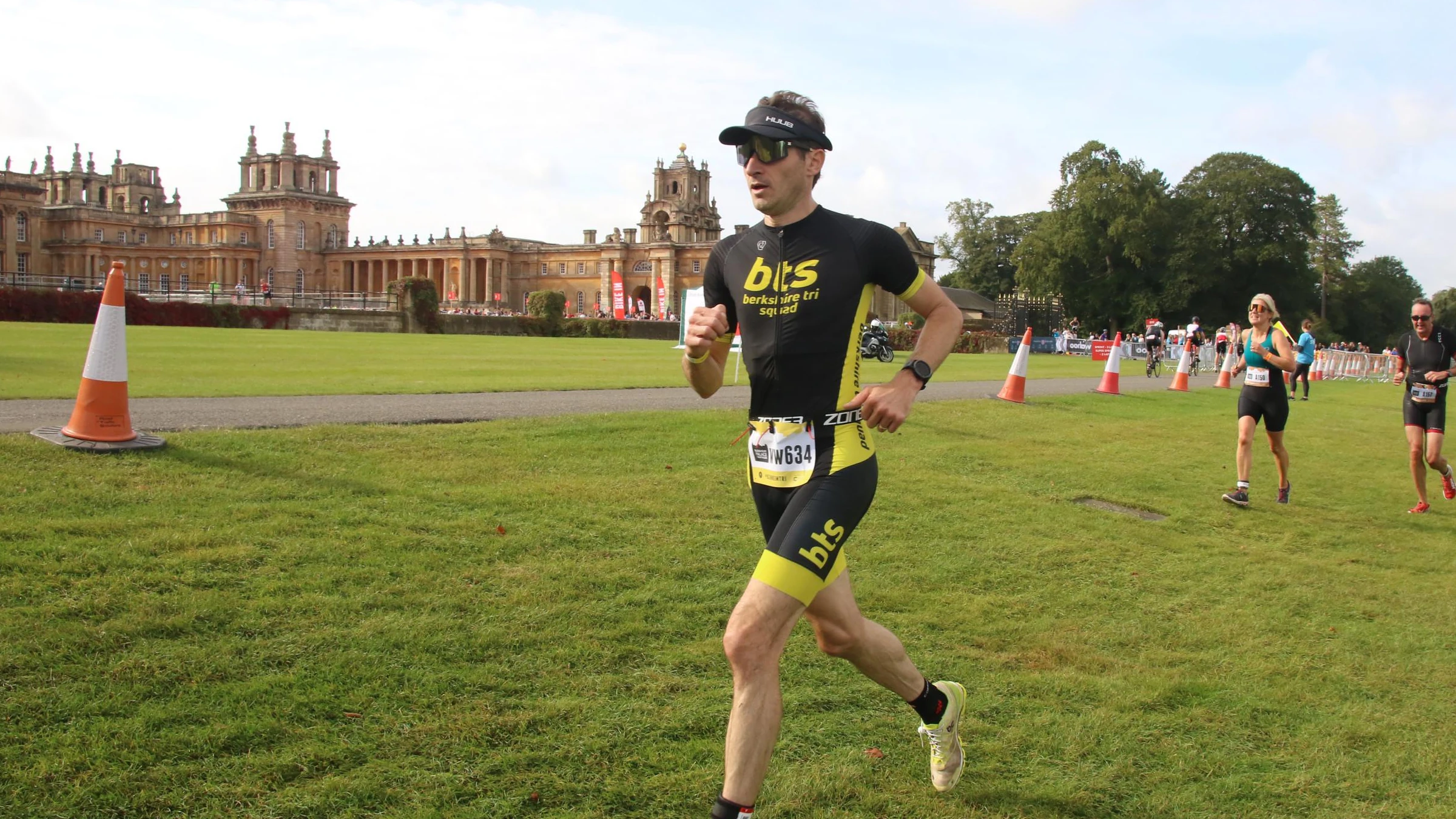
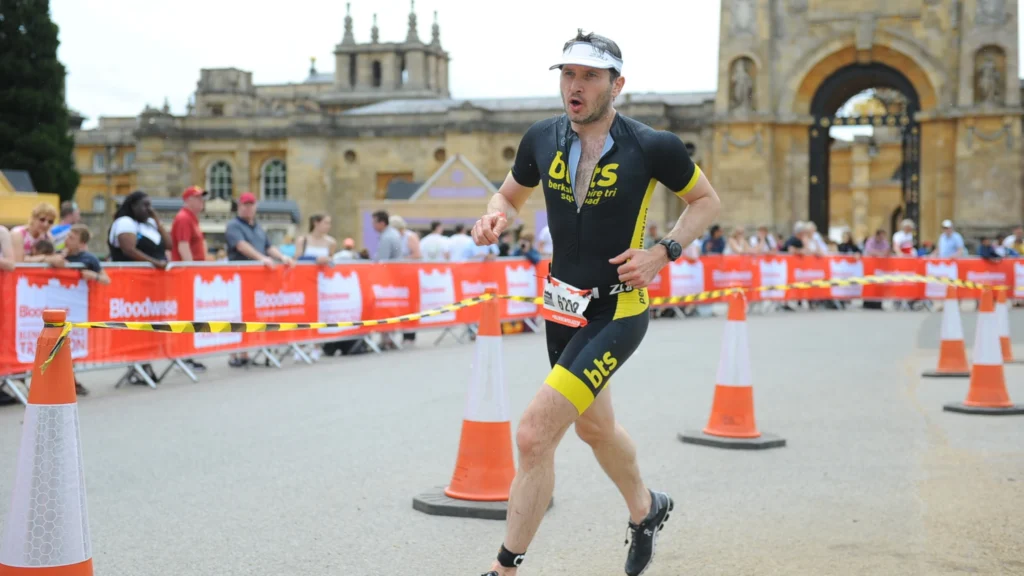
For UK athletes, this is the easy one to start with. Supertri Blenheim Palace runs in the grounds of Blenheim Palace near Woodstock in Oxfordshire, a UNESCO World Heritage Site and one of the grandest backdrops in British triathlon. It is a short-course weekend with sprint, super-sprint, and Weekend Warrior formats over a lake swim and a rolling bike-and-run, which makes it a brilliant first UNESCO race with no flights or bike box required. It lands in June as a proper festival weekend, and it is close enough to Berkshire Tri Squad turf that there is really no excuse not to give it a go.
Kraków, Poland: a medieval finish line
IRONMAN 70.3 Kraków starts in the clear water of the Zakrzówek reservoir and works through the countryside before dropping you into the heart of the old town. The finish sits on the Main Market Square, Europe’s largest medieval square and a UNESCO World Heritage Site. Held in high summer, it is a fast-flat-then-lumpy 70.3 with a genuinely theatrical last kilometre. If a cobbled square lined with spectators does not lift your run cadence, nothing will.
Vichy, France: racing through a Great Spa Town
Vichy runs both a 70.3 and a full-distance race, so you can pick your poison. The town was added to UNESCO’s list of the eleven Great Spa Towns of Europe in 2021, and it looks the part with its tree-lined boulevards and art deco frontages. You swim in the Allier, ride through the volcanoes of the Auvergne, then run the old town and riverbanks. It is a proper French endurance day, and the spa heritage means recovery options are, shall we say, on theme.
Campeche, Mexico: colonial colour on the Yucatán
IRONMAN 70.3 Campeche is one of Mexico’s quieter gems. The historic city centre is a UNESCO World Heritage Site, all pastel houses and fortified walls, and the race leans into flat, fast bike and run legs on the Gulf coast. It lands in November when the heat is a touch more manageable, though tropical is still tropical. This is the sort of place people race once and then keep finding reasons to go back to.
Cartagena, Colombia: a walled city in the Caribbean
Cartagena appears twice, as a 5150 Olympic-distance race and a 70.3, both threading the centuries-old colonial walled city that UNESCO lists among its World Heritage Sites. You swim in the bay, ride the coast, then run the historic streets with balconies overhead and a Caribbean crowd making a proper racket. Warm water, warm air and warmer welcomes. Pacing discipline matters here, because it is easy to get swept up in the atmosphere and post a bike split you regret on the run.
Iquique, Chile: ghost towns in the Atacama
5150 Iquique is the wildcard. The race sits on Chile’s Pacific coast, and its listing points inland to the UNESCO-protected saltpetre ghost towns of Humberstone and Santa Laura, eerie relics of the nitrate era on the edge of the Atacama Desert. Cooler than most tropical destination races thanks to the Humboldt current, it is a compelling early-winter option and a very good excuse to explore one of the strangest landscapes on the planet.
What these races have in common
Look past the postcards and a pattern emerges. Half of them sit on or near the coast, with sea or bay swims and flat-to-rolling bikes, while the inland races at Blenheim, Kraków and Vichy trade that for lakes, rivers and reservoirs. Warm water is common overseas, which brings its own wetsuit and pacing questions. And every one of them puts the finish somewhere with real character, whether that is an English palace, a Polish square, a French spa town or a Caribbean rampart. The travelling age-grouper’s sweet spot is a course that rewards good pacing without punishing you for being on holiday.
It is worth noting that many other events take place in spectacular protected landscapes without using the UNESCO label. I have felt the pull of it myself on the Jurassic Coast scenery at IRONMAN 70.3 Weymouth and the sunrise bay swim at IRONMAN Cascais. The UNESCO stamp is a useful filter, not the whole story.
How to plan a destination race without wrecking it
A bucket-list trip is easy to overcook. A few things I have learned the slightly harder way across six full-distance finishes and a lot of travel.
- Respect the heat. Most of these races run warm. If you are coming from a British winter of training, build in acclimatisation and rethink your fuelling and hydration for the conditions rather than copying your home-race plan.
- Check the swim rules early. Warm water often means wetsuits are banned or optional, which changes your kit and your buoyancy. Confirm the water temperature policy and any local rules before you travel, and read the current wetsuit guidance from British Triathlon so nothing surprises you on the start line.
- Travel the bike like it is made of glass. Box it properly, arrive with a day spare to rebuild and shake it down, and know where the nearest mechanic is.
- Recce what you can. Walk the finish, drive part of the bike course, eat where you plan to eat the night before. Plant-based or not, a dodgy pre-race meal in an unfamiliar town is an avoidable own goal.
- Race your own numbers. A stunning course tempts you to chase strangers. Stick to the power, pace and heart-rate targets you agreed with your coach at home.
Done well, a destination race becomes the highlight of a season rather than a stressful logistics exercise. The speed of IRONMAN Tours in the Loire Valley, the crowd-lined Bavarian atmosphere of Challenge Roth and the elite fields at The Championship in Šamorín have all reminded me why I keep entering races in places I want to see. A UNESCO backdrop just raises the stakes in the best possible way.
Leave a Comment
You must be logged in to post a comment.