
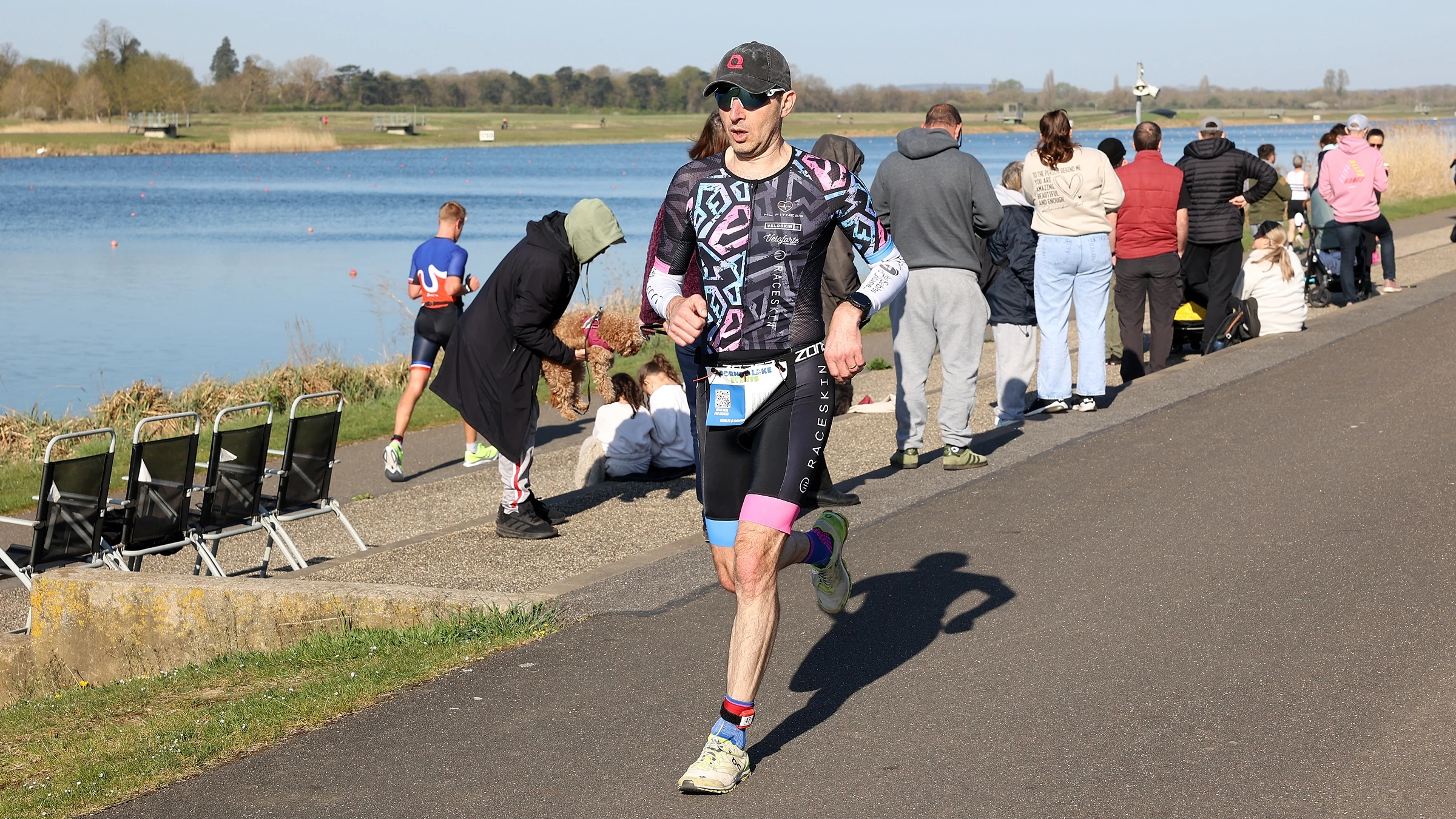
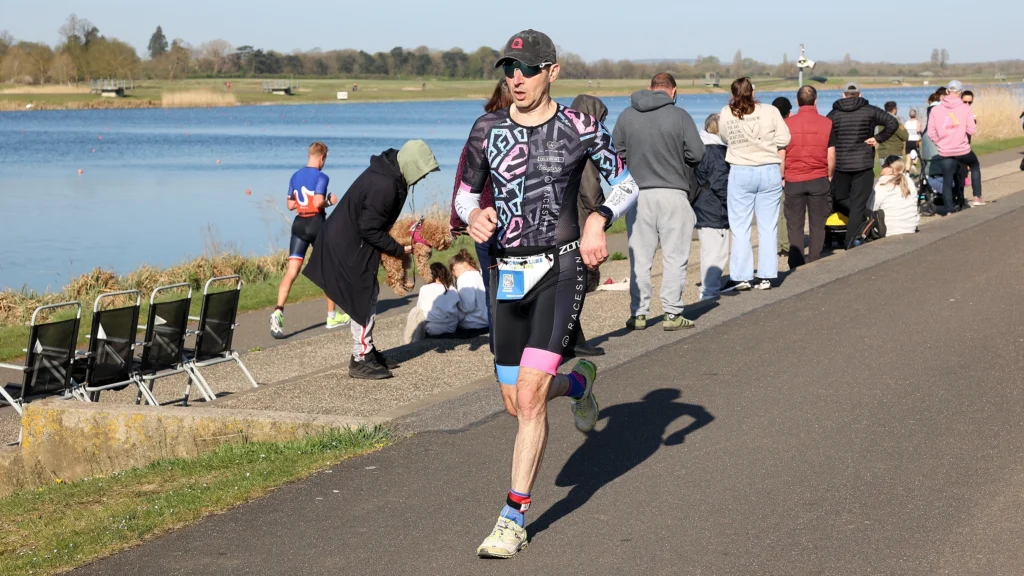
The first time I ran off the bike at Bedford triathlon, my legs felt like they belonged to someone else. Heavy, wooden, completely confused. I knew I could run. I knew I could bike. But nobody had warned me quite how brutal that transition from pedalling to running actually feels when race-day adrenaline is replaced by lactate. Brick run training exists specifically to fix that problem, and if you’re not doing it regularly, you’re leaving serious time on the table.
Brick run training is the practice of running immediately after a bike session to replicate the neuromuscular demands of a triathlon’s bike-to-run transition. The goal is to teach your legs to switch from the cycling motion to the running stride faster, reduce the heavy-leg sensation, and build confidence in your run-off-the-bike pacing so you don’t blow up in the first kilometre.
Why the Bike-to-Run Transition Feels So Brutal
There’s a physiological reason your legs feel like concrete when you step off the bike. Cycling recruits your quads as the primary driver, keeping your hip flexors in a relatively compressed position for hours. Running asks your glutes and hamstrings to take over, your stride to lengthen, and your whole kinetic chain to reorganise itself in seconds.
On top of that, blood flow has been pooled in your cycling muscles. Your cardiovascular system needs a moment to redistribute. Your heart rate often spikes as you stand upright and your body adjusts to a new demand profile. Research published in the International Journal of Sports Medicine confirms that running economy is measurably reduced immediately after cycling, but that this effect diminishes significantly with brick-specific training over time. In short: it gets easier, but only if you practise it.
How Often Should You Do Brick Run Sessions?
For most age-group athletes, one dedicated brick session per week is enough to build adaptation without adding excessive cumulative fatigue. If you’re in a base phase and training volume is lower, you might do one every ten days. In race-specific build phases, especially in the six weeks before an event, two per week is entirely reasonable.
The brick run doesn’t need to be long. Even ten to twenty minutes of running immediately after your bike ride will trigger the neuromuscular adaptation you’re after. The key word is immediately. Don’t stretch, don’t faff with your kit, don’t make a cup of tea. Rack the bike, switch shoes, and go.
Three Brick Sessions Worth Building Into Your Week
The Short and Sharp Brick
Ride for 60 to 90 minutes at a steady endurance pace, then run for 15 to 20 minutes at your goal race pace. This is your bread-and-butter brick. It’s low risk, highly specific, and fits easily around work and family commitments. Do this once a week throughout your build phase, and your legs will adapt faster than you’d expect.
The Race-Simulation Brick
This one is more demanding. Ride at your target race intensity (referencing your FTP is useful here for dialling in the right effort) for the distance closest to your event, then immediately run 5 to 10 kilometres at race pace or slightly above. I use this session in the final four weeks leading up to a target race. It tells me a lot about my current form and how my fuelling strategy is holding up.
The Fatigue-Builder Brick
A longer bike ride, perhaps two to three hours at moderate effort, followed by a 20- to 30-minute run. The goal here isn’t speed. It’s teaching your body to run when it’s genuinely fatigued. This is the session that prepares you for the back half of a 70.3 or full-distance run leg.
Plant-Based Fuelling for the Bike-to-Run Transition
This is where a lot of plant-based athletes trip up, and it’s something I’ve spent years refining. The run leg is often where glycogen stores become critical. If you’ve under-fuelled on the bike, you’ll pay for it within the first few kilometres of the run.
On a plant-based diet, your carbohydrate sources are naturally abundant, which is a genuine advantage. The challenge is absorption under race conditions. Whole food sources that work brilliantly in training (oats, bananas, dates) can cause GI distress at race intensity. During brick training, practise your actual race nutrition so your gut adapts alongside your legs.
For longer brick sessions, I aim for 60 to 90 grams of carbohydrate per hour on the bike, using a mix of gels and real food. Towards the final 20 minutes of the ride, I back off solid food and transition to liquid carbohydrates only. This keeps the stomach settled when running begins. Electrolyte balance matters too, particularly in warmer conditions where sweat rate climbs. Don’t forget sodium.
Beetroot has become a genuine staple in my pre-brick routine. The nitrate content supports oxygen efficiency during that transition phase when your body is recalibrating between disciplines. I’ve written about beetroot’s role in recovery and performance before, and the evidence continues to stack up in its favour.
Pacing the Run Off the Bike: Don’t Be a Hero in the First K
The most common brick run mistake isn’t a training error. It’s a race-day pacing error that training should cure. When you start the run feeling surprisingly good (and sometimes you will, on a great day), the temptation is to bank time early. Resist it.
Your perceived effort in the first kilometre off the bike is completely unreliable. Heart rate is elevated, your stride hasn’t settled, and glycogen burn rate is higher than it will be once you find your rhythm. Run the first kilometre deliberately and conservatively. By kilometre two or three, your legs will have remembered what running feels like, and you can assess whether to push or maintain.
During my Ironman Nice preparation, my coach drilled this into me: run the first mile like you’re late, not like you’re being chased. Late means brisk and controlled. Chased means you’ve overcooked it and you’ll pay for it by mile eight. Hold that line and the negative split takes care of itself.
Tracking Your Progress With Brick Training
One of the most motivating things about brick run training is how quickly you can see measurable improvement. Track your first-kilometre pace and heart rate across sessions. Over six to eight weeks of consistent brickwork, you should see your heart rate at a given pace decrease and your transition-phase discomfort shorten significantly.
If you want to go deeper into understanding your physiology and whether your training is truly building aerobic efficiency, lactate testing can give you genuinely actionable data rather than just feeling. It’s not essential, but for those who love the numbers (and if you’re reading a triathlon training blog, there’s a reasonable chance that’s you), it’s worth exploring.
Log every brick session: bike duration and intensity, run duration and pace, how your legs felt at minutes one, five, and fifteen, and what you ate and drank. Patterns emerge quickly. You’ll start to see exactly which fuelling choices and bike pacing strategies set you up for a strong run, and which ones leave you shuffling.
Kit and Logistics for Brick Training
Brick training is one area where having your transition setup dialled genuinely speeds up the session. Lay your running shoes out before you start the bike ride. Have your run nutrition ready. If you’re training indoors on a turbo, keep your running kit within arm’s reach of the bike.
For outdoor bricks, a loop course that brings you back to your start point after the bike leg makes the logistics far simpler. Check the race-day checklist for ideas on how to structure your gear for fast transitions, both in training and on race day. Getting efficient in practice makes it instinctive when it counts.


Leave a Comment
You must be logged in to post a comment.