
Second day of a three-week holiday, start of April 2025. I’d raced a standard duathlon the day before and won my age group, riding the high of that result into an easy spin the next day, nothing planned, just legs ticking over. Then a car hit the back left of my bike at a roundabout. That’s the whole story of how 14 months of cycling accident recovery began, and it’s the part I have the least control over in hindsight, because I’d hesitated that morning between a swim and a ride. I should have gone swimming.
Recovering from a serious cycling accident isn’t just about the injury healing. It’s a process that runs in parallel through hospital appointments, an insurance claim, a court case, and a slow, imperfect return to racing, often before the body is genuinely ready. Here’s what those 14 months actually looked like, and what I’d want another cyclist to know if it happens to them.
The Accident: Hit While Exiting a Roundabout
Roundabouts are one of the worst places to get hit on a bike, because drivers are scanning for cars, not cyclists, and the moment you’re exiting feels like the safe part. That’s exactly when it happened to me. I was coming off the roundabout when a car came in from my left, probably not paying proper attention, and caught the back left of my bike. I went down. The collarbone took the impact.
The driver did stop, to her credit, at first. She got out of the car, said she’d move it out of the road, and never came back. It’s a strange detail to sit with, the bit where someone is physically present and then simply isn’t. Later, she told the police a different story entirely: that I had fallen in front of her car.
This is where the rear bike light doubling as a camera earned its keep. A cheap Toocycling unit, nothing fancy, but it had footage of the entire incident. Faced with that evidence, she pleaded guilty in court rather than contest it. Without that footage, the case would have come down to her word against mine, and there’s no guarantee which version a court would have preferred. The court outcome was a £438 fine, a £175 victim surcharge, £130 in costs, and six points on her licence. I won’t pretend that felt proportionate to a broken collarbone and 14 months of ongoing shoulder trouble, but it is what the system produced.
If you cycle regularly, a rear light with a built-in camera is one of the cheapest forms of insurance you can buy. Mine turned a contested “he said, she said” into a guilty plea, and that single piece of footage shaped everything that followed, the court case, the insurance claim, all of it.
I didn’t go back on the road for a long time after that. My gravel bike, which had mostly sat as the second option before the accident, became the default, away from roundabouts and traffic entirely. I didn’t actually own a proper road bike again until the 2nd of June 2026, well over a year on, which tells its own story about how long that hesitation lasted.
The Hospital: A&E, a Sling, and a Long Wait for Physio
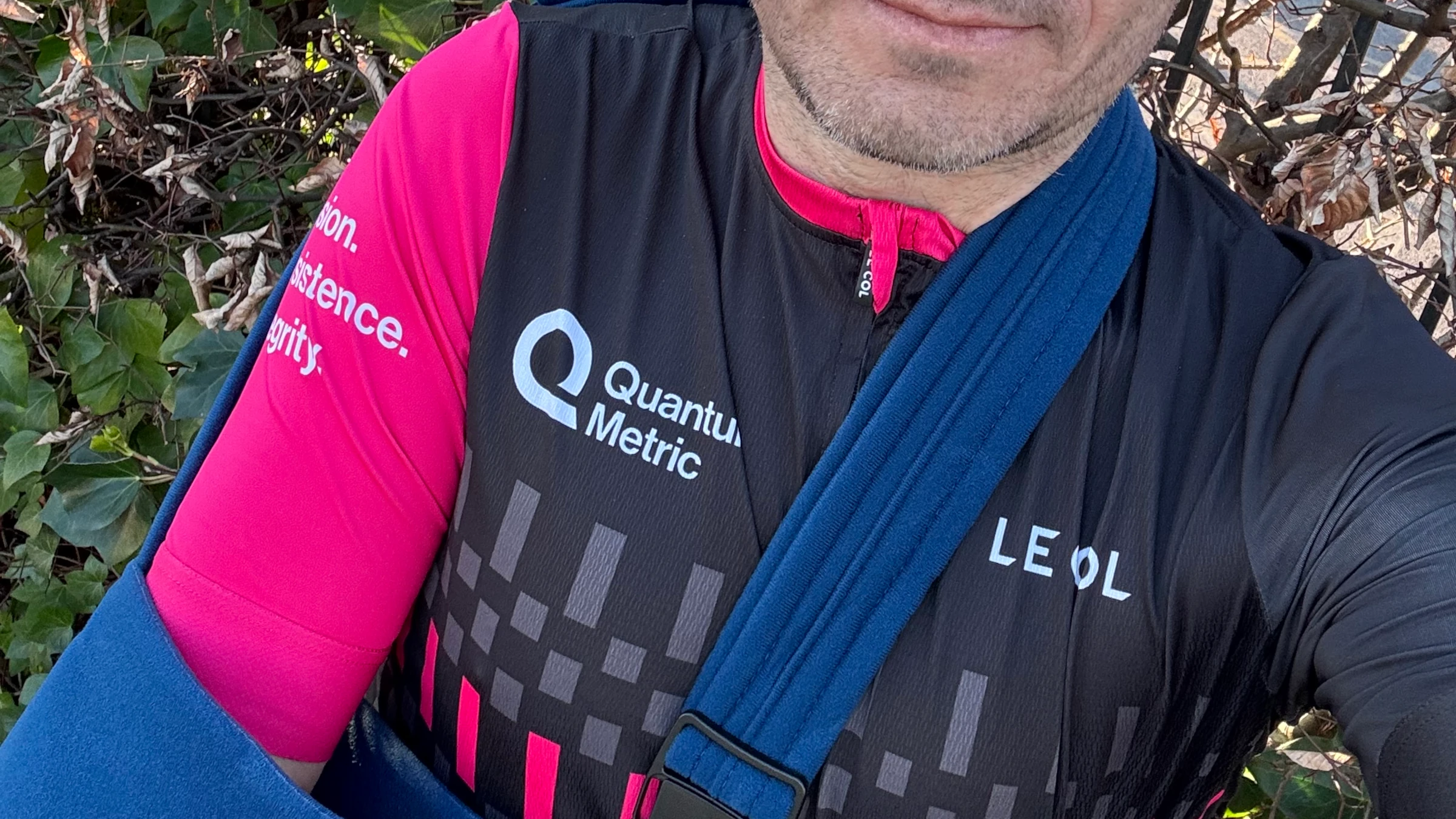
The injury itself was, mercifully, contained to the collarbone. No other fractures, at least not at first. A&E put my right arm in a sling and sent me home. Three weeks later, my left wrist was still painful enough that it warranted a proper look, so a cast went on that arm too, while a CT scan worked out whether anything was actually broken in there. It wasn’t, in the end, but for a stretch I was walking around with a sling on one arm and a cast on the other.
My wife took one look at that combination and told me, completely deadpan, that she wouldn’t be wiping my bum. Fair enough, really.
From there, the NHS pathway was almost disappointingly brief. I was told the collarbone had healed, no surgery was needed, and that was effectively the end of formal treatment. No structured physio plan, no shoulder assessment beyond confirming the bone itself had knitted back together.
It took nine months and an Ironman finish in between before I was finally granted access to a physio. I started the sessions, but they began aggravating something that felt like internal inflammation, and I stopped. As I write this, I’m still waiting for a referral to a shoulder specialist, more than a year on from the accident.
There’s a gap here worth naming clearly. The NHS treats a healed bone as a finished job, even when the soft tissue, joint mechanics, and strength around it are nowhere near sorted out. A collarbone fracture gets X-rayed, monitored until the bone itself knits back together, and then closed out as resolved. Nobody checks whether you can actually hold a tuck position on a TT bike, or rotate a front crawl stroke, or push a deadlift overhead, because those aren’t the questions a fracture clinic is set up to ask.
By the time I finally got the physio referral, nine months had passed, and an entire IronMan had happened in between. The sessions themselves were useful at first, working through the range of motion and strength that had quietly atrophied around the joint. Then something shifted, a kind of internal inflammation that the physio work seemed to be aggravating rather than easing, and I made the call to stop rather than push through it. That’s where things have sat since: a shoulder that’s functional enough to train and race on, but not properly diagnosed, still waiting on a referral to someone who can actually look at what’s going on underneath.
If you go through something similar, push for a referral early, and don’t assume “the bone has healed” means “you’re fixed.” Ask directly whether a physio assessment is part of the standard pathway, rather than waiting to be offered one.
The Insurance Claim: Still Open, More Than a Year Later
The legal side was handled through solicitors covered by my British Triathlon membership, which I hadn’t realised included this kind of support until I needed it. If you race under BTF, it’s worth checking what your membership actually covers beyond event insurance.
Shortly after the accident, the insurer offered £5,000 as a settlement. I turned it down. At that point, I had no idea what the long-term impact on my shoulder would be, and accepting early would have closed the door before I knew what I was actually dealing with. As things stand, I still haven’t recovered the cost of the bike itself, since the insurer apparently isn’t obliged to cover that, and any compensation is on hold until I’ve actually seen a shoulder specialist.
It’s a slow, faintly absurd process. The claim is still open. The bike is still unpaid for. The shoulder still isn’t fixed. None of it has a tidy resolution yet, and I think that’s worth saying plainly, because most recovery stories skip straight to the redemptive ending. The reality of a personal injury claim seems to be that it moves at the pace of the slowest piece, and right now that slowest piece is a specialist referral that hasn’t happened yet. Everything else, the bike replacement, any further compensation, is effectively parked until that appointment exists.
It’s an odd position to be in as an athlete. You’re out racing IronMans, posting finish line photos, getting on with the sport you love, while in the background, there’s an entirely separate, unresolved process grinding along about whether the system that’s supposed to make you whole again has actually done its job. The two timelines don’t match up, and I don’t think they’re supposed to.
Getting Back to Training: Three to Six Months
Easy spinning on the turbo came back somewhere in the three to six-month window, well before anything resembling proper training. There was no single dramatic moment when the shoulder was “ready.” It was more of a slow renegotiation of what felt possible, session by session, with Nathalie adjusting the plan around what the shoulder would actually tolerate rather than what a normal training block would ask for.
Running came back faster than cycling, unsurprisingly, since there’s no aero position or handlebar weight to manage. Swimming was the slowest of the three to return to proper form. Front crawl asks a lot of the shoulders, and the first session back made that brutally clear. Twenty-five metres of crawl, painful enough to switch to breaststroke. The strangest part was a sensation that one arm was shorter than the other, not something you can easily explain to someone who hasn’t been through it. That was it. Twenty-five metres and done, first swim session finished. By the time IronMan Cascais came around, I’d done less than 5k in a pool in total.
First Race Back: Tribourne Standard Duathlon
Five months after the accident, I lined up at the Tribourne Standard Duathlon in Brighton, a race I’d originally entered as a triathlon before the shoulder made the swim look ambitious. The organisers moved me across to the duathlon without fuss, and then the swim got cancelled on the morning anyway, so everyone became a duathlete regardless.
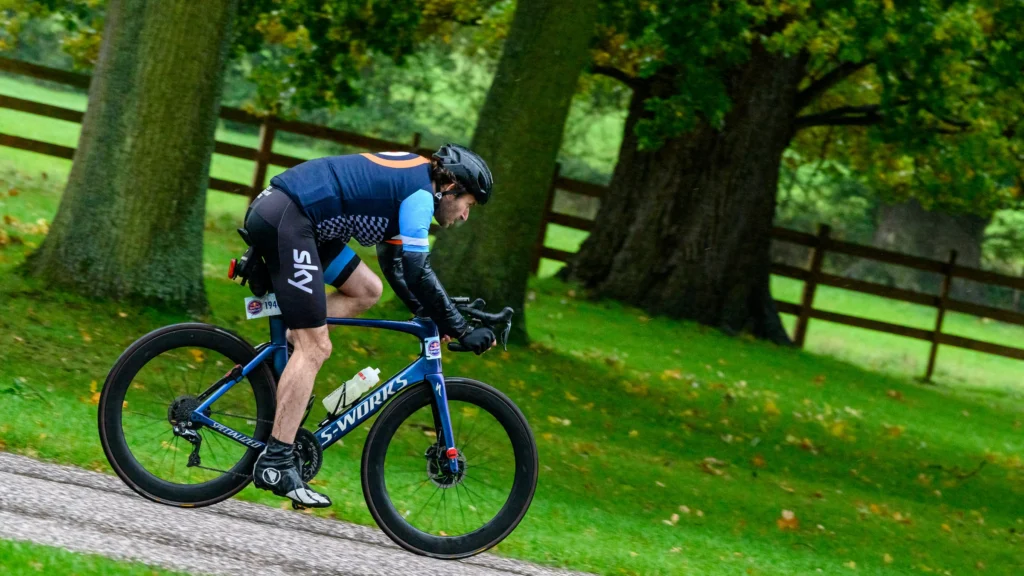
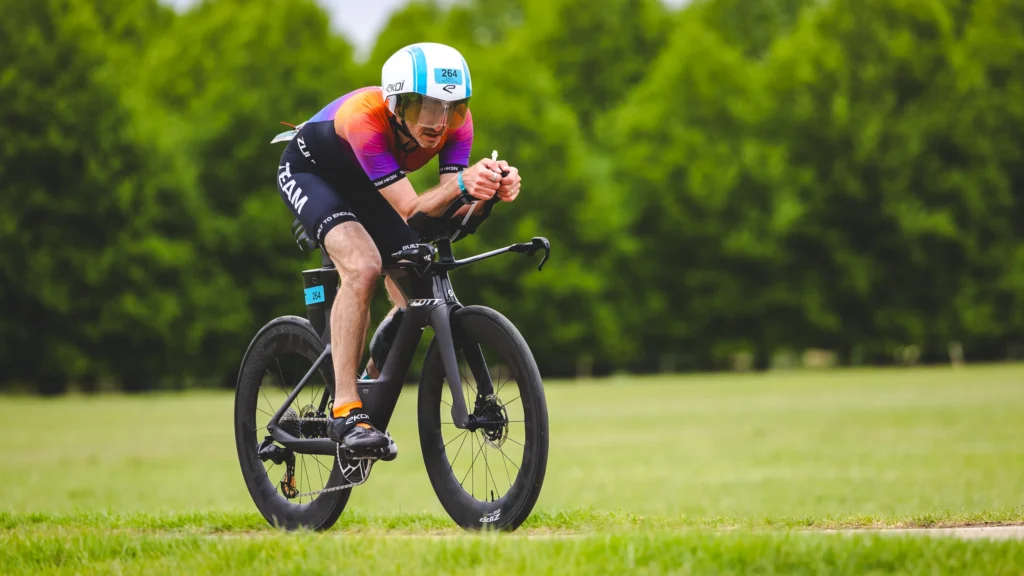
The shoulder couldn’t hold an aero position, so I rode 40km on the hoods like a road cyclist rather than tucked into the TT bars. Second overall on the bike split anyway. The result mattered less than the feeling of being back in transition, suffering through a finish line again, six months after wondering whether that would ever happen.
First Triathlon Back: BTS Club Champs at Dorney Lake
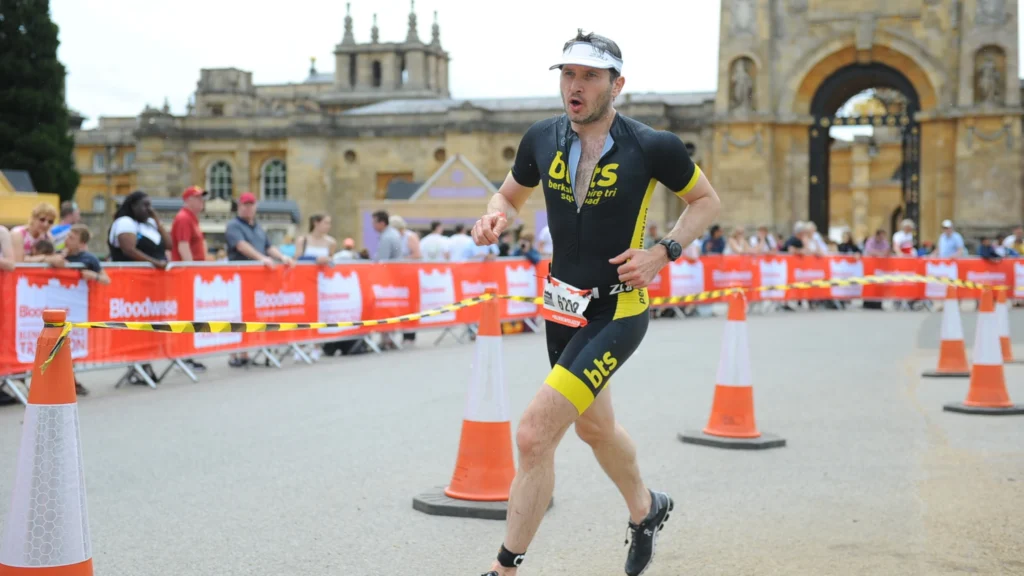
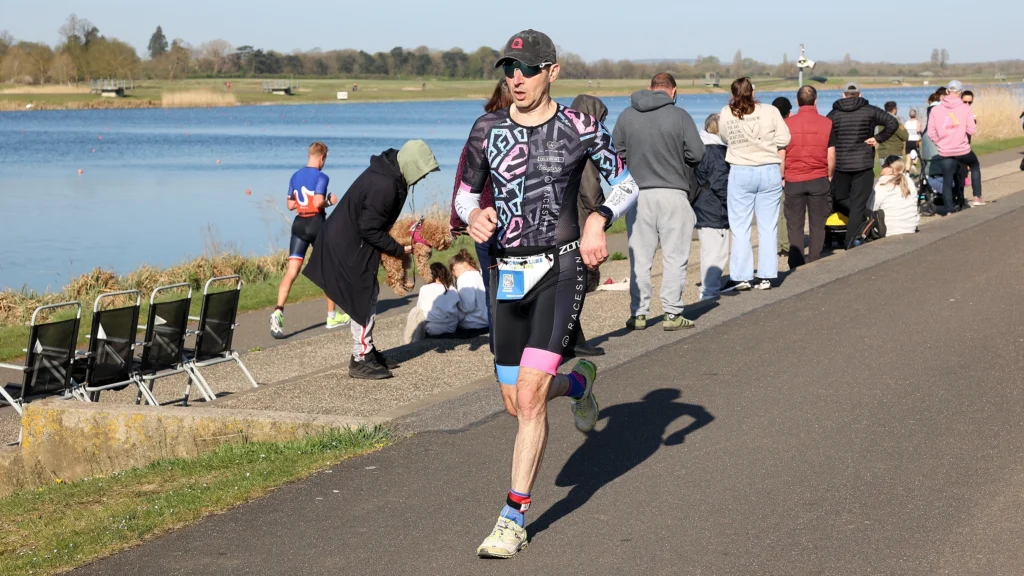
A week later came the BTS Club Champs, my first triathlon back, rather than a duathlon, and the first time I’d had to get a wetsuit over a recently injured shoulder. That alone was its own small battle. The swim, bike, and run were all slower than the previous year, by design rather than accident. I managed the bike around the shoulder limitation rather than pushing through it, which felt like the right call given that everything was still unresolved underneath.
Six weeks after that race, I started thinking seriously about whether IronMan Cascais was still realistic.
The original 2025 plan had nothing to do with Cascais at all. I was meant to race IronMan 70.3 Tours in June and IronMan Les Sables d’Olonne in July. Recovery being slower than I’d hoped meant moving both, with the rebooking fees that come with it. The 70.3 Tours entry shifted to Weymouth, which, in the end, I didn’t start either. Les Sables became Cascais instead, pushed later in the year to give the shoulder more time. None of that was the plan I’d had on New Year’s Day. It was the plan that was actually possible.
The Big Comeback: IronMan Cascais
IronMan Cascais sat just over six months after the accident, and I came genuinely close to not starting. Training had been light, the shoulder was unpredictable, and I’d booked flights and a flat with an explicit backup plan: if the body said no on the day, it would simply be a long weekend in Portugal.
The emotions around that start line were mixed rather than triumphant. Relief that I was even there, sitting alongside real uncertainty about whether 180km on the bike and a marathon afterwards was sensible, given a shoulder that still hadn’t been properly assessed. I finished in 11:57:19, holding the TT position for roughly ten per cent of the bike leg rather than the whole thing, managing the discomfort rather than ignoring it. It remains one of the more complicated finish lines of my triathlon career, equal parts achievement and reminder of how much still wasn’t right.
Burghley: The Shoulder Still Isn’t Sorted
Fast forward to May 2026, well over a year post-accident, and Burghley Standard Duathlon showed a small but real improvement: I held the tri bars for most of the bike leg, a clear step forward from the ten per cent at Cascais. But cold weather, frozen hands, and form that wasn’t quite there yet meant a finish well outside the European Championship qualifying spot I’d hoped for. Progress on the shoulder, not yet progress everywhere else.
IronMan Tours: 14 Months On, Still Managing It
Most recently, IronMan Tours. A tough day on the whole, weather playing its part alongside everything else, and one where the shoulder limited me again, more than a year on from the original accident. I finished it, which still counts for something, but I won’t pretend this is a story with a clean ending where the injury is fully behind me. Fourteen months in, I’m still racing around a shoulder that hasn’t had a proper specialist assessment, still waiting on that referral, still managing rather than resolving.
What I’d Tell You If This Happens to You
A few things stand out, looking back across the whole 14 months rather than any single race or appointment.
- Get a rear light with a built-in camera, and use it every ride. Mine was the difference between a contested account and a guilty plea in court.
- Don’t assume “the bone has healed” means you’re fixed. Push for a physio or specialist referral early, rather than waiting nine months and an IronMan finish as I did.
- Check what your club or governing body membership already covers. My British Triathlon membership included legal support I hadn’t realised I had until I needed it.
- Be cautious about early settlement offers. £5,000 sounded reasonable days after the crash. It would have looked very different against a shoulder injury still unresolved 14 months later.
- Racing again doesn’t mean recovered. Five IronMan-distance finishes and several duathlons happened in this window, and the shoulder still isn’t sorted. Those two things can both be true at once.
If you’re going through something similar right now, I’d genuinely rather you take the slower, more cautious route through the medical and legal side than mirror my timeline. Push for the referral. Don’t rush the claim. The races will still be there.
What I keep coming back to, 14 months on, is that recovery from something like this isn’t a single line that goes from broken to fixed. It’s two or three lines running at different speeds: the medical one, the legal one, and the athletic one, and they rarely arrive at the finish together. I was racing IronMan distance again within six months, technically a triathlete in full working order. Quietly, underneath that, the actual injury was still unresolved, and still is now. Both of those things are true, and I think recovery stories would be more useful if they admitted that more often, instead of wrapping everything up at the first finish-line photo.
Frequently Asked Questions
This is my personal experience, not medical or legal advice. If you’ve been in a cycling accident, see a doctor and consider speaking to a solicitor about your specific circumstances.
Leave a Comment
You must be logged in to post a comment.