
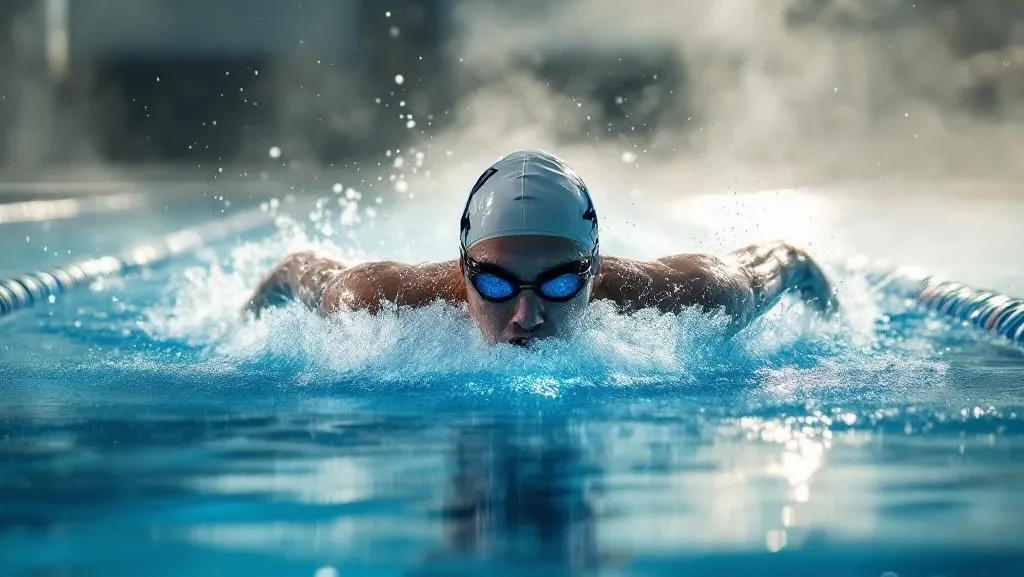
Swimming is the discipline where I’ve put in the most deliberate work and seen the least return. Video analysis, books, club sessions with Berkshire Tri Squad, structured methodology, I’ve tried the lot. And yet, when it comes down to it, my biggest limiter in the water isn’t technique. It’s endurance. Getting through a 3.8km open water swim with anything left in the tank is a different beast from nailing drills in a 25m pool, and that gap took me a long time to acknowledge.
Swim endurance training for triathlon swimming distance requires a fundamentally different approach than simply swimming more metres. The key is building aerobic capacity whilst maintaining form, progressing systematically, and recovering smart.
Understanding Swim Endurance vs Swimming More
Endurance isn’t about grinding out painful distances. True swim endurance means sustaining your goal pace with consistent technique over the required distance. Research on polarised training intensity distribution shows that 75–80% of endurance athletes’ training at low intensity, combined with 15–20% at high intensity, appears most beneficial for improving aerobic capacity and work economy. That principle applies directly to the pool.
The mistake most triathletes make is training too hard too often. You’ll see swimmers thrashing up and down the pool, gasping at the wall every 100m. This develops anaerobic power, not the steady-state endurance you need for triathlon distances.
A study tracking elite swimmers over 20 competitive seasons found that roughly 86–90% of their training was performed at low-to-moderate intensity, well below the lactate threshold. The principle translates directly to pool training for triathletes: keep the bulk of your sessions genuinely easy, and the hard efforts will actually mean something.
The Progressive Volume Approach
Smart distance building follows the 10% rule – increase your weekly swim volume by no more than 10% each week. But here’s the crucial part: not every session needs to be longer. Instead, add volume through frequency first, then duration.
Start with three swims per week. If you’re currently managing 2000m per session (6000m weekly), add roughly 10% the following week, so around 6500m total. That might look like 2500m, 2000m, and 2000m across three sessions. The week after, step up to 7000m.
After four weeks of progression, include a recovery week at 80% of your peak volume. This allows adaptation without accumulating excessive fatigue.
Aerobic Base Building Sets
The foundation of swim endurance training is aerobic base work. These sets should feel comfortably challenging – you could hold a conversation if you weren’t breathing into water every few strokes.
Progressive Build Sets:
- Week 1-2: 10 x 200m on 3:30 (adjust interval to give 15-20 seconds rest)
- Week 3-4: 8 x 250m on 4:15
- Week 5-6: 6 x 300m on 5:00
- Week 7-8: 4 x 400m on 6:30
Continuous Swimming:
Once weekly, include a straight swim at an aerobic pace. Begin with 800m and add 200m every two weeks. Focus on consistent pace and rhythm. Use a tempo trainer set to your target stroke rate if you have one.
The key is negative splitting within each set. Your last repeat should feel the same effort as your first, but you’ll likely be swimming slightly faster as you warm into the rhythm.
The 80/20 Training Distribution
Following the research-backed 80/20 principle, four out of five training sessions should be aerobic. The remaining 20% can include threshold work and speed development.
With three weekday sessions, hitting exactly 80/20 in a single week isn’t possible — one session in five doesn’t divide neatly into three. Spread across a fortnight, it works cleanly: five easy sessions and one harder one across six total.
Your two-week structure might look like:
Week 1
- Monday: Technique and easy aerobic volume (1800–2400m)
- Wednesday: Aerobic endurance main set (2200–2800m)
- Friday: Aerobic endurance main set (2000–2600m)
Week 2
- Monday: Technique and easy aerobic volume (1800–2400m)
- Wednesday: Threshold or race pace work (1600–2200m)
- Friday: Long aerobic swim (2500–3500m)
During base building phases, I often include 85-90% easy swimming. The Saturday long swim becomes my key session – starting at 2500m and building to 4000m+ over 8-12 weeks.
Plant-Based Recovery for Swimmers
Swimming’s low-impact nature can be deceptive. Your cardiovascular system works hard, and proper recovery ensures each session builds on the last rather than fighting accumulated fatigue.
Immediately post-swim, focus on rehydration – yes, even though you’ve been in water for an hour. I typically drink 500-750ml within 30 minutes of finishing.
For protein synthesis, plant-based options work perfectly. A post-swim smoothie with pea protein, banana, and spinach provides 25-30g protein plus glycogen-replenishing carbohydrates.
Sleep quality becomes crucial as volume increases. Swimming late in the day can leave you wired from the pool environment. If evening swims are unavoidable, include a proper cool-down and some gentle stretching.
Monitoring Progress Without Obsessing
Track your swim endurance training, but avoid drowning in data. Focus on these key metrics:
Stroke Count Consistency: Count strokes per length during your aerobic sets. As endurance improves, you’ll maintain lower stroke counts even when tired.
Perceived Effort Stability: Rate each set out of 10. Aerobic sets should stay between 6-7 throughout. If you’re hitting 8+ regularly, slow down or reduce volume.
Recovery Between Sessions: You should feel ready to swim again within 24-48 hours. Persistent heaviness in your shoulders or an elevated resting heart rate suggests you need recovery.
During my build-up phases, I use a simple traffic light system. Green means energy levels are good, technique feels solid. Amber means manageable fatigue; the technique needs focus. Red means immediate recovery is needed.
Common Endurance Training Mistakes
The ‘Middle Zone’ Trap: Swimming at moderate intensity – too hard to be truly aerobic, too easy to drive adaptation. This zone builds fatigue faster than fitness.
Ignoring Technique Under Fatigue: As distance increases, form deteriorates. Poor technique costs more energy and can lead to injury. Better to finish a set early with good form than struggle through with terrible stroke mechanics.
Inconsistent Pacing: Starting sets too fast creates an oxygen debt that affects the entire session. Use a pace clock religiously and aim for even splits.
Inadequate Warm-Up: Longer sessions need longer warm-ups. Include 400-600m of easy swimming, plus some build swims, before starting your main set.
Periodising Your Swim Training
Like cycling and running, swim training benefits from periodisation. Your approach should vary based on your race calendar and current fitness.
Base Phase (8-12 weeks): Focus purely on aerobic volume. 85-90% of swimming at a comfortable pace. Gradually increase weekly volume and include one long swim per week.
Build Phase (4-6 weeks): Introduce race pace work. Include threshold sets and some shorter, faster swimming. Maintain aerobic volume but add intensity.
Peak/Race Phase (2-4 weeks): Reduce volume while maintaining intensity. Include race-simulation swims and practice your race-day routine.
The beauty of this approach is that each phase builds on the previous one. The aerobic base supports higher-intensity work, while the build phase sharpens your race-specific fitness.


Leave a Comment
You must be logged in to post a comment.