
IRONMAN 70.3 Versailles Review: The Castle Dream and the Muddy Reality
A poster on a Versailles street still carries the original date: 12 07 2026. That was supposed to be the start of IRONMAN 70.3 Versailles, a brand new half-distance race that sold out within hours of registration opening in February. Three days before the start, it was cancelled because of a heatwave and an algae bloom in the swim lake. It finally went ahead on 11 October, and a clubmate was one of the athletes who raced it. Here is what the course promised, what he reported, and whether it’s worth your entry fee.
IRONMAN 70.3 Versailles is a half-distance triathlon held on the grounds of the Château de Versailles, with a 1.9km swim, a 90km bike through the Chevreuse Valley and a 21.1km run. The July date was cancelled, and the rescheduled race took place on 11 October 2026.
Why It Sold Out So Fast
Registration opened on 13 February 2026, and the field reportedly filled in under three hours. IRONMAN described it as the fastest 70.3 sell-out in Europe that season, with around 2,500 athletes expected and roughly 40% of them travelling from abroad. Many people never got past checkout. Some athletes reported being removed from the portal mid-purchase or losing their place in virtual queues. Demand was never the issue. The real question is what those entrants get once they reach the start line.
The Cancellation and the October Rerun
Local authorities called off the July edition as the heatwave intensified. Before that decision, IRONMAN had warned athletes that a cyanobacteria (blue-green algae) bloom in the reservoir could force the swim to be replaced by individual time trial starts on the bike. The race was then rescheduled to 11 October, with an 8 am start from the Château de Versailles. For anyone who had paid for a July place, the delay meant a long wait and a very different season.
The Course on Paper
The swim takes place in the Pièce d’Eau des Suisses, a 13-hectare lake carved out between 1679 and 1682 by a regiment of Swiss Guards. The bike route runs over rolling roads through the Chevreuse Valley, past villages and farmland. The run is described as largely flat, looping through the Potager du Roi before finishing on the avenue de Paris. On paper, it sounds like a dream: a royal setting, a scenic ride and a flat finish. Then came the account from the ground.
The Swim: Mud Before Water
According to a clubmate who raced, the swim started badly. He walked through mud for around 300 metres before there was enough water to swim in. He also said he swallowed what he called black sludge for the next 1.5km, and that the final 200 metres were walked in water no deeper than the calf, over large stones on the lake bed. He summed the swim up as disgusting. Open water is never a guarantee of clean, deep swimming, but a race that markets a castle lake should be ready to deliver one.
Social media has picked up on the swim too. Two Instagram posts, a reel and a second post, poke fun at the conditions in the water.
Transitions and the Bike
He reported more than a kilometre of running in both transition one and transition two. Long transitions quietly eat into your race before your legs have settled, and at half distance that adds up. The bike fared better in his telling. He called the Chevreuse Valley route nice, rolling and challenging but worth doing. He also described the course as very dangerous, with numerous crashes. If you are not comfortable riding in a bunch on undulating roads, treat this leg with respect.
The Run: Not a Fast Course
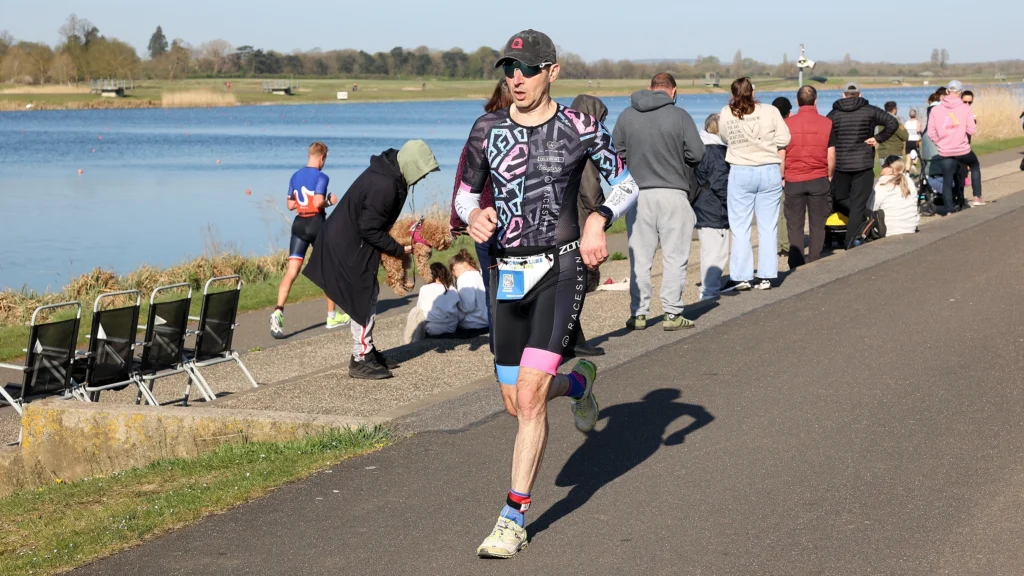
He described grass, gravel, cobbles, large stones, roots and forest paths through the park. The only stretch he found smooth was the out-and-back near the château. His verdict was blunt: this is not the fastest half marathon in the world. That contradicts the flat-course description in the race materials, so check the course map yourself before you plan a pace.
Organisation and Safety
He rated the organisation as very improvable. For a race with a field of around 2,500, that is a serious criticism, and it lines up with the registration complaints that followed the sell-out. Good race organisers manage the course, the water, the transitions and the bike safety as one job. Based on his account, Versailles fell short on several of those at once.
Is It Worth Entering?
If you are chasing a time, his advice was to skip it. If you want a day out, a ride through the valley, and a walk around one of the world’s most famous palace gardens, he said it is pretty. But worth no more than 250€. That is a fair summary of the experience, and it is not the same as a well-run half-distance race.
If you want a 70.3 with a smoother organisation, read my IRONMAN 70.3 Weymouth race report.
The bigger question is for the brand. A sold-out field, a famous backdrop and a strong marketing push can carry an event for a while. But athletes pay for the course, the water, the transitions and the safety on the bike, and those are where Versailles reportedly struggled. Local authorities have reportedly agreed to a multi-year deal that guarantees a 2027 edition, so the next race will be the real test.
Other half-distance options in Europe are listed in the race directory.
Final Thoughts
If you’re choosing your first 70.3 and want help narrowing it down, try the Triathlon Matcher quiz.
Sources
- Triathlon Magazine Canada: Breaking, Ironman 70.3 Versailles cancelled amid heat wave
- Endurance.biz: IRONMAN 70.3 Versailles reportedly sells out in three hours
- Info Syvelines: IRONMAN 70.3 Versailles annulé, canicule et cyanobactéries
- Sortiraparis: Ironman 70.3, a royal triathlon at the Palace of Versailles

Leave a Comment
You must be logged in to post a comment.