
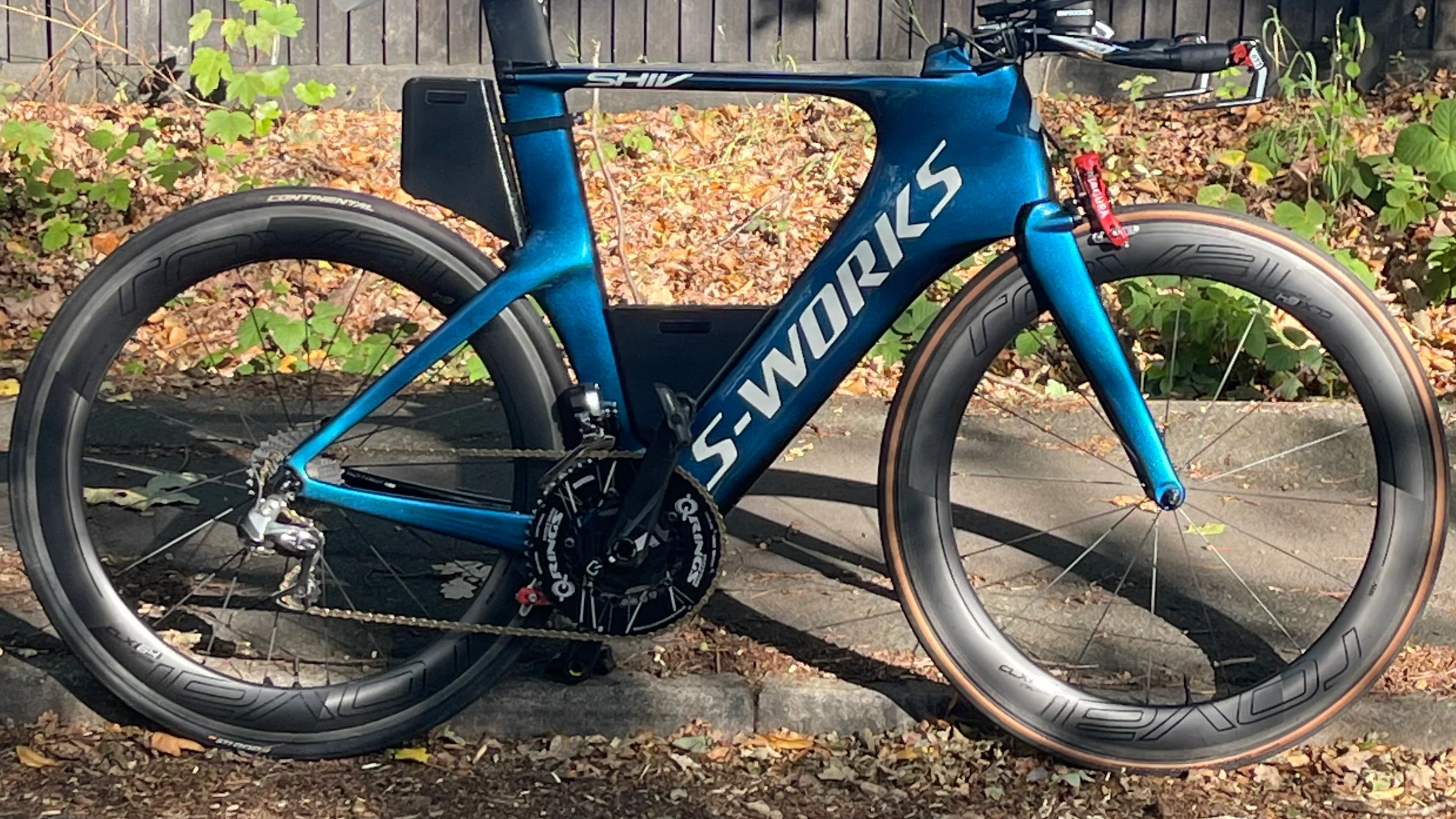
Halfway up the first climb out of Nice during my first Ironman, I was overtaking riders. Not because I was stronger — just better geared. Triathletes were grinding to a halt on their compact chainrings, legs gone, cadence collapsed, while I spun past them. That moment taught me that triathlon bike gearing isn’t just about going fast; it’s about having the right setup for every situation.
Triathlon bike gearing combines your chainrings (front gears) and cassette (rear gears) to create gear ratios that determine how easy or hard it is to pedal at different speeds. The right setup balances climbing ability, flat speed, and aerodynamic positioning across varying terrain.
Understanding Gear Ratios in Triathlon
Gear ratios represent how many times your rear wheel turns for each pedal revolution. A lower gear ratio (easier gear) means less wheel rotation per pedal stroke, which is perfect for climbing. Higher ratios (harder gears) generate more speed on flats but require more power.
The calculation is simple: divide your chainring teeth by your cassette cog teeth. A 50-tooth chainring with an 11-tooth cassette gives you a 4.55 ratio, quite hard. The same chainring with a 28-tooth cog produces a 1.79 ratio, much easier for climbing.
During Challenge Roth, running a 53/39 chainring with an 11-28 cassette, my ratios ranged from 1.39 (39×28) on the steeper sections to 4.82 (53×11) on the fast descents. That range kept me in my optimal power zone throughout the undulating course.
Chainring Options for Triathletes
Most triathlon bikes use either compact (50/34) or standard (53/39) chainrings, though single chainrings are gaining popularity for their simplicity and aerodynamics.
Compact Chainrings (50/34) offer excellent climbing ability with the small ring providing easy gears for steep sections. The trade-off comes on fast flats where the 50-tooth big ring might not provide enough top-end speed for powerful riders.
Standard Chainrings (53/39) deliver more speed on flats and rolling terrain. The 53-tooth ring gives higher gear ratios, whilst the 39-tooth provides reasonable climbing gears when paired with a wide cassette.
The key is matching your chainrings to your functional threshold power and typical race terrain.
Cassette Selection for Different Race Distances
Cassette choice depends heavily on race distance and terrain. Sprint and Olympic distance races often favour closer gear ratios for precise pacing, whilst long course events benefit from wider ranges to handle varied terrain efficiently.
For Sprint and Olympic distances, an 11-25 or 11-28 cassette provides tight gear spacing. You can fine-tune your effort precisely, maintaining optimal cadence as conditions change. The narrow range works because these shorter races typically don’t include extreme climbs.
Half Ironman and Ironman distances often require wider cassettes, such as 11-32 or even 11-34. The extra climbing gears become crucial for maintaining sustainable power over hours of riding. Better to spin easily up hills than grind your legs to exhaustion before the run.
My current setup uses an 11-32 cassette with standard chainrings. This combination handled everything from the flat fast sections of Ironman Cascais to the punchy climbs of Weymouth without compromising my run performance.
Climbing Gears: What You Actually Need
Many triathletes obsess over having the easiest possible climbing gear, but the reality is more nuanced. Your climbing gear should allow you to maintain a sustainable power output and cadence on the steepest sections of your target races.
A good climbing ratio falls between 1.5 and 2.0 for most age-groupers. This typically means a 34×28 (1.21) for compact setups or 39×32 (1.22) for standard chainrings with wider cassettes. These ratios allow 80-90 rpm cadence whilst climbing at sustainable power.
During training rides in the Chiltern Hills, I regularly test my climbing gears at race effort. Can I maintain my target watts whilst keeping cadence above 75 rpm? If not, I need easier gears. Remember, optimal cadence varies by individual, but most triathletes perform best between 80-95 rpm on climbs.
High-Speed Gears for Flat Sections
Top-end speed isn’t just about bragging rights; it’s about efficiency. Having adequate high gears prevents you from spinning out on descents and fast flats, allowing you to maintain momentum rather than soft-pedalling.
A 53×11 combination (4.82 ratio) provides plenty of top-end for most situations. At 90 rpm cadence, this gear produces roughly 35 mph, faster than most triathletes can sustain aerobically. However, having this gear available for short bursts or descents maintains efficiency.
The key insight from my power data analysis is that I rarely use my largest gears for extended periods, but having them prevents the frustrating spin-out sensation when road speed exceeds my gear range. This psychological benefit translates to better pacing decisions.
Gear Spacing and Shifting Strategy
Smooth gear transitions matter enormously in triathlon. Unlike road racing with its sudden accelerations, triathlon rewards consistent power output with minimal disruption from gear changes.
Modern 11-speed and 12-speed cassettes offer excellent gear spacing, typically 1-2 teeth between adjacent cogs in the middle range. This close spacing allows micro-adjustments to maintain optimal cadence as gradient or wind conditions change.
My shifting strategy focuses on anticipation rather than reaction. Approaching a climb, I shift to an easier gear before I need it, maintaining smooth power delivery. On descents, I shift up progressively rather than making large jumps that disrupt rhythm.
The front derailleur requires more planning. I typically stay in the big ring unless facing sustained climbs or strong headwinds. Cross-chaining (big ring to the largest cassette cogs) creates inefficient chainlines and should be avoided through proper gear selection.
Terrain-Specific Gearing Recommendations
Different race venues demand different approaches to gearing. Flat, fast courses like Challenge Copenhagen favour close-ratio cassettes and standard chainrings. Hilly events like JurassicMan require wider gear ranges.
Flat courses work best with 11-25 or 11-28 cassettes paired with standard chainrings. The close spacing allows precise power management, whilst the high gears handle fast sections efficiently.
Rolling terrain benefits from moderate cassette ranges like 11-30 or 11-32. These provide climbing options without excessive gear changes across varying gradients.
Mountainous courses demand wide cassettes (11-32 or 11-34) regardless of chainring choice. The easy gears become essential for sustainable climbing power over multiple ascents.
Testing and Optimising Your Setup
The best gearing setup means nothing without proper testing. I recommend structured testing during training rides that simulate race conditions rather than relying on theoretical calculations.
Start by recording your gear usage during typical training rides using your bike computer or power meter. Which gears do you use most frequently? Are there gaps where you frequently shift but can’t find the right ratio? Do you run out of gears when climbing or descending?
Next, test your setup on courses similar to your target races. Can you maintain race power on the climbs without excessive strain? Do you have adequate high gears for the fast sections? Most importantly, how do your legs feel after extended climbing – fresh enough for a strong run?
Fine-tuning might involve cassette swaps rather than complete drivetrain changes. Many riders find that moving from an 11-28 to an 11-30 cassette solves climbing issues without major expense or setup changes.
Common Gearing Mistakes to Avoid
The biggest mistake I see among triathletes is over-gearing – choosing ratios too hard for their fitness level or race terrain. This typically stems from ego rather than performance analysis. Grinding big gears might feel powerful, but it destroys run performance.
Another common error is neglecting gear maintenance. Poorly shifting gears wastes energy and disrupts pacing. Regular drivetrain cleaning, chain replacement, and derailleur adjustment maintain smooth operation throughout training and racing.
Finally, many athletes choose gearing based on their best days rather than typical performance. Your gearing should work on an average day, not just when you’re flying. Build in some insurance with slightly easier-climbing gear than you think you need.


Leave a Comment
You must be logged in to post a comment.