
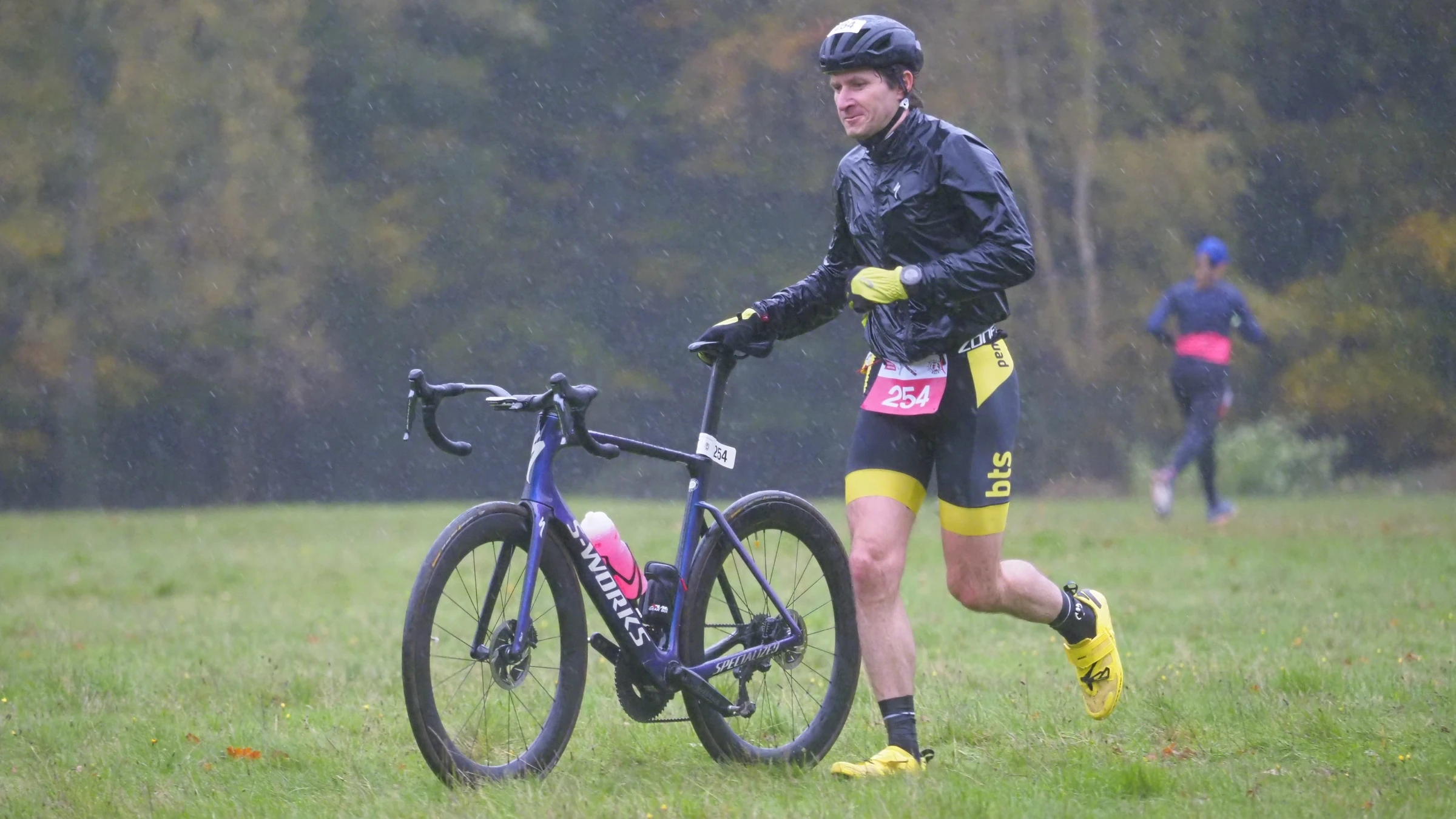
I still remember my first triathlon disaster at a sprint race near St Albans. I stumbled out of the water, wrestled with my wetsuit for what felt like an eternity, sat down, then spent another age fumbling with my helmet. By the time I finally got on my bike, half the field had disappeared up the road. That painful experience taught me that the swim-to-bike transition isn’t just a changeover – it’s a crucial fourth discipline that can make or break your race.
The swim-to-bike transition, or T1, is the critical changeover period where you transform from swimmer to cyclist. A smooth, practised T1 can save you minutes compared to a chaotic scramble, and those seconds often determine age group placings.
Pre-Race T1 Setup Strategy
Your transition setup begins long before the starting horn. After completing over 100 races, I’ve learned that a methodical approach to laying out your kit saves valuable time when your heart rate is sky-high, and fine motor skills have abandoned you.
Position your bike in the rack with the chain side facing out – this gives you clear access to mount from the correct side. Lay your cycling kit in the exact order you’ll need it: helmet first (closest to the bike), then sunglasses inside the helmet, cycling shoes clipped into the pedals if you’re confident with flying mounts, or placed beside the bike if not.
I place a small towel at the foot of my transition spot for wiping sandy feet, with my race number belt laid on top. This seemingly minor detail prevents the frustration of searching for gear when you’re running on adrenaline and limited oxygen.
Athletes should consider placing a small energy gel or date here if their race distance demands early fuelling. The transition period offers a perfect opportunity to get some quick carbohydrates on board before settling into your cycling rhythm.
Wetsuit Removal Techniques
Before you exit the water, scoop some water into the front of your wetsuit at the chest. It sounds counterintuitive, but that extra water lubricates the neoprene against your skin, making the suit much easier to peel off quickly.
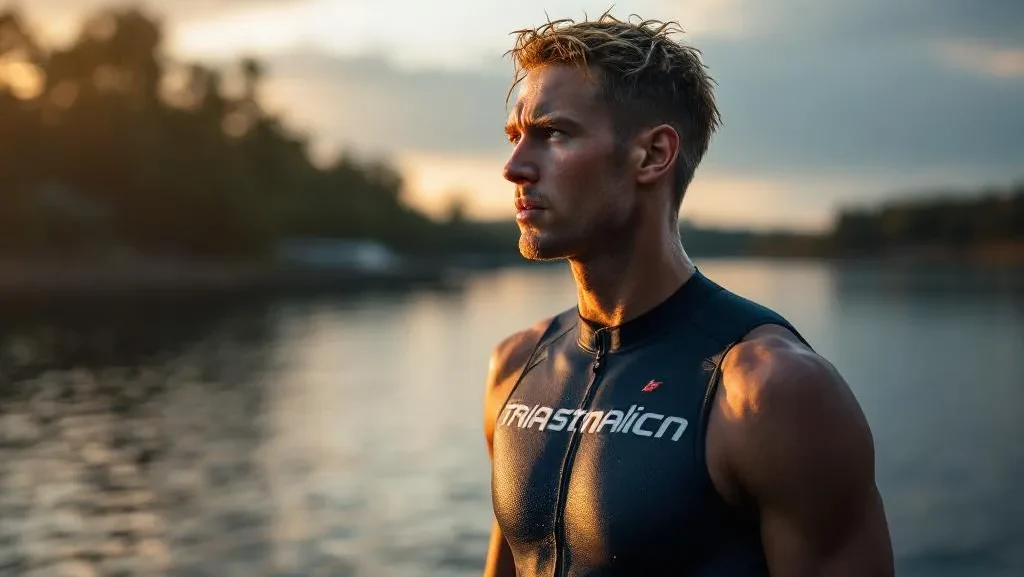
As soon as you’re out of the water and running to T1, unzip and strip the wetsuit down to your waist. By the time you reach your bike, you’ve already done half the work. Then it’s just a case of stepping on the ankles and pulling your legs free while standing.
Grab the wetsuit at the ankles and roll it inside-out as you pull. Don’t try to pull it right-side-out – the inside-out method reduces friction and prevents the suit from catching on your legs. Practice this technique during your triathlon training sessions until it becomes second nature.
For plant-based triathletes, the post-swim period can feel particularly draining if your iron levels aren’t optimised. That dizzy, lightheaded feeling during wetsuit removal often signals your body’s struggling with oxygen transport – something to discuss with your coach or sports nutritionist.
The Flying Mount vs. Traditional Mount
The flying mount – where you run alongside your bike and leap on while moving – looks spectacular and can save 3-5 seconds. However, it’s also a recipe for disaster if you haven’t practised extensively. I’ve seen countless athletes crash in transition, attempting flying mounts they’d never rehearsed.
For most age-group athletes, a traditional mount is faster and safer. Put your cycling shoes on in T1, run with your bike to the mount line, then mount normally. The time saved attempting a flying mount rarely compensates for the time lost if you crash or fumble the technique.
If you do want to master the flying mount, start practising on grass rather than concrete. Begin by simply running alongside your bike with your hand on the seat. Progress to small hops while holding the bike, then gradually build to the full mount. Remember, confidence in transition comes from repetition, not bravery.
During my time in triathlon, I watched age-group athletes lose significant time attempting flashy techniques they hadn’t mastered. Smooth and consistent always beats fast and chaotic.
Optimal Gear Sequencing
The order in which you put on your cycling gear can dramatically impact your T1 time. After hundreds of transitions, I’ve settled on this sequence: helmet first (it’s mandatory before touching your bike), then race-number belt, sunglasses, and finally shoes, if not already clipped in.
Your helmet should go on immediately after removing your wetsuit. Many athletes leave this until last, but race officials will penalise you for touching your bike without a helmet. Make it your first priority to avoid any potential issues.
Race number belts are far superior to safety pins for transitions. You can put the belt on with your number at the back, then rotate it to the front for the run. This avoids the fumbling and potential injury risks associated with pinned numbers.
Sunglasses placement depends on conditions. In bright sunshine, they go on immediately. In overcast conditions, I’ll clip them to my helmet or bike and decide during the early kilometres whether I need them. There’s nothing worse than foggy glasses ruining your first few minutes on the bike.
Plant-Based Energy Considerations
Plant-based athletes often experience a more pronounced energy dip during transitions due to their typically lower glycogen storage capacity. Consider placing a small piece of banana or a couple of dates at your transition spot for quick energy. Natural sugars are absorbed quickly and provide an immediate boost as you begin the bike leg.
Mental Preparation and Visualisation
Your T1 performance is largely determined before you enter the water. Mental rehearsal and visualisation aren’t just new-age nonsense – they’re proven techniques that help automate your transition process when race-day stress kicks in.
I spend time the night before each race mentally walking through my entire T1 sequence. I visualise exiting the water, finding my bike among the sea of similar machines, and executing each step of my gear change. This mental rehearsal helps identify potential problems before they occur.
During the swim, particularly in the final 200 metres, I’m already thinking about my transition. Where is my bike positioned relative to the swim exit? Which direction do I turn in transition? What’s the first thing I need to do when I reach my spot?
Sports psychology research consistently shows that mental practice can improve motor skill performance — a meta-analysis of 60 studies found that mentally practising a motor skill produces a meaningful improvement over no practice at all (Feltz & Landers, 1983). For something as complex as a triathlon transition, running through it in your head before race day is genuinely useful preparation, not just a pre-race ritual.
Common T1 Mistakes to Avoid
After watching thousands of transitions at races, from local sprints to IronMan, certain mistakes recur. The most common is rushing. Ironically, trying to go too fast often results in slower transitions due to fumbled gears and repeated actions.
Another frequent error is inadequate transition practice. Many athletes spend months perfecting their swim, bike, and run, then wing their transitions on race day. Your transition deserves the same attention as any other discipline – practice it regularly until it becomes automatic.
Forgetting essential items tops the list of costly mistakes. I’ve seen athletes realise halfway through T1 that they’ve forgotten their helmet, cycling shoes, or race number. Create a pre-race checklist and use it religiously.
Plant-based athletes sometimes forget their specific fuelling needs. Unlike omnivorous athletes who might grab any energy gel, we need to ensure our chosen fuel aligns with our dietary requirements. Pack familiar, tested nutrition that you know works with your system.
Weather-Specific T1 Adaptations
British weather demands adaptable T1 strategies. Cold, wet conditions require additional considerations that fair-weather transitions don’t address. I learned this during a particularly grim early-season triathlon where rain turned transition into a mud bath.
In cold conditions, your wetsuit becomes a blessing and a curse. While it keeps you warm in the water, removing it exposes you to a significant temperature drop just when your circulation is compromised. Have a long-sleeved cycling jersey ready, and consider arm warmers that you can remove once your body temperature stabilises.
Wet conditions make everything more challenging. Your transition towel becomes essential for grip and warmth. Consider bringing baby powder or talcum powder to help wet feet slide into cycling shoes more easily.
Hot weather presents different challenges. Your wetsuit removal becomes more urgent as the risk of overheating increases. Ensure you have adequate sun protection ready – sunglasses become essential rather than optional – and consider applying sunscreen before the race rather than trying to apply it in transition.

Leave a Comment
You must be logged in to post a comment.