

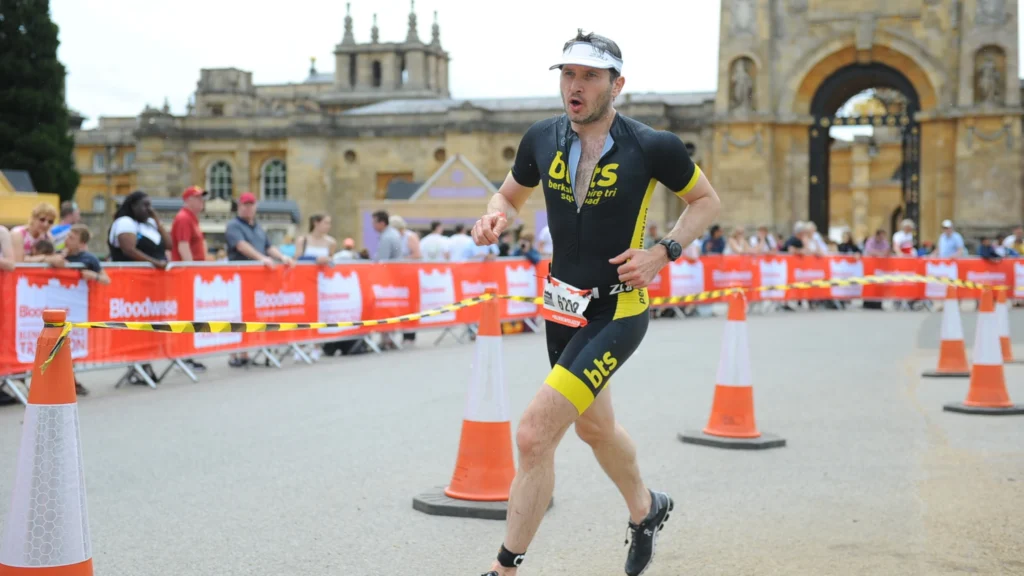
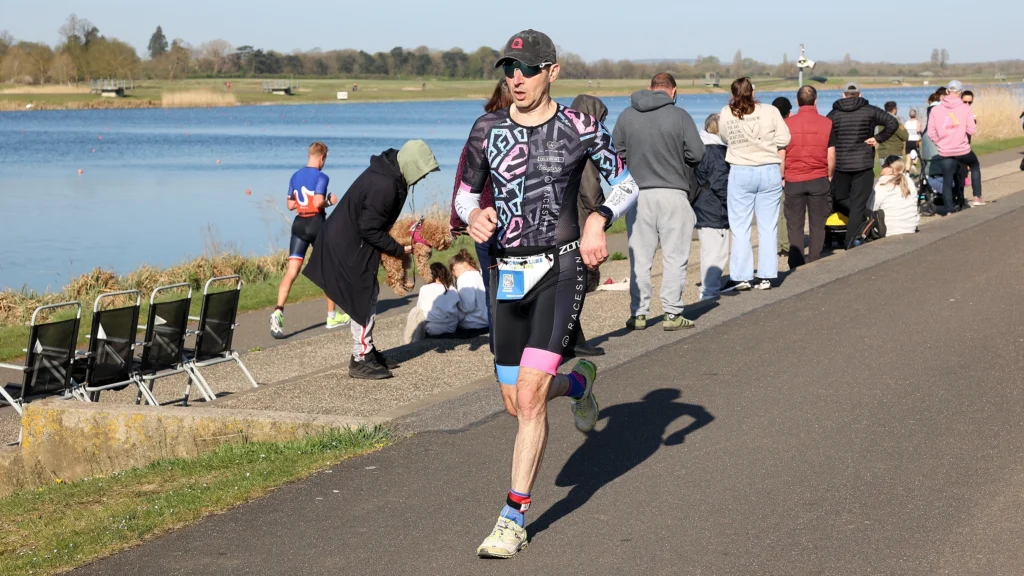
Two runners, same pace, same course. One looks like they’re grinding through treacle. The other seems to float. The difference usually isn’t fitness, it’s cadence.
After completing over 100 races and working with coaches on refining my technique, I’ve discovered that run cadence might just be the most underappreciated aspect of triathlon running. It’s not about how hard you push or how long your stride is. It’s about finding that sweet spot of turnover that maximises efficiency.
What Is Run Cadence and Why Does It Matter
Run cadence refers to the number of steps you take per minute, typically counted as footstrikes for both feet. Think of it as your running rhythm – the metronome that drives your entire gait pattern.
Most recreational runners naturally settle around 160-170 steps per minute, whilst elite runners often maintain 180-190 steps per minute or higher. The magic isn’t necessarily in hitting a specific number, but rather in finding your optimal cadence that minimises energy waste and reduces injury risk.
A 2022 systematic review and meta-analysis published in Sports Medicine Open found that increasing cadence by 5-10% consistently reduces impact forces and improves joint load distribution — without compromising running economy. For triathletes running off the bike with already fatigued legs, this reduction in impact becomes crucial.
The Science Behind Optimal Turnover
When we talk about efficiency in running, we’re really discussing the relationship between oxygen consumption, ground contact time, and forward propulsion. Higher cadence typically correlates with shorter ground contact time, which means less energy is lost to vertical oscillation and more is directed toward forward movement.
The biomechanics are fascinating. A quicker turnover naturally encourages a midfoot or forefoot strike pattern, reducing the braking forces that occur when you overstride. It’s like the difference between tapping rapidly on a table versus slapping it with your palm – one creates smooth, efficient motion, whilst the other wastes energy through unnecessary impact.
During my training, I’ve noticed that maintaining proper cadence becomes even more critical during longer triathlon distances. The cumulative effect of inefficient turnover over 10K, 21K, or 42K can mean the difference between a strong finish and a painful shuffle.
Finding Your Personal Optimal Cadence
Before diving into specific drills, you need to establish your baseline. This isn’t about immediately jumping to 180 steps per minute because that’s what the elites do. Your optimal cadence depends on your height, leg length, running background, and current fitness level.
Start with a simple test during an easy run. Count your steps for 30 seconds, then multiply by 2, or use a GPS watch that tracks cadence automatically. Do this several times at different paces to understand your natural patterns. Most people find their cadence increases naturally with pace, which is perfectly normal.
The goal isn’t to completely overhaul your natural rhythm overnight. Small increases of 5-10 steps per minute over several weeks allow your body to adapt without creating new stress patterns or potential injury.
Run Cadence Training Methods
Metronome Training
Using a metronome app on your phone can provide the steady beat needed to practice consistent turnover. Start with your current cadence and gradually increase by 2-3 beats per minute every few weeks. This method works brilliantly for shorter intervals where you can focus entirely on matching the rhythm.
Music-Based Cadence Work
Curating playlists with specific beats-per-minute makes cadence training more enjoyable. Songs around 180 BPM naturally encourage quicker turnover, whilst 170 BPM tracks work well for tempo runs. The key is finding music you actually enjoy – nothing kills motivation like running to a boring metronome for 45 minutes.
Short Stride Drills
Focus on taking smaller, quicker steps rather than reaching forward with each stride. This drill works particularly well on a treadmill where you can maintain a consistent pace whilst concentrating solely on foot turnover. Start with 30-second intervals and gradually extend as the pattern becomes more natural.
Cadence Pyramids
Begin at your natural cadence, increase by 10 steps per minute for one minute, then 20 steps per minute for one minute, before stepping back down. This helps you experience different turnover rates and find what feels sustainable for various intensities.
Integrating Cadence Work into Triathlon Training
The beauty of cadence training lies in its compatibility with other training objectives. You can work on turnover during easy runs, tempo sessions, or even during brick workouts when practising the bike-to-run transition.
I particularly love incorporating cadence focus during the early stages of run training after a good bike ride. Those first few kilometres off the bike are perfect for establishing rhythm and getting your running legs underneath you efficiently.
For structured training, dedicate one run per week to cadence work. This might involve 4-6 intervals of 3-5 minutes at slightly elevated turnover rates, with easy-paced recovery between efforts. The goal isn’t necessarily to go faster, but to maintain pace with quicker, lighter steps.
Technology and Tools for Monitoring
Modern GPS watches and running pods make tracking cadence simpler than ever. Most devices provide real-time feedback, allowing you to adjust your rhythm mid-run. However, don’t become so focused on the numbers that you lose sight of how your body feels.
Heart rate monitoring during cadence work can provide valuable insights into efficiency gains. As your turnover becomes more optimal, you might notice lower heart rates at the same paces – a clear indicator that you’re moving more efficiently.
Common Mistakes in Cadence Training
The biggest error I see among fellow triathletes is trying to increase cadence whilst maintaining the same stride length. This creates a choppy, inefficient gait that actually wastes more energy. Instead, higher cadence should naturally result in shorter, quicker steps that feel light and springy.
Another mistake is practising cadence work only at easy paces. Your optimal turnover will vary with intensity, so include cadence focus across different training zones. What works for an easy aerobic run might feel awkward during threshold efforts.
Finally, don’t abandon cadence work the moment it feels challenging or unnatural. Like any technique change, it takes time for new movement patterns to become automatic. Persistence and patience yield the best results.
Making It Stick: Long-term Development
Sustainable cadence improvement happens gradually over months, not weeks. I’ve found that consistent, short-duration practice works better than occasional long sessions focused entirely on turnover. Even five-minute segments during regular runs can drive meaningful adaptation over time.
The real test comes during racing, when fatigue and adrenaline can throw carefully practised techniques out the window. This is where those months of consistent practice pay dividends. Optimal cadence becomes your default pattern, not something you have to consciously maintain.
Remember, the goal isn’t to achieve a specific number but to find the turnover rate that makes you a more efficient, resilient runner. Whether you’re tackling your first sprint distance or preparing for an IRONMAN, dialling in your cadence will serve you well across all aspects of triathlon training and racing.
Start with small changes, be patient with the process, and trust that your body will adapt to more efficient movement patterns. Your future self will thank you when you’re cruising past struggling runners with that same effortless efficiency that once caught your attention.


Leave a Comment
You must be logged in to post a comment.