
At Dorney Lake this morning, a pool mate told me he always packs two race belts. Not for himself. For the people who forget theirs. Happens that often.
Then he dropped the kicker: someone at today’s event turned up without her cycling shoes. Not a spare pair. The actual cleats she needed to race.
After 100+ races and five Ironman distance finishes, I’ve refined my packing system to kill that “did I pack everything?” panic. Here’s the checklist.
The Night Before: Pack Smart, Sleep Better
Race morning brings enough nerves without adding gear anxiety. I lay everything out the night before, following the same sequence I’ll use on race day.
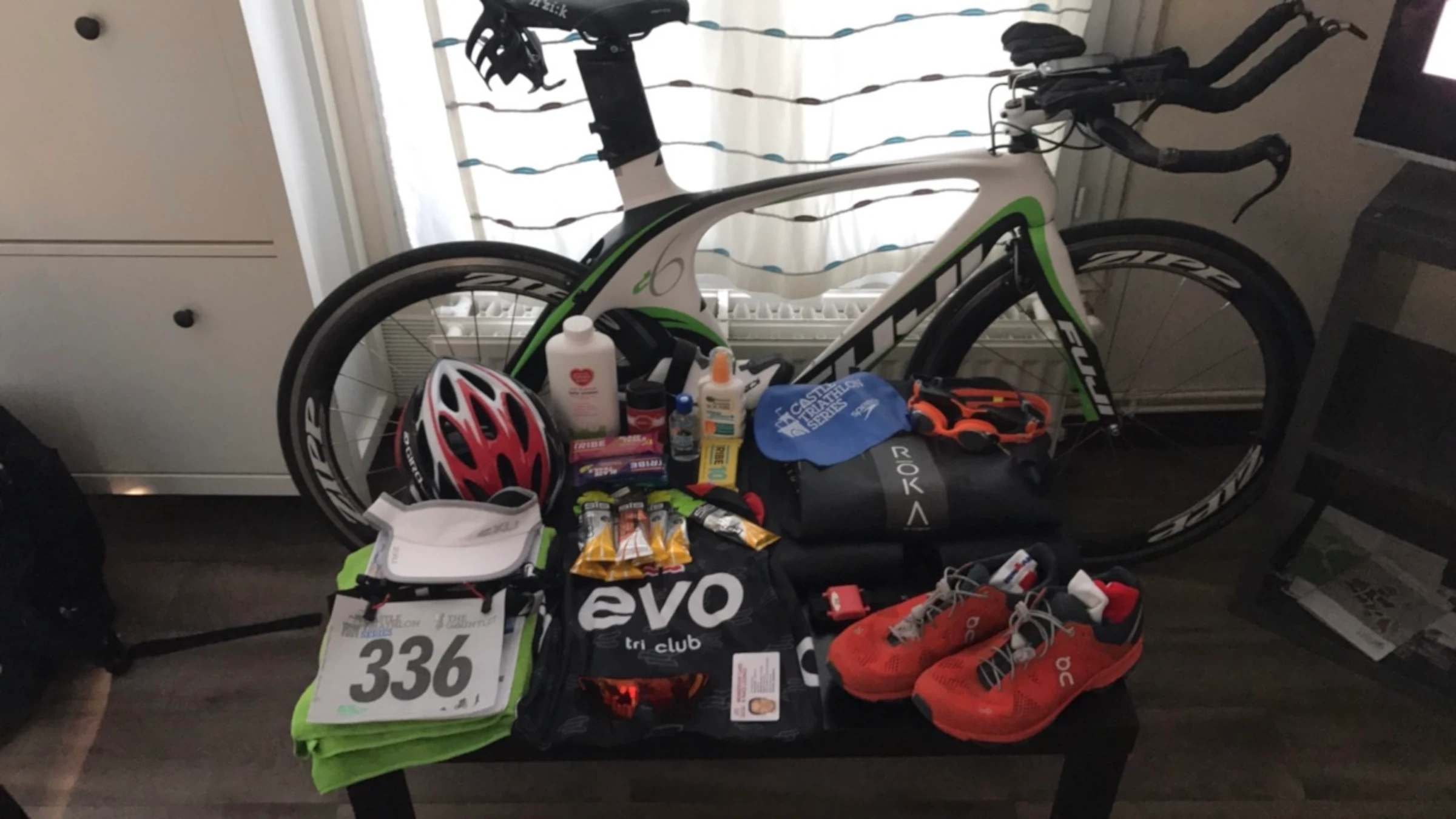
Your triathlon race day checklist should mirror your race flow. Start with swim gear, move through bike essentials, then finish with a run kit. This logical progression helps prevent forgotten items and builds confidence.
Create separate piles for each discipline. It sounds obsessive, but this visual check has saved me countless times. Seeing everything laid out triggers a memory of anything missing.
Swim Essentials: Your Water Warrior Kit
Swimming creates unique gear challenges. Everything must survive getting soaked, and you need backups for critical items.
Must-have swim gear:
- Primary goggles (tested and trusted)
- Backup goggles (different tint if possible)
- Wetsuit (if permitted and beneficial)
- Anti-chafe lubricant
- Swim cap (usually provided, but bring backup)
- Towel for post-swim cleanup
The weather can change overnight, affecting the choice of goggles. Clear lenses for overcast conditions, tinted for bright sunshine. Pack both options rather than gambling on race morning visibility.
Bike Gear: Rolling Reliability
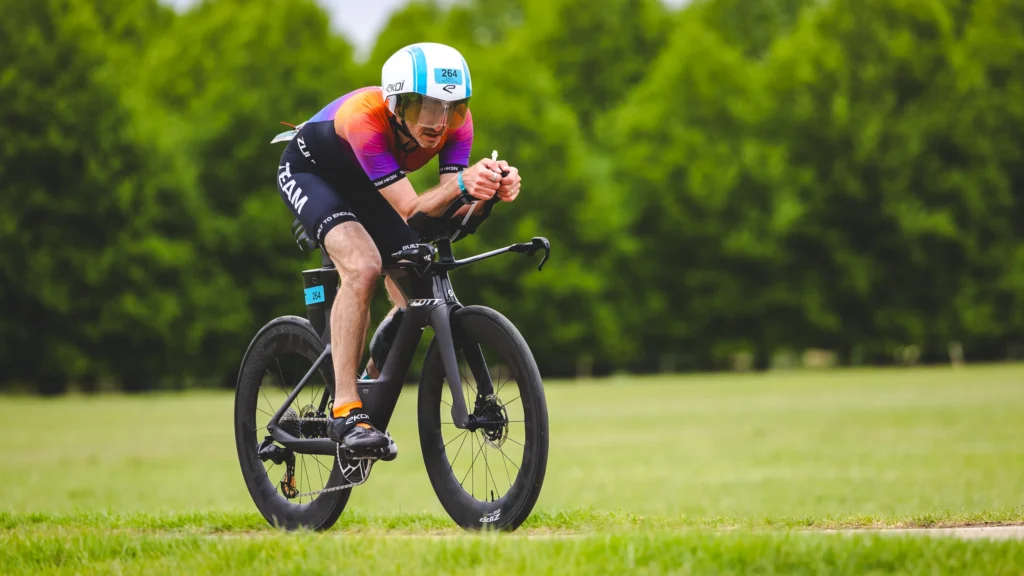
The bike leg offers the most opportunities for mechanical issues. Your triathlon gear list must balance essential repairs with weight considerations.
Bike essentials include:
- Helmet (properly fitted and undamaged)
- Bike shoes and spare elastic laces
- Cycling computer or watch
- Spare inner tubes (2 minimum)
- Tyre levers
- Mini pump or CO2 cartridges
- Multi-tool with chain breaker
- Quick-link for chain repairs
Don’t forget nutrition storage. Whether using bento boxes, frame bags, or jersey pockets, ensure your fuelling strategy has proper transport. Practice accessing nutrition during training rides to avoid fumbling on race day.
Run Kit: Finishing Strong
Running off the bike creates unique demands. Your legs feel strange, your core’s fatigued, and every piece of kit needs to work perfectly.
Essential run gear covers comfort and performance:
- Running shoes (well-broken in)
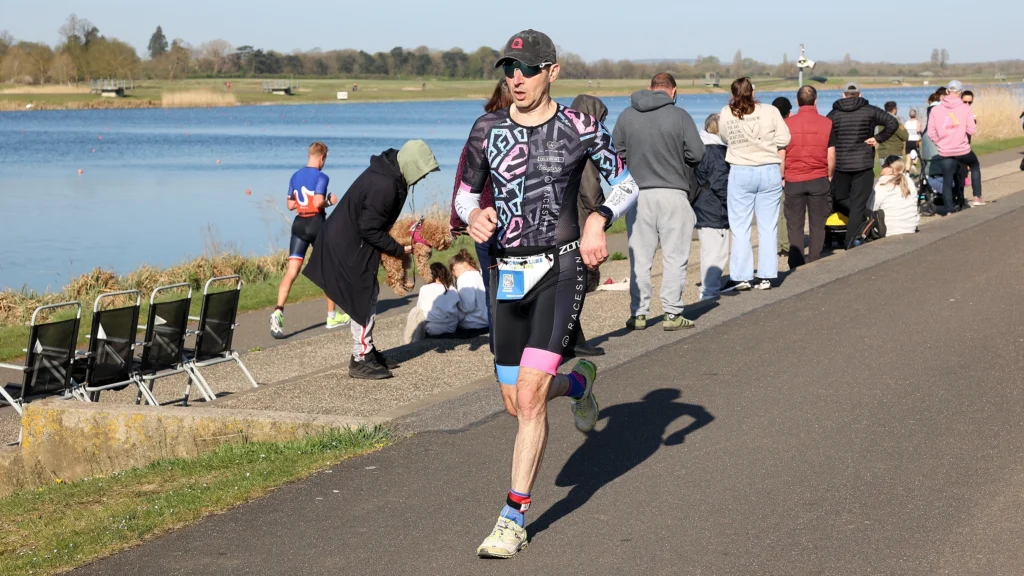
- Race number belt
- Hat or visor for sun protection
- Elastic laces for quick transitions
- Small fuel gel flask or individual gels
Consider weather contingencies. A lightweight rain jacket weighs little but offers great peace of mind when storms threaten.
Transition Setup: Your Mobile Aid Station
Transition organisation separates smooth races from chaotic scrambles. Create distinct zones within your small space.
Use a bright towel as your visual anchor. Everything radiates from this central point. Lay bike shoes beside your bike, run shoes at the towel’s far end. This creates a logical flow matching your race progression.
Practice your transition layout at home. Muscle memory developed through training transfers directly to race-day efficiency. Those seconds saved add up over different triathlon distances.
Plant-Based Fuelling Essentials
Nutrition deserves careful planning, especially for plant-based athletes. Your fueling strategy needs reliable, tested options that digest easily under stress.
Race day nutrition essentials:
- Pre-race breakfast ingredients
- Electrolyte tablets or powder
- Energy gels or whole food alternatives
- Post-race recovery snacks
- Plenty of water bottles
Dates stuffed with nuts provide excellent natural energy. They’re easy to digest and pack efficiently. Bananas offer quick carbs plus natural electrolytes – perfect for longer races.
Calculate your sweat rate beforehand to nail hydration timing. Guessing leads to either dehydration or uncomfortable sloshing.
Weather Contingency Planning
British weather keeps us guessing. Your gear list must flex with conditions while staying manageable.
Pack layers rather than bulk. A lightweight base layer, arm warmers, and a rain cape cover most scenarios without overwhelming your bag. Check forecasts obsessively in race week, but prepare for surprises.
Cold rain creates the toughest conditions. Visibility drops, handling becomes sketchy, and hypothermia risks increase. Extra layers and clear goggles become essential rather than optional.
The Technical Stuff: Electronics and Extras
Modern triathlon involves significant technology. Watches, bike computers, and power meters all need attention in your planning.
Charge everything fully the night before. Pack backup batteries for devices that need them. Nothing’s more frustrating than dead electronics when you’re chasing a personal best.
According to British Triathlon, athletes increasingly rely on data during races. Plan your tech setup as carefully as your physical gear.
Pre-Race Checklist: Final Countdown
Race morning brings final preparation. Your detailed planning pays dividends now, reducing stress when nerves peak.
Arrive with time to spare. Rushing never improves performance but frequently causes mistakes. Use extra time for mental preparation rather than gear panic.
Walk through your transition area. Visualise each changeover. This mental rehearsal primes your brain for smooth execution when fatigue sets in.
Learning from Experience
Every race teaches something new about preparation. Keep notes about what worked and what didn’t. Your gear list should evolve based on real experience rather than theoretical perfection.
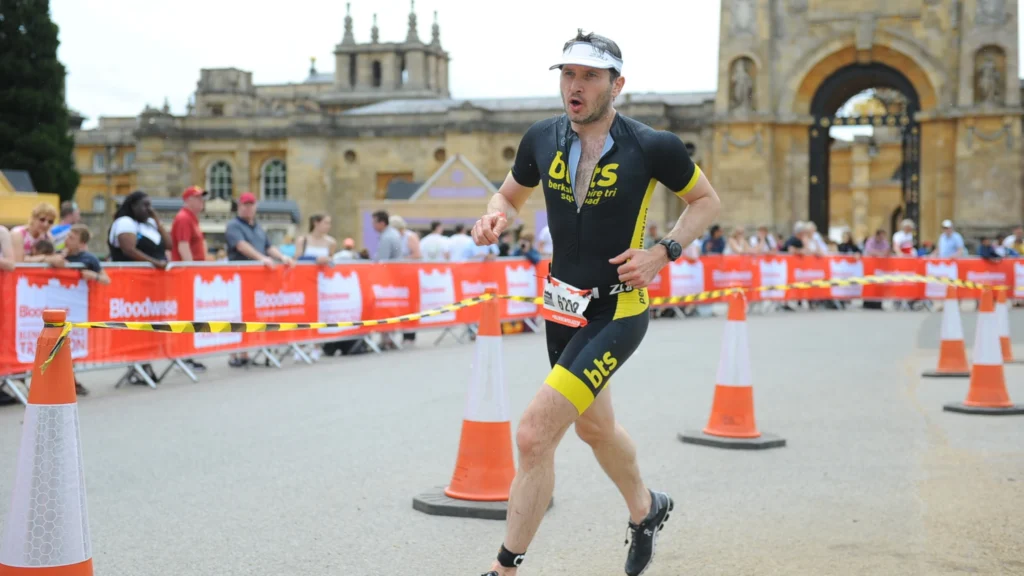
My current system was developed through lots of races with the Berkshire Tri Squad. Watching clubmates’ innovations and sharing solutions prepares everyone better.
Don’t make any major changes on race day. New gear belongs in training, not competition. Stick with a tested, trusted kit when performance matters most.
Your race day gear checklist removes one major variable from an already complex equation. Proper preparation lets you focus on what matters: swimming, biking, and running your best possible race. Start building your system now, refine it through training, and race day will feel like just another great training session with better scenery.

Leave a Comment
You must be logged in to post a comment.