
Vegan Triathlon Race Day Nutrition: What I Actually Use as a Plant-Based Ironman
Standing at the start line of my first 70.3 distance triathlon as a new plant-based athlete, I had one nagging doubt. While I felt great, would my plant-based approach actually fuel me through 1900m of swimming, 90km on the bike, and a 21.1km run? Six years and countless races later, including several IronMan distances, I can confidently say the answer is a resounding yes.
Plant-based race day nutrition isn’t just viable for triathletes. Done right, it can give you sustained energy, better recovery, and that clean feeling that comes from fuelling your body with whole foods. But race day isn’t the time for experimentation.
The Science Behind Plant-Based Performance
Research consistently shows that plant-based diets can support endurance performance when properly planned. The key advantage? Carbohydrates are king in triathlon, and plant foods are naturally carb-rich, supporting effective glycogen storage going into race day.
What really matters on race day is having tested systems that deliver energy when you need it most. Through my experiences across different triathlon distances, I’ve learned that plant-based fuelling requires slightly different timing and combinations than omnivorous approaches.
Pre-Race Breakfast Strategy
Your morning meal sets the foundation for everything that follows. I’ve found success with a tried-and-tested formula: easily digestible carbs, minimal fibre, and only familiar foods.
My go-to breakfast, eaten 3 hours before race start, combines porridge oats made with oat milk, a sliced banana, a drizzle of maple syrup, and a pinch of sea salt. This provides around 80-90g of carbohydrates with enough protein to maintain stable blood sugar.
Avoid high-fibre foods like beans, lentils, or cruciferous vegetables on race morning. Your digestive system needs to focus on absorption, not processing complex fibres that might cause gastric distress mid-race.
Coffee lovers, rejoice. A moderate caffeine hit 30-60 minutes before your start can enhance performance without the jitters. Just ensure you’ve tested your preferred timing during training sessions.
During-Race Fuelling Guidelines
The golden rule remains consistent regardless of dietary approach: 30-60g of carbohydrates per hour for races lasting longer than 90 minutes. Plant-based athletes can absolutely hit these targets with smart food choices.
For shorter sprint distances, water and perhaps a sports drink suffice. But once you’re racing Olympic distance and beyond, your fuelling strategy becomes crucial.
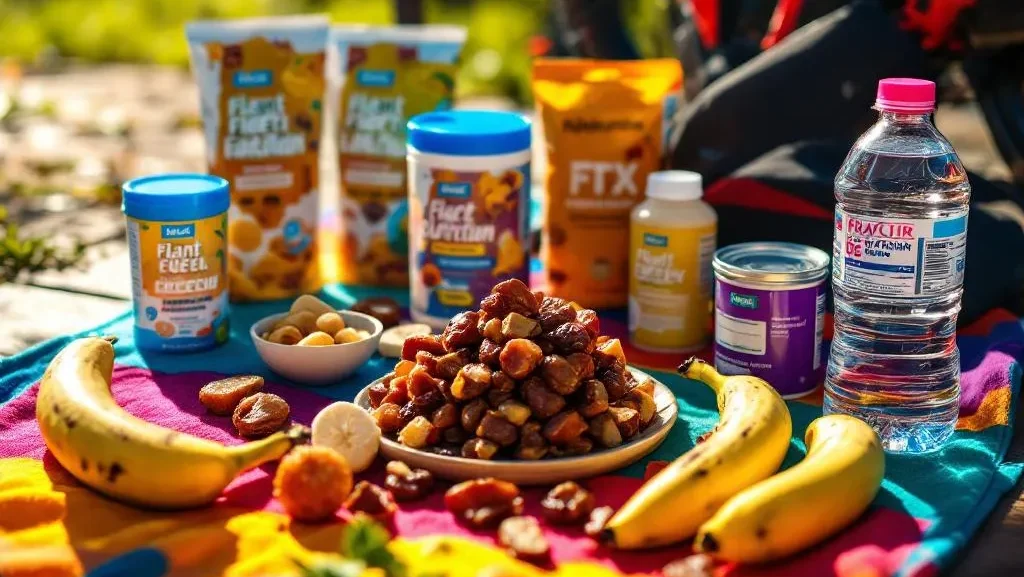
Dates stuffed with a tiny pinch of sea salt work brilliantly during the bike leg. They’re natural, portable, and provide quick-release glucose plus essential electrolytes. Bananas remain the classic choice, though they can be harder to handle at speed.
Some energy gels and sports drinks designed for endurance athletes are vegan-friendly. Always check labels during training, not race week. Brands like Veloforte, Styrkr, and Torq offer reliable plant-based options that mix well with your hydration strategy.
Hydration and Electrolyte Balance
Proper hydration goes hand-in-hand with nutrition. Plant-based athletes often have naturally higher potassium levels from fruit and vegetable consumption, but we still need to replace sodium and other electrolytes lost through sweat.
Start each race well-hydrated but not over-hydrated. Clear, pale yellow urine on race morning indicates good hydration status. During longer races, aim for 150-250ml of fluid every 15-20 minutes, adjusting for conditions and your individual sweat rate.
Electrolyte tablets or powders become essential for races lasting over two hours. The beauty of plant-based racing is that natural options like coconut water (diluted 50:50 with plain water) provide excellent potassium alongside commercial electrolyte products.
Transition Nutrition Timing
Transitions aren’t just about changing kit. There are nutrition opportunities, especially in longer races. Keep this simple and systematic.
T1 (swim-to-bike): Quick sip of a sports drink, grab your nutrition for the bike leg. No solid food needed here unless you’re racing an Ironman distance.
T2 (bike-to-run): This transition matters more nutritionally. A final gel or small piece of date can bridge the gap before your run nutrition kicks in. Your glycogen stores are depleting, and the running leg demands readily available glucose.
Practice your transition nutrition timing during brick sessions. What feels right in training will feel natural on race day.
Plant-Based Recovery Starts at the Finish Line
Your race day nutrition strategy extends beyond the finish line. The 30-60 minute post-race window offers optimal glycogen replenishment and muscle recovery potential.
Chocolate oat milk hits the sweet spot immediately post-race. It provides carbs for glycogen replenishment and plant protein for muscle recovery. Plus, it tastes like a reward after hours of effort.
Within two hours, aim for a proper recovery meal combining carbohydrates and protein. Pasta with lentil bolognese, quinoa Buddha bowls, or even a well-made smoothie with protein powder all work excellently.
Race Day Troubleshooting
Even perfect plans sometimes need adjusting mid-race. Here’s how to handle common plant-based fuelling challenges:
Gastric distress: Switch to liquids only. Sports drinks and diluted fruit juices are gentler on upset stomachs than solid foods. Slow your pace briefly if needed.
Energy dips: Don’t panic. This happens to everyone regardless of diet. Take your planned nutrition, maintain steady effort, and trust that energy levels will stabilise.
Flavour fatigue: Alternate between sweet and savoury options. Salted pretzels can be a welcome change from endless gels and sports drinks during longer races.
For the bigger picture of how plant-based racing has worked for me over five years and five Ironmans, I’ve written the full story here.
Frequently Asked Questions
Less than people assume. The core principle is identical: ISSN guidelines suggest 30 to 60 grams of carbohydrate per hour for endurance events under 2.5 hours, scaling up to 90 grams per hour for longer races using mixed glucose-fructose sources. What changes is the source. I lean on dates, maple syrup-based gels, rice cakes, and bananas instead of dairy-derived products. The macronutrient targets stay the same. The bigger adjustment for plant-based athletes is fibre management in the 24 hours before the gun, not the carbs themselves.
Current sports nutrition research, including ISSN position stands, points to 1.4 to 2.0 grams per kilogram of body weight daily for endurance athletes. I personally aim for the upper end during heavy training. Tofu, tempeh, lentils, soya milk, seitan, and pea or soya protein isolates do the job. Race week I keep protein steady but cut volume slightly to reduce gut load. Individual needs vary considerably by training load and body composition, so working with a sports dietitian is worth it if you’re racing competitively.
I eat about three hours before the swim start. My standard plate is oats made with oat milk, a banana, maple syrup, a spoon of almond butter, and a slice of sourdough with jam. That lands around 100 to 130 grams of carbs with minimal fibre and almost no fat or protein, which keeps digestion easy. I sip black coffee and water alongside. The golden rule is nothing new on race morning. I’ve eaten the same breakfast before every long-course race for years.
Yes, almost certainly. B12 is the one supplement I genuinely consider non-negotiable on a plant-based diet because it isn’t reliably present in plant foods. The NHS recommends supplementation for anyone following a vegan diet. I take a daily supplement and get my levels checked annually through a GP blood test. Don’t guess at dosing or assume fortified plant milks alone cover you, particularly with high training volume. Get tested first, then supplement based on what your results actually show.
Train your gut the same way you train your legs. The single biggest fix for me was practising race-day fuelling weekly during long sessions, not just on race day. Beyond that, I lower fibre roughly 24 to 36 hours before the gun by swapping wholegrains for white rice, white pasta, and peeled potatoes. I avoid beans, lentils, cruciferous vegetables, and large salads the day before. Caffeine timing also matters. Everyone’s gut is different though, so test your own tolerances in training.
Most modern endurance gels are already vegan or near-vegan, but always check. The ones that catch people out contain whey, honey, or milk-derived ingredients. Brands I’ve used without issue include SiS, Veloforte, Maurten, Spring Energy, and Precision Fuel. Whole-food options like Medjool dates, rice cakes with jam, or homemade energy balls also work well for slower sections. I tend to mix gels with real food in long course racing because purely synthetic fuel for ten-plus hours can be hard on the stomach.
Sooner is better, though the old “30-minute window” idea is more flexible than it used to be. ACSM guidance suggests aiming for around 1 to 1.2 grams of carbs per kilogram of body weight in the first hour post-race, alongside 20 to 40 grams of protein. I usually have a soya protein shake with a banana within 15 minutes, then a proper meal within two hours. Beans on toast, a big tofu and rice bowl, or a vegan burger and chips have all done the job for me. Hydrate steadily rather than chugging.
Don’t make the switch in race build. Transition during base season when intensity is lower and you can experiment without consequences. Give yourself at least three months to dial in your shopping, cooking, and fuelling habits before any A-race. The performance side is well-supported by current research for endurance athletes, but the practical side, knowing what to pack, what cafés to trust, what works in your gut, takes time. Track your iron, B12, and vitamin D through your GP. And accept that the first few races will involve some trial and error.
Testing Your Strategy
Race day is never the time for nutritional experiments. Every successful race-fueling plan is built through consistent training.
Test your complete nutrition strategy during longer training sessions. Practice eating while riding your bike at race pace. Try different combinations until you find what your stomach tolerates and what your taste buds can handle for hours.
Keep detailed notes about what works and what doesn’t. Temperature, timing, quantities, and combinations all matter. Your perfect fueling strategy is individual to you.
The most important tip for triathlon success remains consistency. Train your gut like you train your legs, and race day nutrition becomes automatic rather than stressful.
Plant-based race day nutrition isn’t about proving anything to anyone else. It’s about fuelling your body optimally with foods that align with your values while chasing your triathlon goals. Trust the process, stick to tested strategies, and let your performance do the talking.

Leave a Comment
You must be logged in to post a comment.