
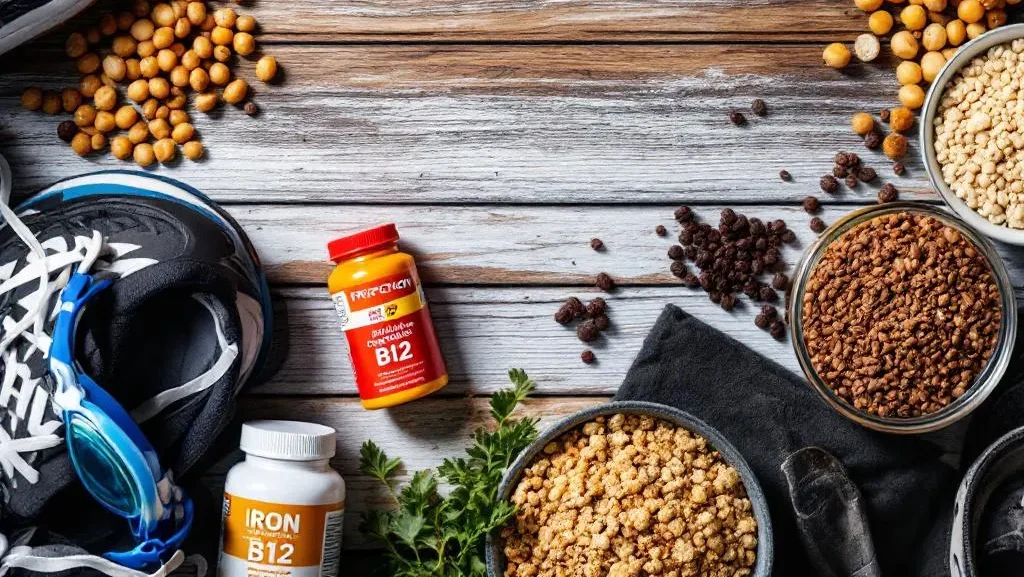
Iron & B12 for Vegan Triathletes: What the Science Says (and What I Take)
When I first moved to plant-based eating, I was cautious to the point of mild obsession. Logging everything in MyFitnessPal and booking blood tests every six months just to keep tabs on my iron and B12. No issues, as it turned out. I’ve never felt better.
But that habit taught me something. Iron and B12 don’t get enough attention on a plant-based diet, and most people aren’t tracking them as closely as they should be. Whilst plant-based eating can absolutely fuel elite endurance performance, these two micronutrients demand special attention. Get them wrong, and no amount of training will compensate for the energy drain.
Why Iron and B12 Matter for Endurance Performance
Iron and B12 aren’t just nice-to-haves in your nutritional toolkit. They’re fundamental to the oxygen transport system that powers every swim stroke, pedal revolution, and running stride.
Iron forms the core of haemoglobin, the protein that carries oxygen from your lungs to working muscles. Without adequate iron, your blood can’t deliver the oxygen your muscles desperately need during that final 10K run off the bike.
B12 plays an equally vital role in red blood cell formation and neurological function. Low B12 doesn’t just sap your energy; it can affect coordination, concentration, and recovery between training sessions.
The challenge for vegan triathletes? Both nutrients are trickier to obtain and absorb from plant sources compared to animal products.
Plant-Based Iron: Beyond Spinach Salads
The iron story gets complicated quickly. Plant foods contain non-haem iron, which your body absorbs less efficiently than the haem iron found in meat. This doesn’t mean plant-based athletes are doomed to deficiency, but it does require strategic eating.
Top Plant-Based Iron Sources
Legumes top my iron-rich foods list. Lentils, chickpeas, and black beans pack a serious iron punch whilst providing the complex carbohydrates your training demands. I regularly fuel pre-training with a hearty lentil curry or post-workout with a chickpea and quinoa salad.
Dark leafy greens deserve their reputation, too. Spinach, kale, and Swiss chard deliver iron alongside folate and other performance-supporting nutrients. The key is eating them regularly, not just when you remember to add salad to your plate.
Don’t overlook fortified foods. Many breakfast cereals and plant milks contain added iron. Check labels carefully, as iron content varies dramatically between brands.
Absorption Maximisation Strategies
Here’s where the magic happens. Vitamin C dramatically enhances iron absorption from plant sources. I always pair iron-rich meals with vitamin C powerhouses: bell peppers, citrus fruits, strawberries, or tomatoes.
My favourite combination? A spinach and chickpea curry with plenty of tomatoes and a squeeze of lemon juice. The vitamin C from the tomatoes and lemon helps unlock the iron from both the spinach and chickpeas.
Timing matters too. Avoid tea and coffee within two hours of iron-rich meals. The tannins in these beverages can significantly reduce iron absorption. As someone who loves his morning brew, this took some adjustment, but the energy gains were worth it.
B12: The Non-Negotiable Supplement
Let’s address the elephant in the room: B12 supplementation isn’t optional for vegan athletes. Unlike iron, which plants can provide in adequate amounts with smart planning, B12 is virtually absent from plant foods.
Some nutritional yeasts and fortified foods contain B12, but relying on these alone is risky. The stakes are too high when you’re pushing your body through intense training blocks.
B12 Supplementation Strategy
Research supports several effective approaches. A daily supplement of 25-100 micrograms works well for most people. Alternatively, a weekly dose of 2000 micrograms can maintain adequate levels.
I prefer the daily approach because it fits easily into my morning routine alongside breakfast. Consistency matters more than the exact dosage within this range.
The sublingual tablets that dissolve under your tongue may offer slightly better absorption than standard tablets, though the evidence isn’t overwhelming. Choose whichever form you’ll actually remember to take consistently.
Monitoring Your Status
Regular monitoring prevents small deficiencies from becoming performance-limiting problems. Annual blood tests should include both iron studies (ferritin, serum iron, transferrin saturation) and B12 levels.
For iron, ferritin levels below 30–40 ng/mL often correlate with reduced endurance performance, even when other markers appear normal. Research in female athletes suggests optimal ferritin levels for endurance performance may be higher than traditional reference ranges, with levels above 35 µg/L recommended as a minimum for athletes (Alaunyte et al., Journal of the International Society of Sports Nutrition, 2015).
Don’t wait for symptoms to appear. By the time you notice fatigue or reduced performance, deficiency may be well established and take months to correct.
Training Considerations
Endurance training increases both iron and B12 requirements. The repetitive impact of running can cause foot-strike haemolysis, literally breaking down red blood cells. Heavy sweating during long training sessions also increases mineral losses.
During peak training blocks, I pay extra attention to iron-rich recovery meals. A high-protein breakfast built around fortified oats, nuts, and seeds provides both iron and the amino acids needed for muscle recovery.
The timing of iron intake around training sessions matters less than overall daily intake, but I avoid iron supplements immediately before training. They can occasionally cause stomach upset, which is the last thing you want during a challenging workout.
Common Mistakes to Avoid
The biggest mistake I see among plant-based triathletes is assuming a varied diet automatically prevents deficiencies. Variety helps, but strategic food combining and, where necessary, supplementation remain crucial.
Over-supplementing iron can be dangerous. Iron supplements should be taken only when blood tests confirm a deficiency or borderline levels. Excess iron can interfere with the absorption of other minerals and, in extreme cases, cause serious health problems.
For B12, the opposite problem exists. Many athletes under-supplement, taking amounts that might prevent severe deficiency but fall short of optimising performance and recovery.
This is part of my broader plant-based journey — if you want the full story of how I switched and what changed across five IronMan finishes, read why I race plant-based.
Frequently Asked Questions
B12, yes. Iron, sometimes. B12 is essentially absent from plant foods, so every vegan needs a reliable source — fortified foods or a supplement. Iron is more nuanced. Plant foods contain non-haem iron, which the body absorbs less efficiently than the haem iron in meat. The NHS notes vegans can meet iron needs but should pay attention to absorption. As a triathlete training 10+ hours a week, I take it seriously because endurance training itself increases iron turnover. Get tested before assuming you’re deficient or stocking up on supplements.
This depends on your current status, age, and whether you eat fortified foods regularly, so please get bloods done and speak to your GP or a registered dietitian. The Vegan Society suggests either daily fortified foods providing at least 3 micrograms, a daily supplement of around 10 micrograms, or a weekly dose of 2000 micrograms of cyanocobalamin. I personally take a weekly high-dose tablet because it’s harder to forget than a daily one. Training load doesn’t dramatically change B12 needs, but consistent intake matters more than chasing big numbers.
Lentils, tofu, tempeh, pumpkin seeds, dark leafy greens, fortified breakfast cereals, and blackstrap molasses all do heavy lifting in my kitchen. Spinach gets all the marketing but its iron is poorly absorbed because of oxalates. Lentils and tofu are more reliable everyday options. I build at least two iron-containing foods into most main meals — a lentil dahl with broccoli, or tofu stir-fry with sesame seeds. Variety matters more than chasing one superfood, and pairing these with vitamin C makes a real difference to absorption.
Honestly, no — not without testing first. Excess iron is genuinely harmful and can mask other issues, so guessing is a bad strategy. The NHS and most sports dietitians recommend testing ferritin, haemoglobin, and transferrin saturation before supplementing. I get bloods done roughly twice a year, usually before a big training block. If your ferritin is low and a doctor recommends supplementation, that’s different from self-prescribing. Iron supplements also have unpleasant gut side effects, which is the last thing you want before a long ride or a race morning.
Pair iron-rich foods with vitamin C in the same meal — squeeze lemon over your dahl, add peppers to your tofu stir-fry, or have an orange with fortified porridge. Avoid drinking tea or coffee with meals, since the tannins and polyphenols significantly reduce non-haem iron absorption. I keep my morning coffee at least an hour away from breakfast for this reason. Soaking and sprouting beans and grains also helps reduce phytates, which inhibit absorption. Cast iron cookware genuinely adds a small amount of iron to acidic foods like tomato sauce.
Menstruating athletes of any dietary pattern are at higher risk of low iron, and the combination of heavy training plus a plant-based diet does warrant closer monitoring. Endurance training increases iron losses through sweat, foot-strike haemolysis, and gut microbleeding. The female athletes I know in Berkshire Tri Squad who’ve had iron issues all caught them through routine blood tests rather than symptoms. If you’re female, training hard, and plant-based, please discuss iron testing with your GP — this is exactly the kind of individual situation where general blog advice isn’t enough.
Persistent fatigue that doesn’t respond to a rest day, breathlessness on climbs that used to feel manageable, unusually heavy legs, brain fog, pale inner eyelids, or a sudden drop in training quality. For B12 specifically, tingling in hands or feet and mood changes can appear. The frustrating part is these symptoms overlap massively with overtraining, poor sleep, life stress, and just having a bad week. That’s why I don’t try to self-diagnose — I get bloods done and let a GP interpret them. Symptoms point you toward testing, not toward the supplement aisle.
Test, don’t guess. For my first few years racing as a vegan I assumed I was fine because I felt fine, then had a flat training patch that turned out to be low ferritin. Two regular blood panels a year would have caught it earlier. I’d also tell younger me to stop overcomplicating meals — a boring rotation of lentils, tofu, oats, fortified plant milk, nuts, seeds, and lots of veg covers most of what an age-grouper needs. The fancy stuff is optional. Consistency and monitoring beat any single superfood.
Putting It All Together
Successful vegan triathlon nutrition requires attention to detail, but it’s absolutely achievable. Focus on iron-rich plant foods combined with vitamin C sources at most meals. Supplement B12 consistently and monitor your levels annually.
The rewards extend beyond just avoiding deficiency. When your iron and B12 status is optimised, you’ll notice better energy levels during training, improved recovery between sessions, and the confidence that your nutrition supports rather than limits your performance goals.
Remember, these are just two pieces of the nutritional puzzle. A well-planned plant-based diet can fuel exceptional endurance performance, but success comes from understanding and addressing the unique challenges that plant-based eating presents.
Your triathlon journey deserves nutrition that matches your training commitment. Get your iron and B12 sorted, and you’ll have the foundation for whatever racing goals lie ahead.
Leave a Comment
You must be logged in to post a comment.