
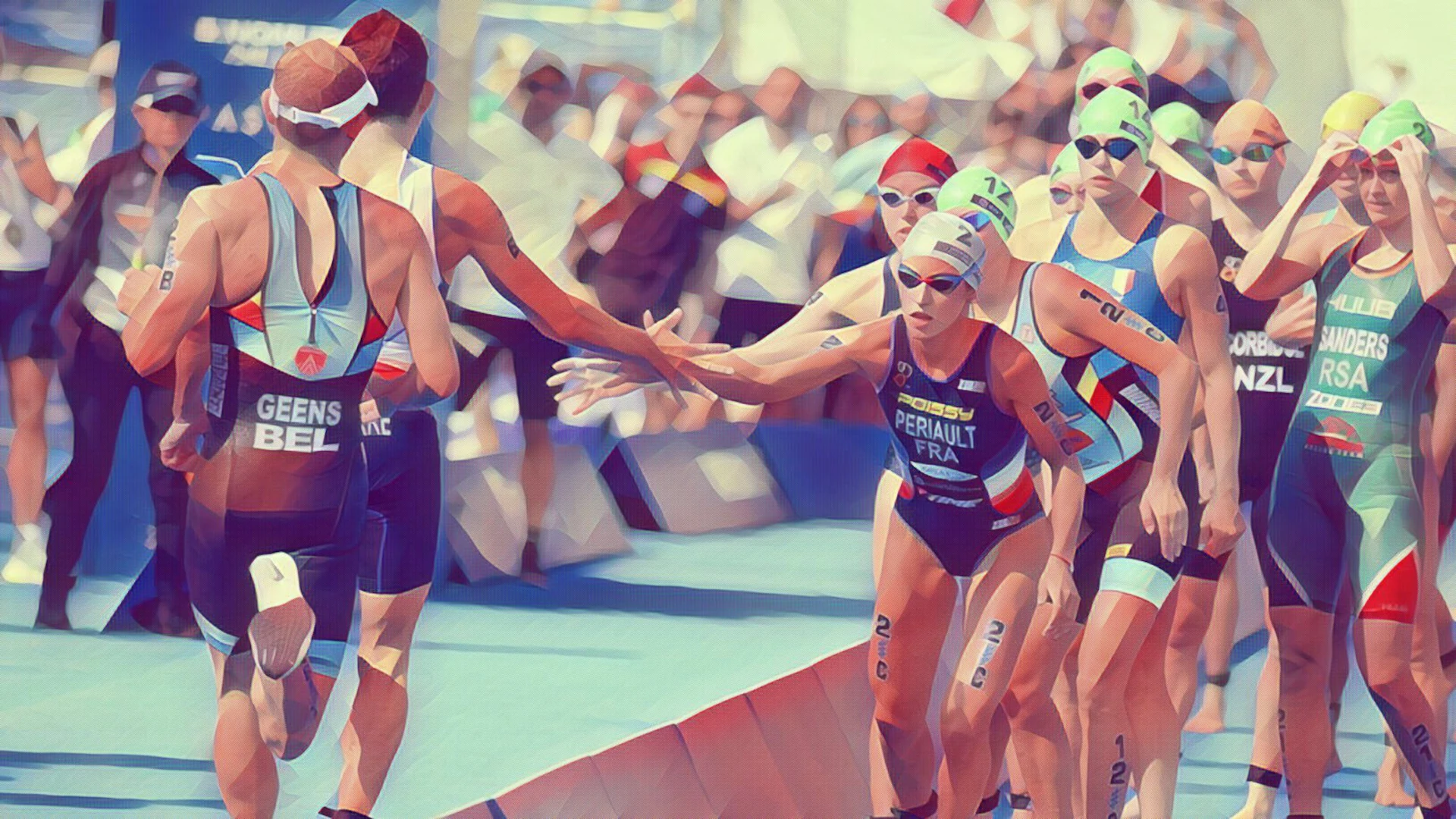
I’ll never forget watching the Tokyo 2020 Olympic mixed relay triathlon from my sofa at 11:30 pm, coffee in hand, absolutely gripped by the drama unfolding on screen. Four athletes per team, alternating male-female-male-female, racing super-sprint distances with lightning-fast transitions. It was triathlon condensed into pure adrenaline, and I knew immediately that this format was something special.
Having raced solo for years — from my first stumbling attempts in Hertfordshire to completing my first Ironman in Nice — I thought I understood the excitement of triathlon. But mixed relay triathlon brings an entirely different energy that’s impossible to replicate in individual racing.
What Makes Mixed Relay Triathlon So Special
The Olympic mixed relay format consists of four legs: male, female, male, female. Each athlete completes a super-sprint distance (typically 300m swim, 6.8km bike, 1.6km run) before tagging their teammate. The entire race unfolds in about 70 minutes of non-stop action.
What sets this apart from traditional triathlon is the constant lead changes and tactical battles. Unlike solo racing, where gaps can stretch to minutes, mixed relay keeps teams bunched together, creating those heart-stopping moments where races are won and lost in transition zones.
The World Triathlon governing body has positioned mixed relay as triathlon’s most spectator-friendly format, and having watched it live at events, I completely understand why.
The Team Dynamic Changes Everything
Competing for Berkshire Tri Squad has taught me the value of team support, but mixed relay takes this to another level entirely. Your performance directly impacts three other people’s races, creating a pressure that’s both terrifying and exhilarating.
I’ve seen strong swimmers deliberately ease off to stay with the pack, knowing that creating a small lead isn’t worth the energy cost when the bike leg will likely neutralise any advantage. It’s chess at 200 beats per minute.
The transitions become crucial battlegrounds. While individual race preparation might focus on your personal race day checklist, mixed relay demands split-second precision in a completely different environment.
Why the Format Works So Well
The genius of mixed relay lies in its accessibility and excitement. Super-sprint distances mean that club-level athletes can compete without the intimidating training volumes required for longer distances. When I started triathlon in my thirties, juggling work and family commitments, a format like this would have been perfect.
The shorter distances also mean higher intensities throughout. There’s no pacing strategy or energy conservation—it’s full gas from the horn. This creates incredibly tight racing where technical skills matter as much as raw fitness.
For spectators, the action never stops. Unlike watching someone disappear into the countryside for hours during an Ironman bike leg, mixed relay keeps all the drama contained in a compact area with constant visibility.
Training for Mixed Relay
Preparing for mixed relay requires a different approach than traditional triathlon training. The emphasis shifts heavily towards speed and power rather than endurance. Your swim training needs to focus on starts and short, intense efforts rather than steady-state aerobic work.
Bike sessions become more about neuromuscular power and handling skills. The ability to accelerate out of corners and respond to surges becomes more important than holding threshold power for hours.
The run leg, coming after only a 6.8km bike, demands the ability to run fast off fresh legs rather than the shuffle-marathon skills needed for longer distances.
The Olympic Stage and Beyond
Watching the Olympic mixed relay has become appointment television for me. The Tokyo event showcased everything brilliant about this format despite France finishing only third, 23 seconds from Great Britain’s gold.
The format has since expanded beyond the Olympics, with World Triathlon Championships and continental events now featuring mixed relay prominently. It’s becoming a pathway for nations to develop depth in their squads while providing opportunities for athletes who might not make individual Olympic teams.
Getting Involved in Mixed Relay
The beauty of mixed relay is that you don’t need to be an elite athlete to experience its thrills — though I’ll be honest, I’m not sure how widespread mixed relay events are here in the UK just yet. If you’ve ever fancied something different from the usual solo grind, it looks like a completely different beast — the teamwork, the strategy, the adrenaline of racing as a unit.
If you’ve taken part in one or know of any events worth checking out, I’d love to hear about them in the comments.
The format has reinvented what triathlon can be—fast, tactical, and spectator-friendly while retaining all the technical skills that make our sport so challenging. Whether you’re watching from the sidelines or racing yourself, the mixed relay triathlon represents everything exciting about where our sport is heading.


Leave a Comment
You must be logged in to post a comment.