
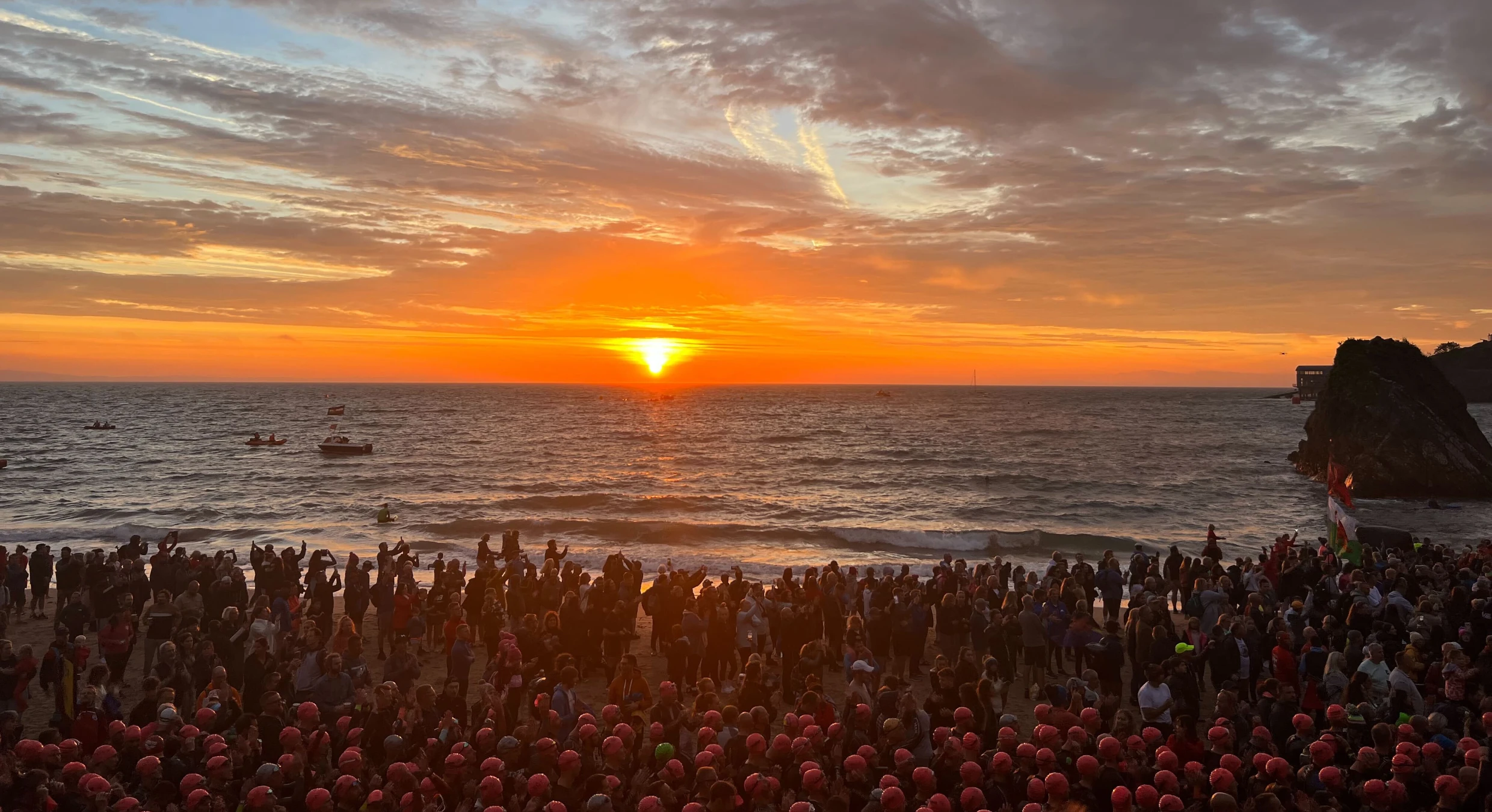
Around 80 kilometres into the bike leg at Ironman Nice, I had plenty of time to think; I caught myself wondering why I chose a full Ironman instead of a 70.3, which would have been enough. But as soon as I saw the finish line, I was already thinking about signing up for the next one. That’s what long-course triathlon is like. Still, deciding between an Ironman and a 70.3 is important before you pay the entry fee, since each distance asks something different from your body, your schedule, and your family.
When deciding between an Ironman and a 70.3, think about four main things: how much time you have to train, your other life commitments, your budget, and your current fitness level. A 70.3 works well for people who can train 8-12 hours a week. A full Ironman usually needs 12-18 hours at peak, along with a longer build-up of six to nine months.
What Are the Actual Distances?
People often use the names without thinking, so here are the exact distances. A 70.3, or half Ironman, includes a 1.9km swim, a 90km bike ride, and a 21.1km run. A full Ironman is double that: a 3.8km swim, 180km on the bike, and a full 42.2km marathon. If you’re new to triathlon, it helps to learn about all the race distances before you decide.
Moving from a half to a full Ironman is not just about doubling the effort. The run feels especially hard after biking 180km. Coaches often say that a full Ironman is about three times as tough as a 70.3 when it comes to recovery, even if the finish times don’t show it.
Training Time: The Honest Numbers
This is where many people don’t realise how much time it takes. Training for a 70.3 usually takes 16- 20 weeks, with the busiest weeks needing about 10- 12 hours of workouts. That’s possible to fit in with a full-time job and family, especially if you make use of early mornings and lunchtime swims.
Training for a full Ironman takes even more planning. Most people spend six to nine months preparing, with the hardest weeks needing 14-18 hours of training. That’s almost like having a part-time job. Coaches often say the real question isn’t if you can do the workouts, but if your life can handle the tiredness. Fatigue can affect your work, family, and relationships in ways you might not expect.
If you haven’t done a long-distance race before, starting with a 70.3 is a better option. It will help you learn about your race nutrition, your pacing, and the transitions at a distance where you can recover from mistakes. It will also boost your confidence. Treat it as a test run before moving up to a full Ironman.
Nutrition Demands: Fuelling the Long Haul
Nutrition is what separates finishers from those who don’t finish in both races, but it matters even more in a full Ironman. In a 70.3, you might get by with some mistakes in fuelling. In a full Ironman, poor nutrition can end your race or leave you struggling through the last 10km.
As someone who eats a plant-based diet, I think about nutrition a lot. For a 70.3, you need about 60- 90 g of carbs per hour on the bike, usually from gels, bars, and sports drinks. For a full Ironman, you have to keep fuelling for 8-12 hours, and your stomach’s ability to handle food becomes just as important as your fitness.
Managing electrolytes is important for both distances. It really helps to know your sweat rate before race day, especially if you’re racing in hot weather. I’ve used electrolyte tablets for years during long races, especially late in the bike ride when you lose more sodium.
You can definitely fuel an Ironman on a plant-based diet. Foods like rice balls, dates, nut butter, oat bars, and bananas are easy on the stomach and work well. The most important thing is to practice your race nutrition during training, not try new things on race day.
The Cost of Long-Course Racing
It isn’t cheap. And it’s important to be aware of the costs. Entry fees for 70.3 races in the UK and Europe are usually between £150 (the non-branded IronMan) and £580 (IronMan 70.3 Weymouth). A full Ironman can cost £400 to over £800, depending on where and when you sign up. When you add travel, accommodation, nutrition, and gear, a full Ironman weekend can easily cost £1,000 to £3,000 for a UK athlete racing abroad.
This doesn’t mean you shouldn’t do it, but it does mean you should plan your budget. There are also great independent full-distance races, like the Outlaw, that cost much less than the big brands but still offer a fantastic experience.
A 70.3 is a better choice if you want to see if long-course racing is right for you before spending a lot on a full Ironman season.
Lifestyle Fit: The Question Nobody Asks Enough
Training for a full Ironman impacts the people in your life. Your partner has to deal with your long Sunday rides that take away from family time. Your kids might notice you’re more tired during the hardest training weeks. Your coworkers may wonder why you’re eating a second lunch before noon. It’s not impossible to manage, but it’s important to talk about these things before you commit.
A 70.3 is less demanding on your family and friends. The long bike rides are shorter, and you don’t need as much recovery. You can train hard for a 70.3 and still feel good at work on Monday morning.
Still, don’t take the 70.3 lightly. It’s a real athletic challenge and needs good preparation. The Ironman 70.3 series has races all over the world and draws very competitive age-group athletes. Finishing a 70.3 is something you can be proud of.
Which Distance Should You Choose?
Here’s a simple way to decide. Pick a 70.3 if it’s your first long-course season, if you have less than 10 hours a week to train, if you’re on a budget, or if you want a tough race that doesn’t take over your whole year.
Go for a full Ironman if you’ve already finished one or two 70.3 races and understand your nutrition and pacing. You should also be able to train 12 or more hours a week at peak, have support at home, and truly want to do the distance for yourself—not just because it sounds impressive.
There’s another option people often miss: do a 70.3 in the spring, think about what you learned, and use that experience to prepare for a full Ironman the next year. This is what I suggest to most athletes in doubt.
A Final Word on Both Distances
Both races are huge achievements. Finishing a full Ironman is one of the most emotional moments in sport. I’ve done it six times. But having a great 70.3, running well off the bike and nailing your nutrition, is just as rewarding and doesn’t need a longer race to prove its value.
Choose the distance that works for your life at this moment. Train with respect for the challenge. Most importantly, enjoy the whole journey, not just the finish line.
Leave a Comment
You must be logged in to post a comment.