
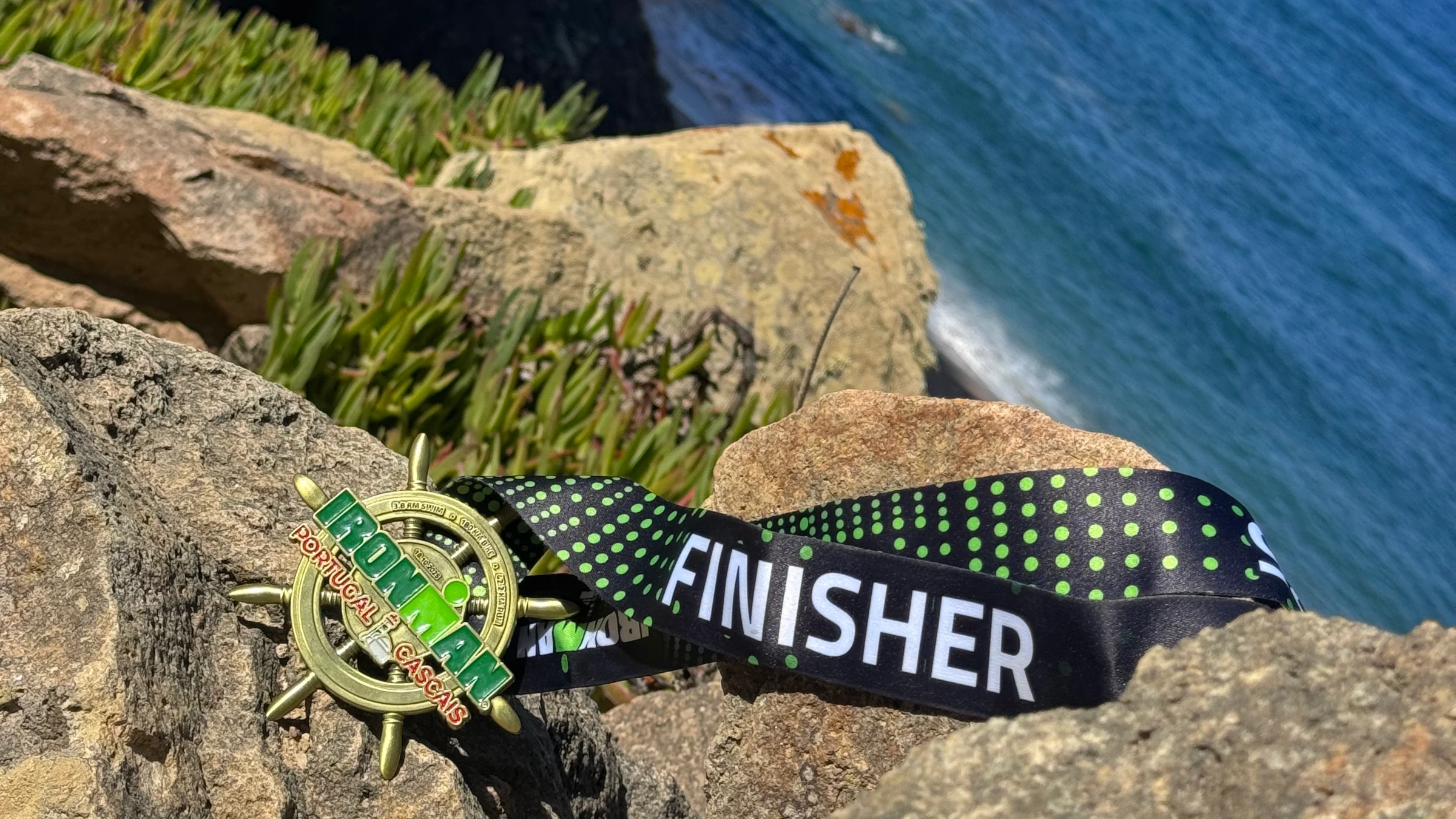
Standing on the beach at Cascais at 8 am, clutching my race day breakfast and trying not to panic about the 3,800 calories I’d meticulously planned to consume over the next 11+ hours. Sound familiar? If you’ve ever stared down an Ironman distance race, you’ll know that getting your nutrition right can make or break your day.
After years of training and testing, I thought I’d finally nailed down my Ironman nutrition plan for Cascais. But let me be honest – it wasn’t pretty getting there. I’d had more GI disasters in training than I care to admit, and I’d learned the hard way that what works for your mate might leave you doubled over at mile 80 of the bike.
Here’s exactly what I ate, when I ate it, and the lessons I learned along the way. Because let’s face it, we’re all just winging it until we find what works, aren’t we?
Pre-Race: Setting the Foundation
My day started at 5:00 am with what I call my “nuclear porridge” – a massive bowl of oats loaded with banana and plant-based milk. This clocked in at around 800 calories, giving me a solid carbohydrate base without feeling too heavy.
The key here was timing. I’d practised this breakfast countless times during long training sessions, always eating around 3 hours before starting. Any closer and I’d still be digesting; any further and I’d be hungry again before the gun went off.
Along with breakfast, I had a strong coffee (because priorities) and sipped on 500ml of electrolyte drink. Nothing fancy – just making sure I was starting the day properly hydrated. My sweat rate calculations from training told me I’d need to be aggressive with fluid replacement from the get-go.
The Swim: Keep It Simple
For the 3.8km swim, nutrition is pretty straightforward – you can’t exactly unwrap an energy bar mid-stroke. My only fuel during the swim portion was on the beach before the start. One gel, bottom’s up.
The real challenge was making sure I didn’t come out of the water already behind on calories. At roughly 85 minutes – I thought – in the Atlantic, I knew I’d be burning through my breakfast reserves and needed to hit the bike ready to fuel immediately.
The Bike: Where Ironman Races Are Won and Lost
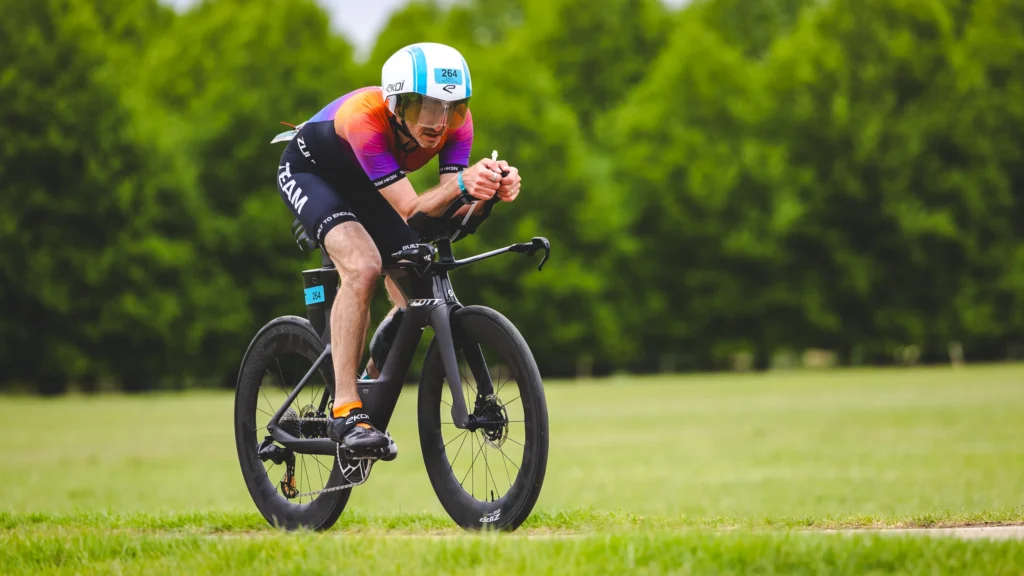
Here’s where my plan got detailed. Really detailed. I had every hour mapped out because, as any experienced triathlete will tell you, the bike leg is where you either set yourself up for a strong marathon or dig yourself into a nutritional hole you’ll never climb out of.
My hourly bike nutrition breakdown:
- 300-350 calories per hour
- 60-70g carbohydrates per hour
- 600-750ml fluid per hour
- 200-300mg sodium per hour
I alternated between energy gels (plant-based, obviously), sodium capsules, and sports drinks. Every 10 minutes, I had a sip of electrolytes, and every 30 minutes, something went in my mouth. No exceptions, even when I wasn’t hungry.
Apart, when it all started falling apart, I decided to go for bananas at the aid stations.
For fluids, I carried two bottles and my inner-tube bottle, all filled with a concentrated sports drink. Even in October, the Portuguese heat was no joke, and I learned quickly that I needed more fluid than my UK training had prepared me for.
Transition Nutrition: The Forgotten Fuel Stop
T2 isn’t just about changing shoes and grabbing your run cap. It’s your last chance to top up properly before 42.2km of suffering. I’d stashed a gel in my transition bag – about 100 calories of easily digestible carbs to bridge the gap between bike nutrition and my run fueling strategy.
The Run: Survival Mode Nutrition
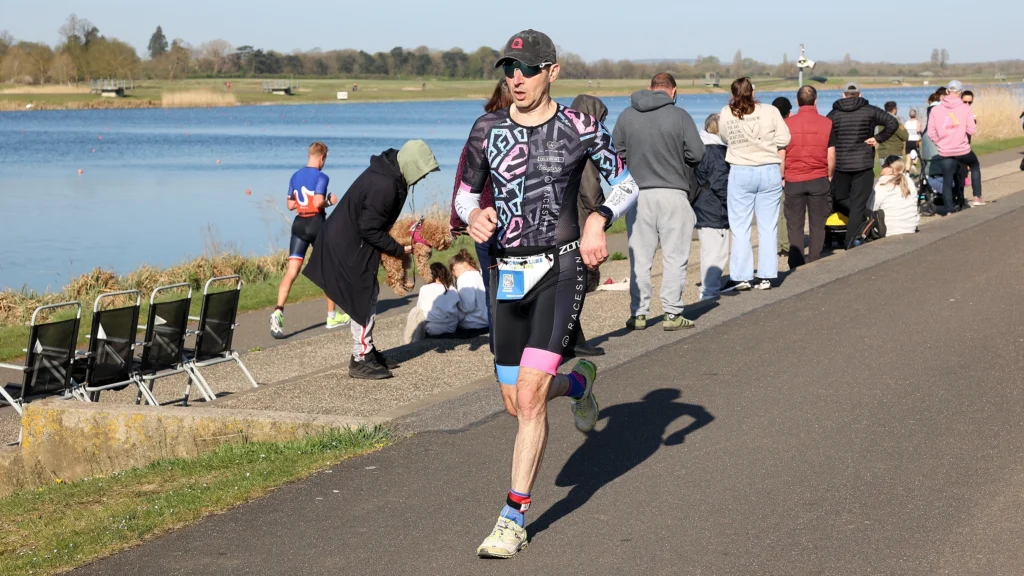
Let’s be honest – by the time you’re running off the bike in an Ironman, your GI system has been through the wars. My run nutrition needed to be bulletproof, simple, and gentle on my stomach.
My run plan was conservative but consistent:
- One gel every 45 minutes (about 25g carbs)
- Sports drink at every aid station
- Water over my head at every other station (cooling, not calories)
- A few pieces of orange or banana when my stomach allowed
This worked out to roughly 200-250 calories per hour – less than the bike, but enough to keep my blood sugar stable and my legs moving forward.
The key was being flexible. When my stomach started rejecting sweet stuff around mile 20 (because it always does), I switched to taking just a sports drink, some Coca-Cola, and the occasional piece of fruit. Better to get some calories in than force down nutrition that wasn’t staying down.
The Numbers: My Total Race Day Intake
When I crunched the numbers post-race, here’s what I’d actually consumed:
- Total calories: Approximately 3,200
- Bike calories: ~2,100 (6.5 hours x ~320 cals/hour)
- Run calories: ~900 (4 hours x ~225 cals/hour)
- Total fluids: Nearly 6 litres
Research suggests that endurance athletes should consume 200-300 calories per hour during ultra-endurance events, so I was sitting pretty much in the sweet spot, especially considering my plant-based approach required some creative planning.
The Plant-Based Advantage
Being plant-based in endurance sports isn’t the limitation some people think it is. My stomach handled the high-carb load brilliantly, and I never felt the heavy, sluggish feeling that some athletes report from consuming dairy or meat-based products during long efforts.
The key was variety – bananas, oat-based breakfast, plant-based gels, and good old-fashioned sports drinks. Simple, effective, and kind to my digestive system when it mattered most.
Your Ironman Nutrition Journey
Here’s the thing about Ironman nutrition – my plan worked-ish for me, on that day, in those conditions. Your perfect race day fuel might look completely different, and that’s exactly as it should be.
The real secret isn’t copying someone else’s plan; it’s testing relentlessly in training, being flexible on race day, and always having a Plan B when your stomach inevitably decides to stage a rebellion somewhere around mile 90.
Start with the basics: aim for 300 calories per hour on the bike, 200-250 on the run, don’t neglect electrolytes, and never try anything new on race day. Beyond that, it’s all about finding what works for your unique engine.
So grab your race day checklist, start planning your nutrition strategy, and remember – we’re all just making educated guesses and hoping our stomachs cooperate. The difference between a good day and a great day often comes down to those small decisions made at 2 am when you’re packing your transition bags.
Good luck out there. Your Ironman nutrition plan is waiting to be discovered – one training session, one mistake, and one breakthrough at a time.

Leave a Comment
You must be logged in to post a comment.