
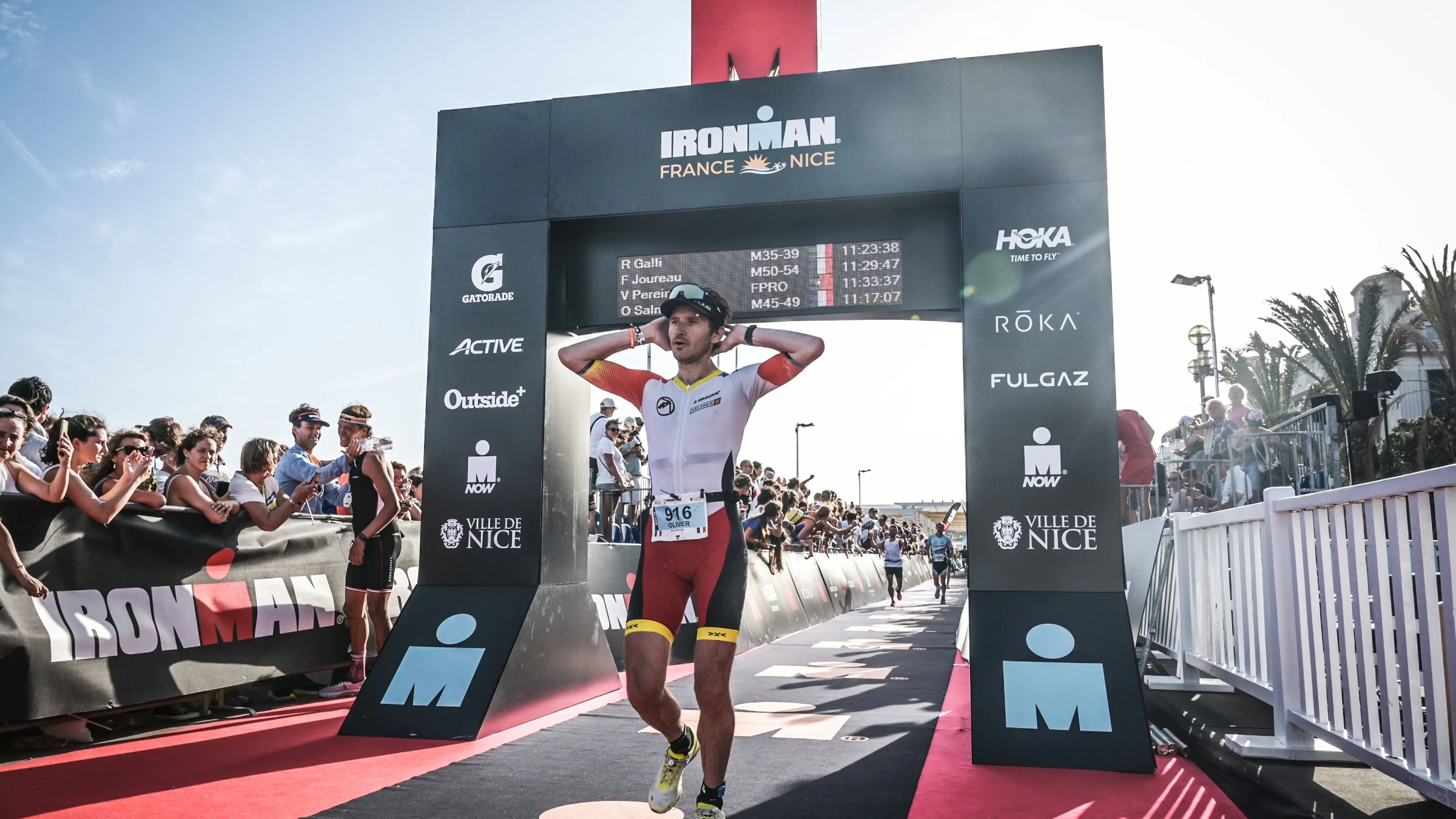
There I was at T2 in Nice, my legs feeling like two wobbly pieces of jelly after 180km on the bike. The marathon ahead seemed impossible. If you’ve ever dismounted after a long bike leg and wondered how on earth you’re supposed to run 42.2km on what feels like someone else’s legs, you’re not alone.
The Ironman marathon is a completely different beast from a standalone marathon. Your glycogen stores are depleted, your legs are screaming, and your mind has already been racing for hours. But here’s the thing – with the right Ironman marathon strategy and proper run pacing, you can absolutely nail that run leg.
The Critical First Steps: Nailing T2
Your marathon performance starts before you even begin running. T2 isn’t just about changing shoes; it’s about setting yourself up for success over the next few hours.
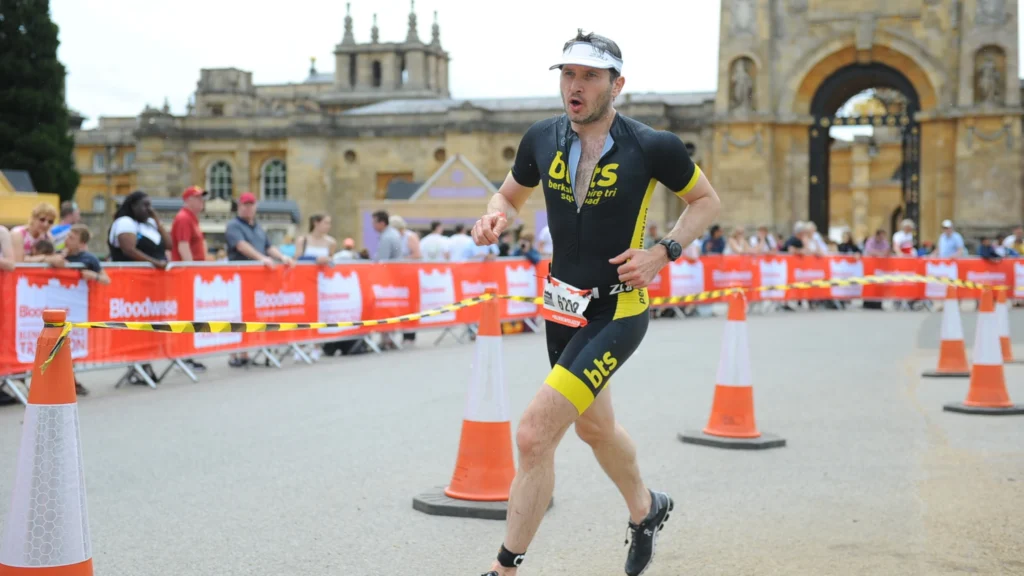
I did have to learn this the hard way during my first attempt at Nice. Because I had the support of a coach and experienced clubmates at Berkshire Tri Squad. But some will rush through transition, forget to grab their nutrition, and start running far too fast because they feel ‘fresh’ coming off the bike. By kilometre 10, they might pay the price.
Take your time in T2. Sit down if you need to – those extra 30 seconds changing shoes properly could save you hours of discomfort later. Have everything laid out systematically on your race checklist so you don’t forget crucial items like nutrition or your watch.
Finding Your Ironman Run Pace
This is where most age-groupers (myself included) get it spectacularly wrong. Your ironman marathon pace should feel uncomfortably slow for the first 10-15km. I’m talking about 45-60 seconds per kilometre slower than your standalone marathon pace.
Why? Because your body is already compromised. Your heart rate is elevated from the bike, your core temperature is higher, and your fuel stores are running low. Starting too fast is like spending money you don’t have – the debt will catch up with you later.
During training, practice your run pacing and Ironman strategy with brick sessions. After a solid bike workout, immediately transition to a run at your target Ironman pace. It should feel almost embarrassingly easy at first. Trust the process.
The 10km Rule
Follow what I call the ’10km rule’ – the first 10km should feel like you could chat to someone running alongside you. If you’re breathing hard or your heart rate is spiking, you’re going too fast.
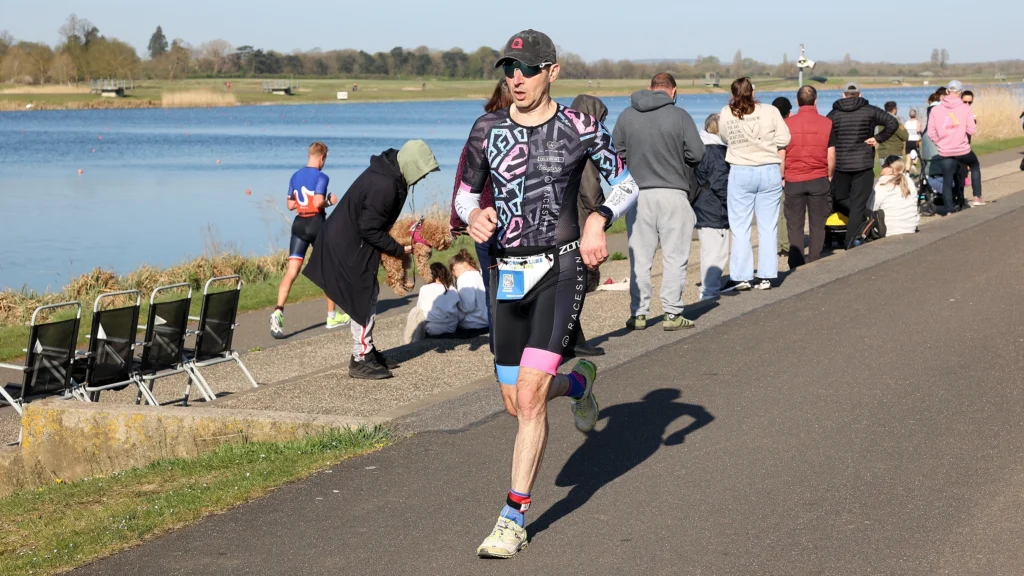
At Cascais, I couldn’t practice it due to my accident and lack of training. But those first kilometres felt ridiculously slow (because they were). By the halfway point, I was still feeling strong while, to some extent, other runners around me were starting to struggle.
Nutrition Strategy on the Run
Your marathon nutrition strategy is just as crucial as your pacing. By the time you start running, you’ve likely been racing for 5-7 hours, and your body’s carbohydrate stores are running dangerously low.
I aim for 200-300 calories per hour during the marathon, split between sports drinks, gels, and whatever solid food I can stomach. Practice this during your long training runs – your gut needs to be trained just like your legs.
Don’t forget about electrolyte balance either. After hours of sweating, your sodium levels will be compromised. I learned this during a particularly hot training session, when I cramped spectacularly.
Mental Strategies for the Marathon
Let’s be honest – the Ironman marathon is as much a mental challenge as a physical one. When your body is screaming at you to stop, your mind needs to be your strongest ally.
I break the marathon into smaller, manageable chunks. Rather than thinking about 42km, I focus on getting to the next aid station or the next turnaround point. It’s amazing how much more manageable the distance becomes when you’re only ever thinking about the next 2-3km.
Having a mantra helps too. Mine is embarrassingly simple: “strong, steady, smiling.” It reminds me to maintain good form, keep my effort consistent, and remember that I’m living my dream of completing an Ironman.
Dealing with the Inevitable Low Points
Every Ironman marathon has dark moments. I remember hitting the wall at Cascais. Or rather, the hill. My pace dropped, my form fell apart, and I genuinely questioned why I’d signed up for this madness.
This is normal. Research shows that most Ironman athletes experience significant fatigue between kilometres 25 and 35 of the marathon. The key is to have strategies for working through these moments rather than fighting them.
Walk the aid stations if you need to. There’s no shame in it, and those 30-60 seconds of walking can help reset your form and give you a mental break. Some of the strongest finishers I know use a strategic run-walk approach from early in the marathon.
The Final Push
If you’ve paced correctly, the final 10km should be where you can start to push slightly. Notice I said slightly – this isn’t the time for heroics, but you might find you have a little extra gear.
The crowd energy in those final kilometres is incredible. Use it. Smile, high-five spectators, soak it all in. You’re about to become an ironman, and that’s something worth celebrating.
Training Your Ironman Marathon
Your training needs to specifically prepare you for running off the bike. This means incorporating regular brick sessions into your schedule. At least once a week during peak training, I’ll do a solid bike session followed immediately by a run.
These don’t need to be massive sessions – even a 60-minute bike followed by a 30-minute run will help your body adapt to the demands of transitioning between disciplines.
Long runs on tired legs are also crucial. Schedule some of your long runs for the day after a big bike session or swim workout. Your legs need to learn how to run when they’re already fatigued.
Your Ironman Marathon Awaits
The Ironman marathon is tough – there’s no sugar-coating that. But with the right strategy, proper pacing, and a bit of mental fortitude, it’s absolutely achievable. Remember, thousands of age-group athletes complete Ironman marathons every year, and most of us are pretty ordinary people with jobs and families.
Start conservatively, fuel consistently, break it into chunks, and prepare for some dark moments. Most importantly, remember why you started this journey in the first place. When you cross that finish line and hear those magical words – “You are an Ironman” – every step of that marathon will have been worth it.
The marathon off the bike isn’t just the final leg of your Ironman – it’s your victory lap. Make it count.


Leave a Comment
You must be logged in to post a comment.