
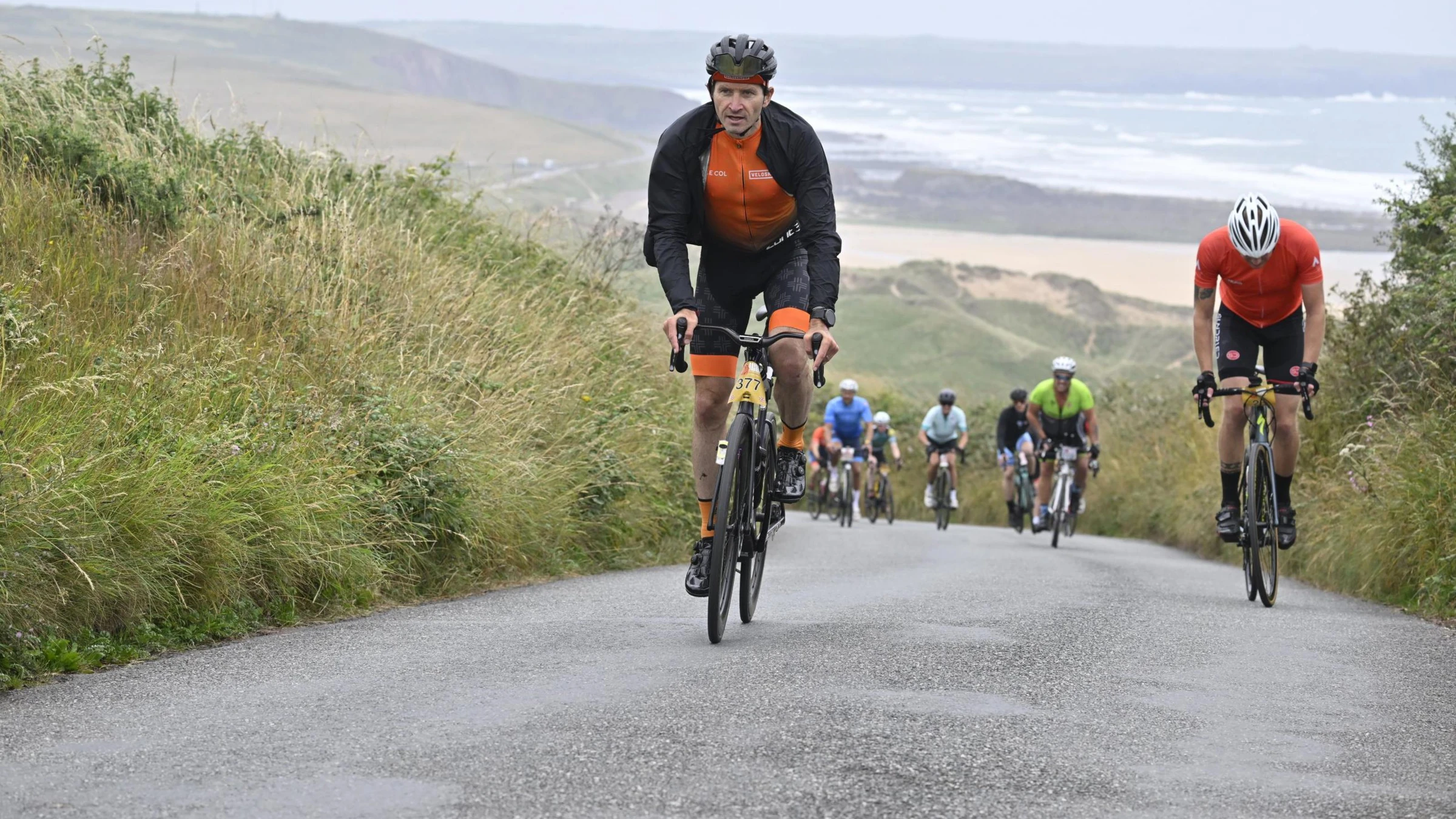
I’ll never forget my first proper hill climb on a triathlon bike during one of the Brownlees ‘ triathlons (Harewood 2014). Watching riders sail past me on the Hill while I ground away in my aerobars, legs screaming and cadence dropping to what felt like single digits. That day taught me that hill climbing on a triathlon bike isn’t just about power – it’s a completely different skill set.
Most of us started cycling on road bikes, where climbing feels natural. You can stand, shift hand positions, and attack gradients with relative ease. But strap yourself onto tri bars and suddenly those same hills become monsters that humble even the strongest riders.
The reality is that cycling hills on a triathlon bike requires specific techniques and targeted training. After years of getting it wrong (and a few spectacular failures), I’ve learned that the secret isn’t just grinding harder – it’s about efficiency, preparation, and knowing when to bend the rules.
Why Hill Climbing on a Triathlon Bike is Different
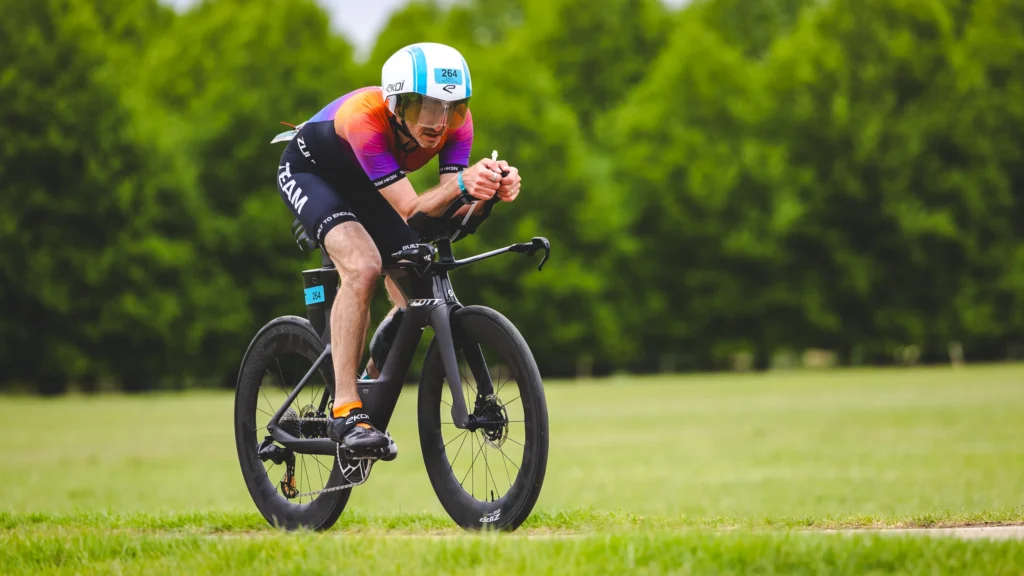
The aerodynamic position that makes you slice through headwinds becomes a liability on climbs. Your hip angle is more closed, restricting power output from your glutes and limiting your breathing. The weight distribution is different, too, affecting traction and bike handling on steep gradients.
During my early days in triathlon, I’d watch experienced riders switch seamlessly between positions during training rides. They understood something I didn’t – that successful hill climbing on a triathlon bike is about adaptation, not just brute force.
Research shows that the aerodynamic position can reduce power output by 5-10% compared to a standard road bike position. That might not sound like much until you’re halfway up a 15% gradient with 80km still to ride. Understanding your FTP becomes crucial here, as it helps you pace climbs appropriately without blowing up early.
Essential Hill Climbing Techniques
Position Management
The golden rule I’ve learned is that aerodynamics matter less than sustainability on climbs above 6-8%. Don’t be afraid to come out of the aerobars and onto the bull horns or brake hood extensions. Yes, you’ll lose some aerodynamic advantage, but you’ll gain power and comfort.
I typically stay in the aerobars for gentle rolling hills (under 4% gradient) but transition to a more upright position for anything steeper. The key is making this transition smooth and practised – you don’t want to be fumbling with hand positions when your heart rate is already spiking.
Cadence and Gearing
Forget what you know about optimal cadence on flat terrain. Hill climbing on a triathlon bike often requires dropping your cadence to 70-80rpm to maintain power output. The restricted hip angle means you can’t spin as efficiently as on a road bike.
Gearing becomes critical. Most modern triathlon bikes come with compact chainsets (50/34), but don’t be shy about going even smaller if your race demands it. An 11-32 or even 11-36 cassette can be the difference between a controlled climb and a complete disaster.
Breathing and Pacing
The aerodynamic position restricts your diaphragm, making efficient breathing more challenging on climbs. Focus on belly breathing rather than chest breathing, and don’t be afraid to sit up slightly to open your airways on longer climbs.
Pacing is where many triathletes go wrong. Lactate testing has shown me that I need to climb at about 85-90% of my threshold power to avoid accumulating too much lactate while maintaining a reasonable speed. Going harder might get you up faster, but you’ll pay for it later.
Specific Hill Climbing Workouts
Foundation Hill Repeats
Start with these basic repeats to build climbing strength in the aerodynamic position:
- Find a 4-6% gradient hill, 3-4 minutes long
- Warm up thoroughly (20-30 minutes)
- Complete 4-6 repeats at your FTP, staying in aerobars throughout
- Recover with easy spinning between repeats (2-3 minutes)
- Focus on smooth pedalling and controlled breathing
The key is practising the specific position and cadence you’ll use in races.
Mixed Position Intervals
This workout teaches you when and how to change positions during climbs:
- 6-8 minute hill repeats at varying gradients
- Start each repeat in aerobars for the first 2 minutes
- Transition to bull horns for the middle section
- Finish in whatever position feels most sustainable
- Practice smooth transitions without power drops
This workout mimics real racing conditions where gradient changes force position adjustments. It’s particularly valuable preparation for races with varied terrain.
Long Climbing Endurance
For longer races, you need to practice sustained climbing efforts:
- Find a long climb (15-30 minutes) or create loops on shorter hills
- Climb at 80-85% FTP, focusing on efficiency over speed
- Practice your race nutrition and hydration strategy
- Work on mental strategies for long, grinding climbs
During these sessions, you can practice everything from gear selection to nutrition. Proper hydration becomes even more critical during climbing efforts as your core temperature rises and sweat rates increase.
Race Day Climbing Strategy
All the training in the world won’t help if your race-day strategy is wrong. I’ve learned to start climbs conservatively, settling into a sustainable rhythm before assessing whether I can push harder.
Pre-climb preparation is crucial. Shift to your climbing gear before the gradient hits, take on nutrition if needed, and mentally prepare for the effort ahead. I usually take a drink and a gel about 5-10 minutes before a major climb, depending on the race distance.
During the climb, focus on your own effort rather than on other riders. It’s tempting to chase people early on climbs, but this often leads to unsustainable efforts. Stick to your power targets and trust that consistent pacing will serve you better over the full race distance.
Maintaining a consistent power output rather than surging and recovering leads to faster overall climbing times and better preparation for the run that follows.
Common Mistakes and How to Avoid Them
The biggest mistake I see (and made myself) is trying to maintain the same position and cadence on climbs as on flat terrain. Your triathlon bike setup should accommodate climbing – this might mean slightly higher bar positions or different gear ratios than those in pure time-trial setups.
Another common error is inadequate climbing-specific training. Many triathletes focus heavily on flat, aerodynamic efforts but neglect hill-specific sessions. If your races have significant elevation, at least 20-30% of your bike training should include climbing work.
Finally, don’t underestimate the mental challenge of climbing on a triathlon bike. It feels harder because it is harder. Accept this, prepare mentally, and have strategies for when the going gets tough. I often break long climbs into sections, focusing on reaching intermediate landmarks rather than the summit.
Building Your Hill Climbing Programme
Start incorporating climbing work gradually into your training programme. If you’re new to hill climbing on a triathlon bike, begin with shorter, gentler climbs and focus on technique before intensity.
Consider your race calendar when planning climbing work. If you’re preparing for a flat race like Challenge Roth, basic climbing competency might suffice. But if you’re targeting something with serious elevation like Ironman Austria, climbing needs to be a training priority for months beforehand.
Remember that climbing fitness is specific – you can’t fake it on race day. But with consistent, targeted training and proper technique, even steep climbs become manageable challenges rather than insurmountable obstacles.
Whether you’re facing the rolling hills of a local sprint or preparing for an alpine Ironman, developing your hill-climbing skills on the triathlon bike will make you a more complete and confident racer. Start with the basics, build gradually, and don’t forget to enjoy those hard-earned descents!


Leave a Comment
You must be logged in to post a comment.