
The finish line at IronMan Cascais was barely behind me before I was in the shower, wetsuit in hand, rinsing off the Atlantic. Standing there, water running over three years of memories baked into the neoprene, I found myself actually looking at it properly for the first time in ages.
My made-to-measure SNUGG set me back £600. Six hundred quid, custom-fitted, and I’d been treating it like a bin bag. Chucking it in the boot still wet, yanking it off after races, storing it however it fitted in the corner of the garage. Meanwhile, I obsess over bike maintenance and running shoe rotation like some kind of endurance monk.
Proper wetsuit care isn’t just about hygiene (though your family will thank you). It’s about protecting what’s likely your second most expensive piece of kit and making sure it performs when you’re standing on a start line at 6 am, staring at open water.
The Golden Rules of Post-Swim Care
The damage to your wetsuit happens in those crucial minutes after you exit the water. Salt, chlorine, sand, and organic matter start their destructive work immediately.
First rule: rinse immediately if possible. Pack a 5-litre water container for triathlon events. A quick rinse removes the worst offenders before they can bond with the neoprene.
If immediate rinsing isn’t possible, get that wetsuit into fresh water within 24 hours. Soak it inside and out for at least 30 minutes, gently massaging the neoprene to work out trapped contaminants.
Temperature matters enormously. Hot water breaks down neoprene faster than a poorly executed T1 transition. Stick to cool or lukewarm water, never above 30°C.
Deep Cleaning: More Than Just Water
Monthly deep cleans keep your wetsuit fresh and supple. Regular detergent is neoprene’s enemy, stripping away essential oils and flexibility.
Specialist wetsuit shampoos contain conditioners that maintain neoprene’s elasticity. Mix a capful in cool water and let your wetsuit soak for 30 minutes. Pay special attention to high-wear areas such as the shoulders, neck, and ankles.
For stubborn odours (we’ve all been there), white vinegar works wonders. Add 200ml to your rinse water once monthly. The smell might make you wince initially, but it neutralises bacteria and breaks down organic deposits.
Inside-out washing is crucial but often forgotten. The interior collects dead skin cells, hair, and body oils. Turn your wetsuit inside out for every other wash to ensure both surfaces get equal attention.
Drying: Patience Prevents Damage
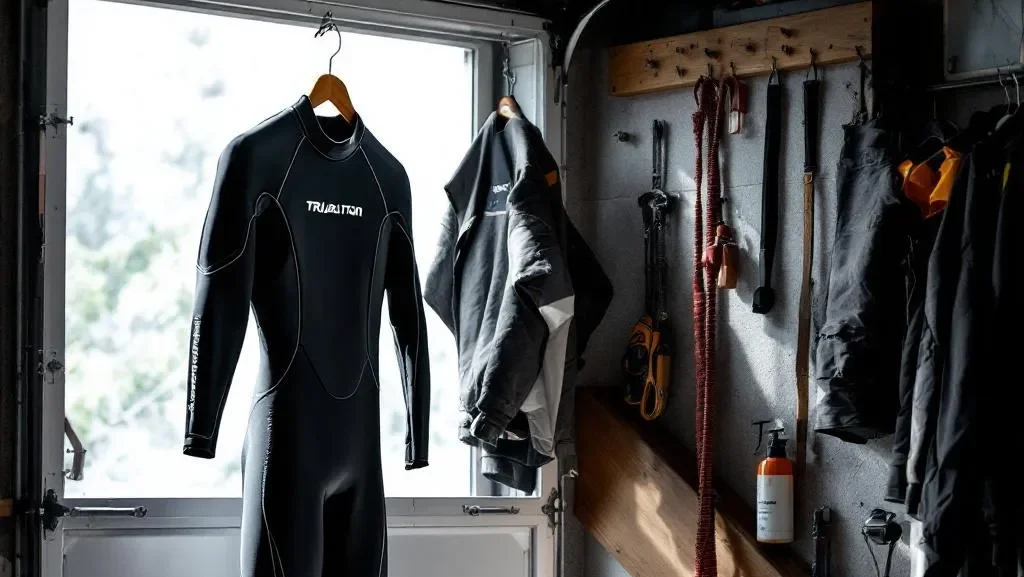
Here’s where most people go wrong. Hanging a wetsuit by the shoulders is like doing a plank on one elbow. Everything’s going to give way eventually.
Lay your wetsuit flat on towels initially, pressing out excess water without wringing or twisting. Once it stops dripping, you can hang it, but fold it over a thick rail or use padded hangers to distribute the weight.
Direct sunlight and heat sources are wetsuit killers. UV rays degrade neoprene, making it brittle and prone to tears. That radiator might seem efficient, but it’s cooking your investment.
Find a shaded, well-ventilated spot. Flip your wetsuit inside-out halfway through drying to ensure complete moisture removal. Patience here prevents that musty smell and significantly extends lifespan.
Storage Solutions That Actually Work
Winter storage separates the wetsuit veterans from the newcomers. Cramming a damp wetsuit into a bag breeds mould, bacteria, and regret.
Ensure your wetsuit is bone dry before storage. Even slight dampness creates perfect conditions for deterioration during months of inactivity.
Hanging long-term causes stretching and permanent deformation. Instead, lay flat in a breathable garment bag or loosely fold with tissue paper between layers. Some people use padded hangers, but flat storage is safest.
Temperature stability matters. Avoid lofts, garages, or anywhere subject to extreme temperature swings. A spare wardrobe or under-bed storage works perfectly.
Repair and Maintenance
Small tears and worn areas don’t spell disaster if caught early. Neoprene cement and patches can extend your wetsuit’s life by years.
Check high-stress areas regularly: shoulder seams, neck opening, and ankle cuffs. Hairline cracks here become major splits during races if ignored.
For minor repairs, clean the area thoroughly, apply neoprene cement to both surfaces, let it become tacky, then press firmly. Weight it down overnight for a permanent bond.
Larger tears need professional attention, but many can be repaired for under £30, far cheaper than replacement.
Signs It’s Time to Replace
Even with perfect care, wetsuits don’t last forever. Neoprene gradually loses buoyancy and flexibility through repeated compression and expansion.
Key warning signs include: significant loss of buoyancy, multiple small tears appearing regularly, stiffening that doesn’t improve with conditioning, or persistent odours despite thorough cleaning.
Most quality wetsuits last 3-5 years with proper care.
The Economics of Good Care
Wetsuit maintenance might seem fussy, but the mathematics are compelling. Extending a £600 wetsuit’s life from three to five years saves £80 annually.
More importantly, a well-maintained wetsuit performs better. Flexible neoprene moves with you rather than against you. Clean surfaces slip through water more efficiently. Fresh-smelling gear boosts confidence.
Your wetsuit is your armour against cold water, your buoyancy aid when fatigue sets in, and often your comfort blanket during nervous pre-race moments. It deserves more than being stuffed wet into a transition bag.
Start implementing these practices now, whether your wetsuit is brand new or battle-worn. In the future, you will appreciate the investment, and your gear will reward you with years of reliable service.
Remember, every minute spent on maintenance saves money on replacement and ensures your wetsuit performs when it matters most – crossing that finish line with a smile.