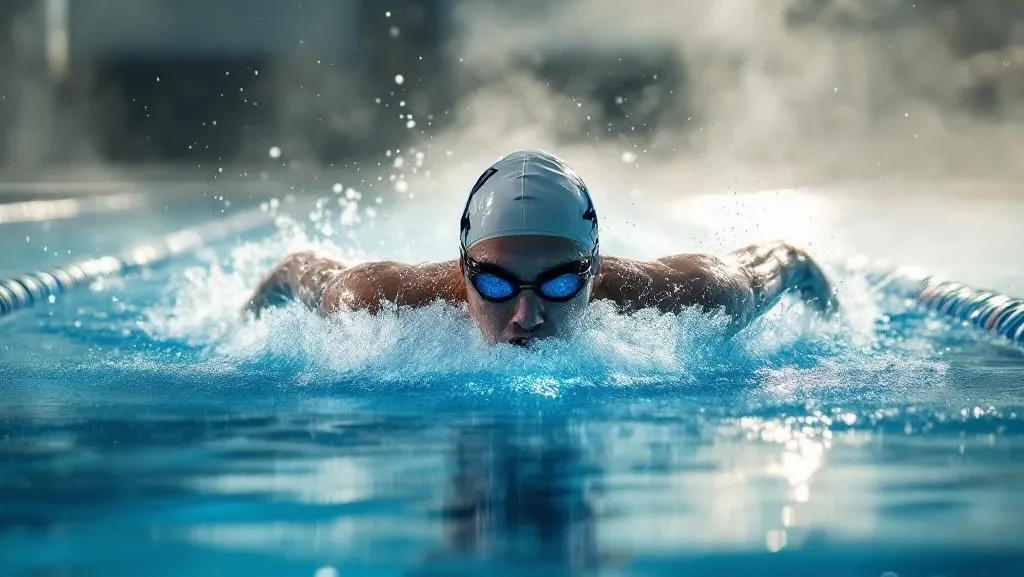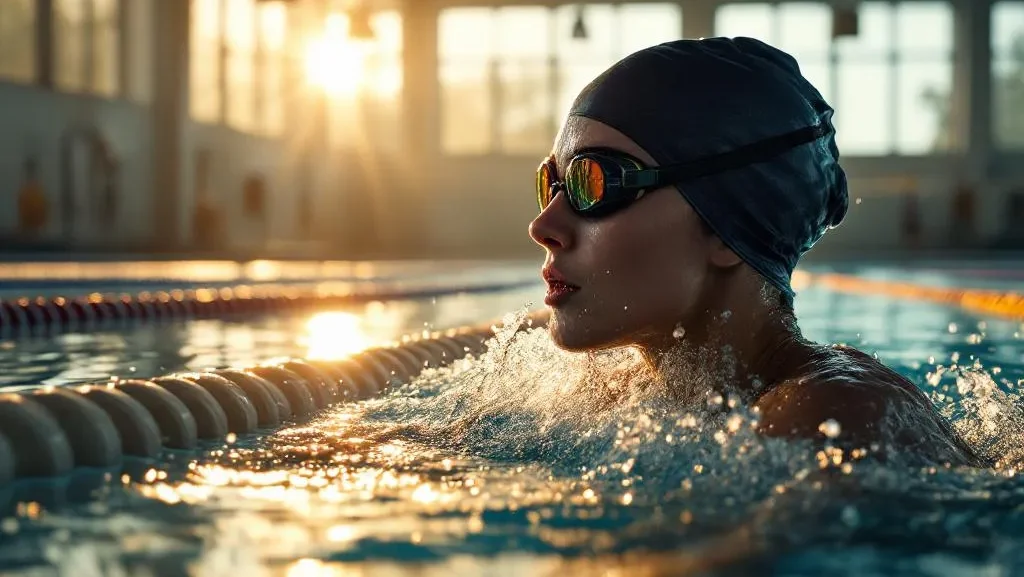

Standing on a beach before a 70.3, staring at choppy water whilst your stomach does gymnastics that would impress Nadia Comaneci — sound familiar?
Training can be spot on, nutrition dialled in, but if your head isn’t in the right place, none of it matters. That’s why many experienced age-groupers treat race visualisation and mental prep as seriously as swim sessions or brick workouts — and it can genuinely transform racing.
Why Race Visualisation Actually Works
Here’s the thing about our brains — they’re brilliant at pattern recognition but terrible at distinguishing between vividly imagined experiences and real ones. When you visualise racing scenarios repeatedly, you’re essentially programming your nervous system to respond calmly when those situations arise.
Research from Manchester Metropolitan University developed the PETTLEP model — a structured approach to mental imagery that’s become one of the most cited papers in sport psychology history. Studies using the model have shown performance improvements of up to 22% when imagery is combined with physical practice. For age-groupers juggling training with work and family, that’s gold dust.
Think about it: if your goggles leak 400 metres into the swim, the difference between a calm adjustment and a full-blown panic often comes down to whether you’ve mentally rehearsed dealing with equipment failures beforehand.
The PETTLEP Framework: Visualisation That Actually Works
PETTLEP stands for Physical, Environment, Task, Timing, Learning, Emotion, and Perspective. Rather than just sitting quietly and vaguely imagining a good race, this model encourages you to make your mental rehearsal as realistic as possible.
Physical — wear your race kit or hold your gear whilst visualising. The physical sensations matter.
Environment — study course photos and videos so your mental imagery matches reality. If you can visit the race venue beforehand, even better.
Task — visualise the specific demands of your event, not a generic triathlon. A hilly Olympic distance needs different mental prep to a flat sprint.
Timing — try to imagine things at a real-time pace rather than fast-forwarding through sections.
Learning — update your imagery as your skills improve. What you visualise in January should evolve by race day.
Emotion — don’t just see the race, feel it. Include the nerves at the swim start, the satisfaction of nailing your pacing, the grit of the final kilometres.
Perspective — experiment with both first-person (seeing through your own eyes) and third-person (watching yourself from outside) views. Most athletes find the first-person more effective for race preparation.
Getting Started: Basic Visualisation Technique
Before getting fancy, it’s worth mastering the basics. Find a quiet spot where you won’t be interrupted — after an evening session when the house has settled works well.
Close your eyes and start at the beginning of your race. Don’t just see it; engage all your senses. Feel the wetsuit around your shoulders, hear the pre-race announcements, smell the lake water or sea air. The more vivid, the better.
Walk through each transition methodically. See yourself moving efficiently through T1, visualise clipping into your pedals smoothly, imagine the rhythm of your feet hitting the tarmac as you start the run.
Crucially, don’t just visualise the perfect race. Include challenges and see yourself responding calmly and effectively.
Advanced Techniques: Race-Specific Mental Rehearsal
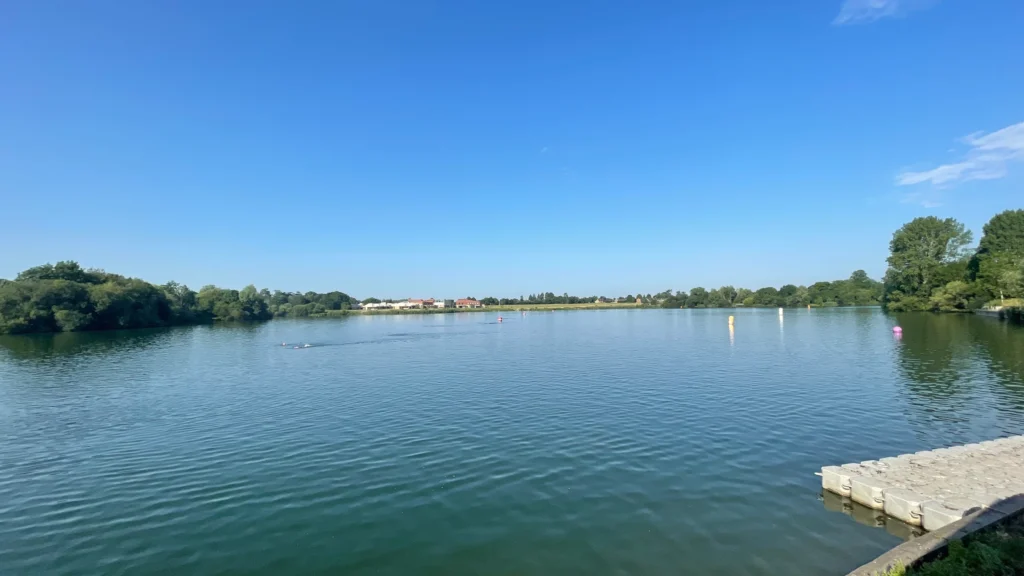
Once you’re comfortable with basic visualisation, it’s time to get race-specific. If you’re doing a sea swim, research the typical conditions and visualise different wave patterns. For lake swims, imagine the different feel of fresh water and potential temperature variations.
Study the course map meticulously and visualise key sections. That sharp left turn at mile 15 of the bike? You can ride it dozens of times in your mind before race day. The hill at mile 8 of the run? Your brain can already know the effort level you need to maintain.
Having a solid race checklist helps enormously with this process — you can visualise executing each step perfectly.
Dealing with Race Day Disasters
This is where visualisation becomes truly powerful. Instead of only imagining perfect scenarios, deliberately rehearse dealing with problems. Flat tyre? Visualise yourself calmly pulling over, executing a quick wheel change, and getting back into your rhythm.
This is where visualisation becomes truly powerful. Instead of only imagining perfect scenarios, deliberately rehearse dealing with problems. Flat tyre? Visualise yourself calmly pulling over, executing a quick wheel change, and getting back into your rhythm.
Goggles steaming up during the swim? See yourself staying calm, rolling onto your back if needed, clearing them, and continuing. The key is programming your response before panic has a chance to set in.
Equipment failures, weather changes, a dodgy stomach — whatever could go wrong, spend time mentally working through your response. It’s far better to troubleshoot in your living room than mid-race.
Pre-Race Mental Preparation Routine
Developing a consistent pre-race mental routine pays dividends. A common approach starts the night before with a complete race walkthrough, focusing particularly on whatever moment tends to cause the most anxiety — for many triathletes, that’s the swim start.
On race morning, a shorter, confidence-building visualisation works well: swimming smoothly in clean water, riding within your power zones, running with controlled effort.
The final piece happens in transition, just before the race starts. Close your eyes, take three deep breaths, and quickly visualise a successful swim start and first few hundred metres. Make it as habitual as checking your swim technique fundamentals.
Building Mental Resilience Through Training
Don’t save mental prep for race day. During training sessions, especially the harder ones, practise positive self-talk and maintaining focus when fatigue sets in.
When you’re grinding through the final intervals of a track session, imagine it’s mile 20 of an Ironman run. How do you want to respond when your legs feel like concrete? Practising mental toughness during training makes it automatic on race day.
Using your post-workout recovery routine as an opportunity to reflect on mental performance — not just physical effort — is another easy win.
The Science Behind Mental Rehearsal
There’s solid science backing this up. Studies in sports psychology show that mental practice activates similar neural pathways to physical practice. Essentially, your brain can’t fully distinguish between a vividly imagined perfect race and actually having raced perfectly.
This is particularly powerful for age-groupers who might only race a few times per year. You can’t physically practise race scenarios as often as you’d like, but you can mentally rehearse them daily.
Making It Stick: Consistency is Key
Like any skill, visualisation improves with practice. Even 10–15 minutes most evenings doing some form of mental training — sometimes race-specific scenarios, sometimes just reinforcing good technique patterns — can make a noticeable difference.
Don’t overcomplicate it. Start with five minutes of basic race visualisation and build from there. The key is consistency, not duration.
similar to those activated by
Remember, the goal isn’t to eliminate nerves entirely — a bit of nervous energy is useful. It’s about ensuring that when challenges arise, your response is calm, practised, and effective rather than panicked and destructive.
Your mind is probably your most undertrained piece of equipment. Give it the attention it deserves, and watch your race day performances transform.