
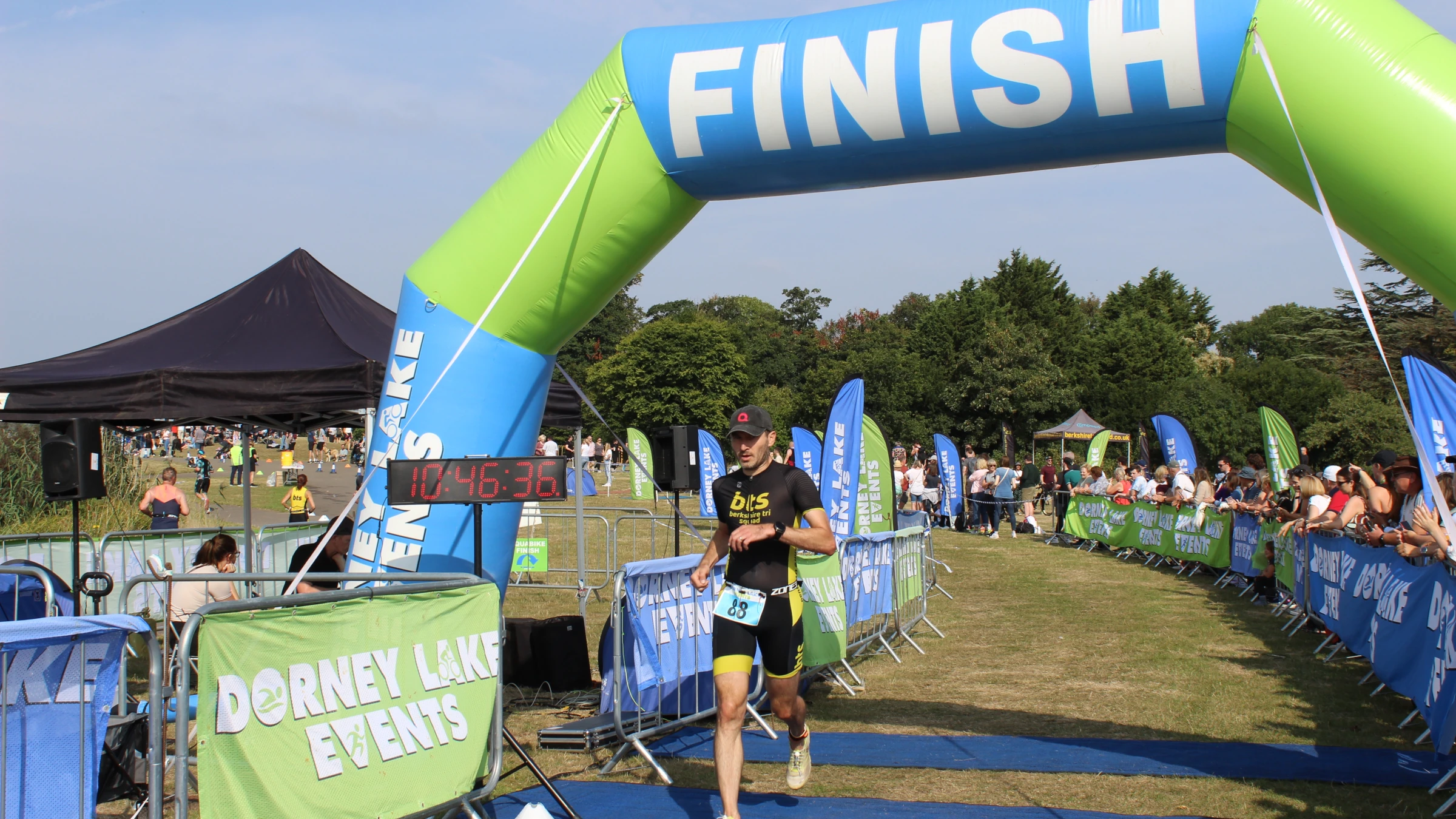
Negative Split Triathlon Pacing: Your PB Strategy
Standing at the transition Challenge Roth last year, watching age-groupers charge off like they were chasing Olympic gold, I couldn’t help but smile. Within 20 minutes, I’d be overtaking most of them on the bike. Not because I’m faster (trust me, I’m not), but because I understand something that took me years to truly grasp: negative split pacing is the secret weapon hiding in plain sight.
After over 100 races ranging from sprint distance to full Ironman, I’ve seen the same pattern repeat endlessly. Athletes who start conservatively and finish strong consistently outperform those who blast out of the gates. Yet somehow, race day adrenaline continues to override logic for so many of us.
What Is Negative Split Pacing?
Negative split pacing means completing the second half of your race faster than the first half. Simple concept, challenging execution. It’s the difference between feeling like a champion crossing the finish line versus crawling across like you’ve been hit by a freight train.
The beauty lies in the physiology. By starting conservatively, you preserve glycogen stores, maintain better form, and avoid the metabolic chaos that comes from going anaerobic too early. Your body thanks you by delivering sustained power when everyone else is fading.
This strategy works across all triathlon distances, though the execution varies significantly between a sprint and an Ironman.
The Science Behind Successful Pacing
Research consistently shows that even pacing or slight negative splits produce the fastest overall times in endurance events. Studies on marathon running demonstrate that runners who negative-split their races finish with faster times and report less perceived exertion.
The key mechanism involves your anaerobic threshold. When you start too aggressively, you accumulate lactate faster than you can clear it. This metabolic stress forces your body into damage control mode, sacrificing efficiency for the remainder of the race.
Understanding your FTP and lactate thresholds becomes crucial here. These markers help establish the sustainable intensities that underpin negative split pacing.
Swim Pacing: Setting the Foundation
The swim sets the tone for your entire race, yet it’s where I see the most pacing disasters. Open water brings out everyone’s inner competitive beast, leading to oxygen debt before you’ve completed 200 metres.
Start 10–15 seconds per 100m slower than your threshold pace. For a swimmer targeting a 70-minute Ironman swim, this means easing into around 2:00 per 100m for the first half, then building to 1:50–1:55 as you settle into your rhythm.
Focus on rhythm and stroke efficiency early on. Count your strokes per length during training to develop consistency. When you feel smooth and controlled after the first buoy, that’s your cue to gradually increase intensity.
The psychological benefit is enormous. Passing people in the water builds confidence that carries through T1 and onto the bike.
Bike Pacing: Where Races Are Won or Lost
The bike leg offers the greatest opportunity to execute a negative split, particularly in longer races. Power meters make this scientific, but heart rate and perceived exertion work equally well.
For Ironman distance, target 65-70% of threshold power for the first half, building to 75-80% for the final 90km. In 70.3 races, start at 75% and build to 85-90%. Sprint distances require a more aggressive approach, starting at 85% and building to 95%+.
The first hour should feel almost embarrassingly easy. Other cyclists will pass you, and that’s perfectly fine. Remember, this is about your finish time, not your position at 40km.
Nutrition timing becomes critical for achieving a negative split. Fuel consistently from the start, even when you don’t feel you need it. By the time hunger or fatigue hits, you’re already behind the curve.
Managing the Mental Game
The biggest challenge isn’t physical but psychological. Watching others disappear up the road while you maintain discipline requires serious mental fortitude.
Create process goals for each segment. Instead of focusing on position, concentrate on power targets, cadence, or nutrition timing. This keeps your mind occupied with controllable factors rather than external competition.
Remember that many of those early leaders will reappear later, usually looking significantly less comfortable than when they passed you initially.
Run Pacing: Bringing It Home Strong
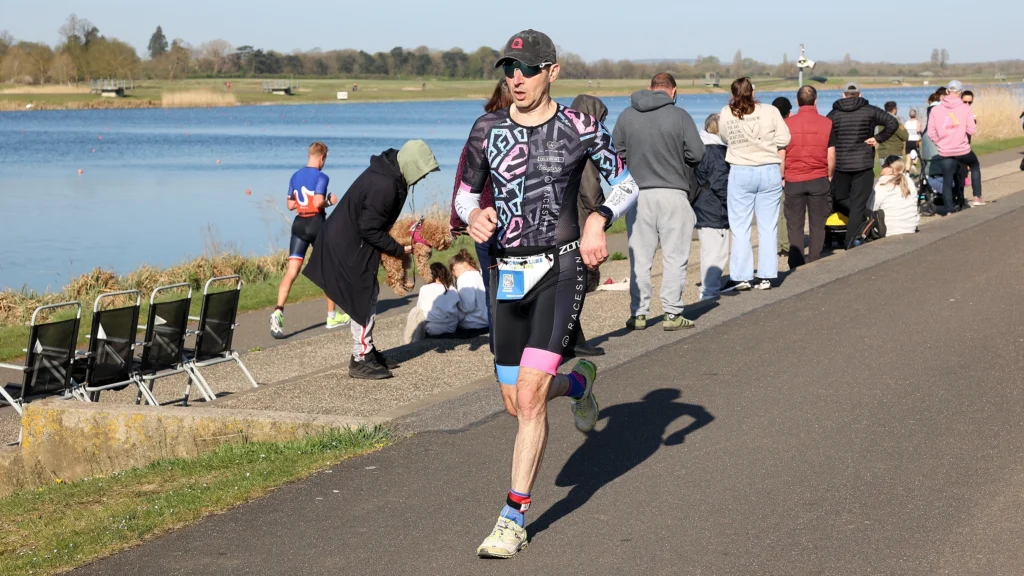
The run is where negative split pacing pays the biggest dividends. Fresh legs from conservative bike pacing allow for aggressive running when your competitors are struggling.
Start 20-30 seconds per kilometre slower than goal pace for the first quarter of the run. This feels almost uncomfortably slow after the bike, but it allows your running muscles to activate gradually while your cardiovascular system adjusts to the new demands.
Build pace progressively through each quarter. If your goal is 5:00/km average, consider: 5:20 for the first quarter, 5:10 for the second, 4:50 for the third, and 4:40 for the final quarter.
The feeling of passing people in the final 5km while maintaining strong form is addictive. You’ll arrive at the finish lines feeling like you could continue rather than barely surviving the distance.
Race Day Execution Tips
Successful negative split execution starts long before race morning. Practice this strategy during training, particularly during brick sessions and long-course simulations.
Create a detailed race plan with specific targets for each segment. Write these on your arm or on the top tube of your bike for easy reference during the race.
Warm up thoroughly, but avoid the temptation to test your speed. Save that feeling for when it matters most.
Trust your preparation when surrounded by aggressive starters. Remember, races are won in the final third, not the opening minutes.
Adapting to Conditions
Environmental factors may require pacing adjustments. Hot conditions demand more conservative early pacing to manage body temperature effectively.
Strong headwinds in the first half become your friend, providing natural pacing restraint and tailwind assistance for your negative split finish.
Choppy water conditions actually suit negative split swimmers better, as technique and rhythm matter more than raw speed in challenging conditions.
Common Negative Split Mistakes
The biggest error is starting too conservatively and never building pace. Negative split doesn’t mean jogging the first half and hoping for magic in the second.
Ignoring nutrition early because you feel good leads to energy crashes that derail any pacing strategy. Stick to your fuelling plan regardless of how you feel initially.
Panic builds when others pass early, often leading to abandoning the strategy entirely. Trust the process and remember that your race is about your performance, not theirs.
Finally, failing to practice negative splits in training makes execution on race day nearly impossible. Your body and mind need to understand what controlled early pacing feels like.
Making Negative Splits Your Secret Weapon
Negative split pacing transformed my racing more than any expensive equipment upgrade or complex training protocol. It’s particularly powerful for age-group athletes who race less frequently and need strategies that work consistently.
The confidence that comes from finishing strong, rather than hanging on desperately, changes your entire relationship with racing. You’ll start looking forward to the final portions of races instead of dreading them. That said, I’ll be honest — even after training this approach repeatedly, I still occasionally go out too hard in the heat of the moment. Race-day adrenaline is a powerful thing, and negative splitting is easier to plan than it is to execute when the gun goes off.
Start practising this strategy in your next training race or time trial. Experience the feeling of building speed as everyone else fades.
Remember, personal bests aren’t about how fast you start but how strong you finish. Negative split pacing gives you the tools to make every finish line feel like a victory, regardless of your position in the field.


Leave a Comment
You must be logged in to post a comment.