
Why I Nearly Didn’t Read Iron War
When I first stumbled upon Iron War by Matt Fitzgerald, I’ll be honest — I was sceptical. A whole book about a single Ironman race? One held on 14 October 1989? Surely there’s only so much you can say about a swim, a bike, and a run, no matter how dramatic the finish.
But from the very first line, every ounce of that doubt evaporated. What Fitzgerald delivers isn’t just a race report stretched over 300 pages. It’s a gripping, deeply researched exploration of two extraordinary athletes, two radically different philosophies, and one of the greatest head-to-head battles in the history of endurance sport. If you’ve ever lined up at a race start and wondered what separates the very best from everyone else, this book has answers.
The Story Behind the Race
Kona, 1989: The Stage Is Set
The Ironman World Championship in Kona, Hawaii, needs little introduction for anyone in the triathlon world. The searing lava fields, the crosswinds on the Queen K highway, the humidity that saps your energy before you’ve even hit T2 — it’s the ultimate proving ground. In 1989, two titans of the sport arrived on the Big Island with unfinished business: six-time champion Dave Scott and the supremely talented Mark Allen, who had been chasing a Kona title for years.
Fitzgerald sets the scene brilliantly, weaving together the backstories of both athletes so that by the time the cannon fires on race morning, you feel the weight of what’s at stake. This isn’t just about prize money or podium positions. It’s about legacy, identity, and the question of who truly is the greatest Ironman of all time.
Dave Scott vs. Mark Allen: A Clash of Philosophies
What sets Iron War apart from other sports books is how it digs into the contrasting training philosophies of Scott and Allen. Dave Scott was the data-driven innovator — meticulous in his analysis, constantly tinkering with gear, nutrition, and cutting-edge techniques to find marginal gains. If you’re the kind of triathlete who geeks out over performance testing and training metrics, you’ll recognise a kindred spirit in Scott.
Mark Allen, on the other hand, embodied something closer to pure, relentless dedication. His approach leaned heavily on accumulating enormous training volume, building an aerobic engine of extraordinary depth, and cultivating a mental fortitude that bordered on spiritual. Allen famously worked with a shaman and embraced visualisation techniques that many in the sport dismissed at the time. Fitzgerald handles this contrast with real nuance — he never suggests one approach is superior. Instead, he makes a compelling case that there is no one-size-fits-all formula for success in endurance sport.
For anyone working on their own training approach, that’s an incredibly liberating message.
What Makes This Book Special
More Than a Race Report
Plenty of triathlon books recount famous races. What Fitzgerald does differently is zoom out to explore the psychology and science of pushing through pain. He draws on research into exercise physiology and mental endurance, weaving it seamlessly into the narrative so that you’re learning without ever feeling lectured. The depth of research is remarkable — interviews with both athletes, their coaches, their families, and fellow competitors all contribute to a 360-degree portrait of the rivalry.
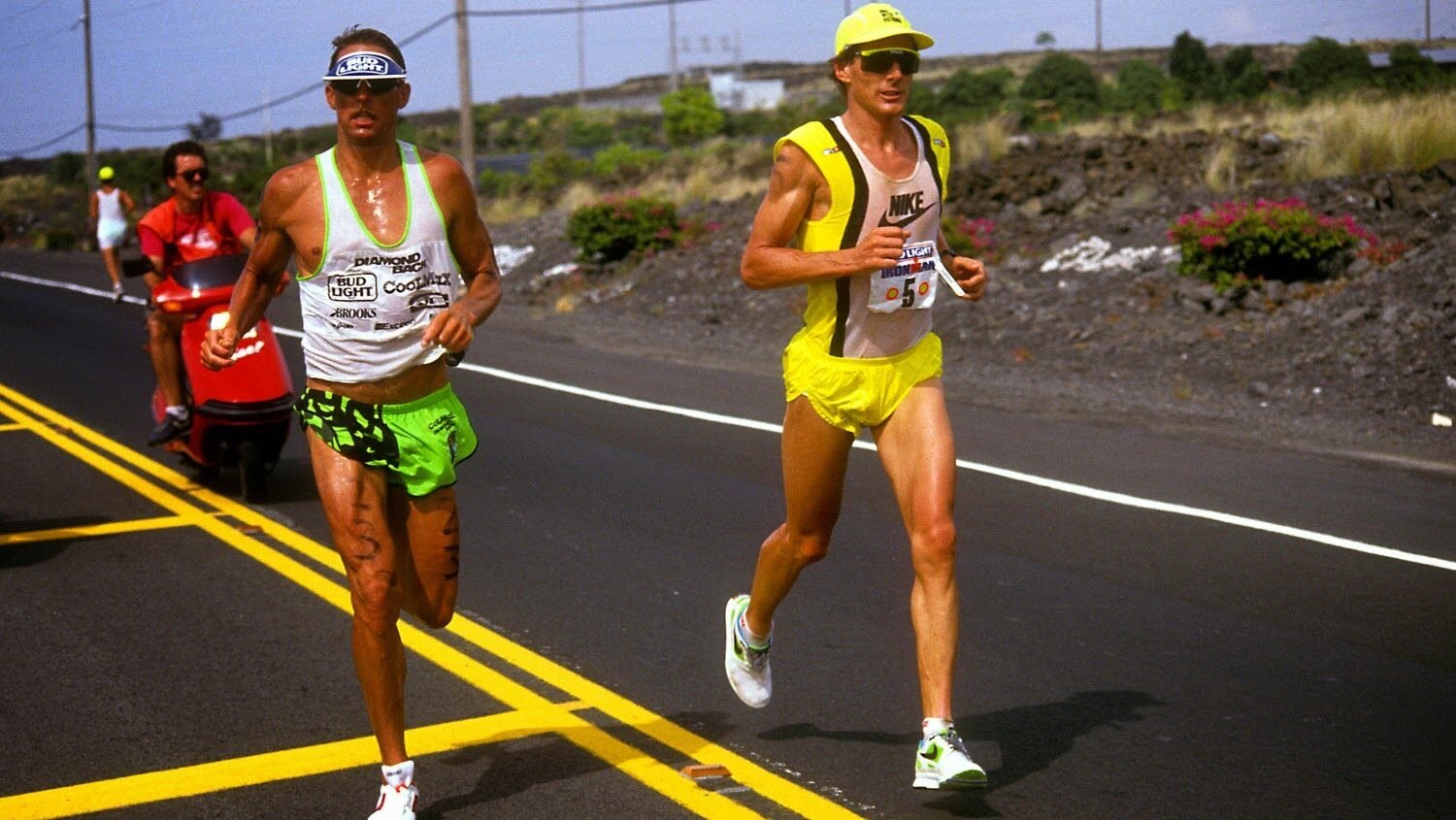
The race itself, when Fitzgerald finally gets there, is told with the pacing of a thriller. Scott and Allen ran side by side through the marathon — literally shoulder to shoulder for mile after mile in the blazing Hawaiian heat. Neither man would yield. It’s the kind of contest that makes you grip the pages tighter, even though you can easily look up the result. That’s the mark of exceptional sports writing.
The Human Side of Elite Performance
One of the things I appreciated most was how Fitzgerald never reduced Scott or Allen to caricatures. These are complex, driven, sometimes flawed people. The book explores the sacrifices they made — strained relationships, injuries endured, and doubts that crept in during dark training miles. It’s a reminder that behind every world-class performance is a very human story of struggle and persistence.
For age-group triathletes like me, it puts our own challenges into perspective. The next time you’re dragging yourself through a cold, dark swim session in January or questioning why you signed up for your next race, the example set by Scott and Allen is a powerful motivator.
How Iron War Changed My Perspective
Iron War didn’t just entertain and educate me — it lit a fire. Reading about the sheer dedication, the years of preparation, and the willingness to suffer that Scott and Allen brought to Kona made me reflect on my own goals and what I’m truly willing to commit to. It reinforced something I’ve always believed: endurance sport rewards consistency and honest effort above all else.
The book also deepened my appreciation for nutrition and recovery as pillars of performance, not afterthoughts. Scott was famously obsessive about his diet, and Allen’s approach to mental recovery was years ahead of its time. If you’re looking at your own preparation and wondering where the gains are hiding, Iron War will give you plenty to think about.
Most of all, it made me dream bigger. Standing at the start line of the Ironman World Championship in Kona one day? It’s a goal that feels audacious, but after reading what Scott and Allen achieved through sheer will and preparation, it no longer feels impossible. Every long ride, every interval session, every early alarm is a step in that direction.
Should You Read Iron War?
Absolutely. Whether you’re a seasoned triathlete chasing a Kona slot, someone new to the sport exploring what triathlon is all about, or simply a fan of outstanding sports writing, Iron War delivers on every level. Matt Fitzgerald has a rare gift for making you feel the heat of the lava fields, the burn in your quads at mile 20 of the marathon, and the emotional weight of two athletes giving everything they have.
It’s available from most major booksellers — I’d recommend grabbing a copy from your local bookshop. If you do read it, I’d love to hear what you think. Drop me a message on Instagram @oli_le_triathlete and let me know whether it fired you up as much as it did me.
In the meantime, if you’re looking for more triathlon reading, check out my thoughts on the wider world of triathlon or browse my race day tips for your next event.

Leave a Comment
You must be logged in to post a comment.