
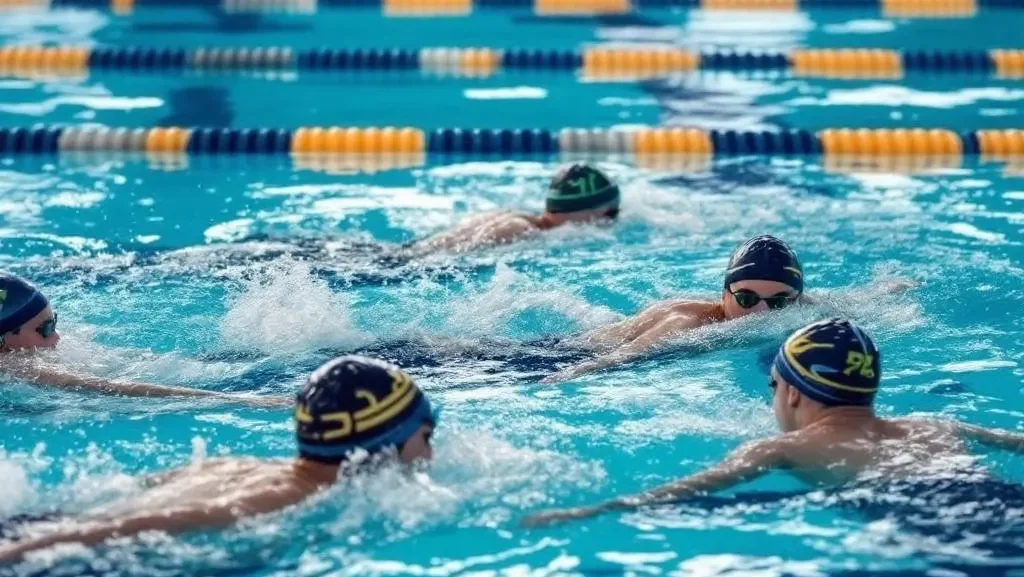
Nothing quite prepares you for that awkward moment when you’re mid-set, and someone hops into your lane without a word. I’ve been there countless times over my years of training, watching lane sharing go brilliantly or spectacularly wrong, depending on whether people follow basic swimming pool etiquette.
Swimming pool etiquette is the unwritten code of conduct that makes lane sharing work smoothly for everyone. It covers everything from entering a lane to overtaking protocol, rest positioning, and communicating with fellow swimmers to ensure respectful and efficient training sessions.
Reading the Lane Before You Enter
Before diving in, spend thirty seconds observing the lane dynamics. Count how many swimmers are already there, note their pace relative to yours, and check if they’re swimming in a circle pattern or splitting the lane down the middle.
Most pools operate on a ‘medium’ lane system during busy periods. If you’re significantly faster or slower than the current occupants, politely ask if they mind sharing or consider waiting for a more suitable lane to open up. During my early triathlon days, I made the mistake of jumping into fast lanes when I clearly belonged in medium pace groups.
The golden rule? Make eye contact and get a nod of acknowledgement before entering. It’s basic courtesy that sets the tone for your entire session.
Circle Swimming vs Lane Splitting
Understanding traffic patterns prevents chaos. Circle swimming means everyone moves anticlockwise, staying on the right side of the lane. This works brilliantly with three or more swimmers of similar pace.
Lane splitting suits two swimmers of different abilities. You each take one side of the lane and swim up and down your designated half. It’s less efficient for overtaking but reduces conflicts when pace differences are significant.
Watch for the established pattern rather than imposing your preference. If two people are already splitting, don’t force them to circle swim. Flexibility here demonstrates good swimming pool etiquette and prevents frustrated swimmers.
The Art of Overtaking
This is where lane-sharing swimming gets technical. When you need to overtake, tap the person’s foot gently at the wall during their rest. Wait for them to acknowledge you, then explain your intention clearly.
During the overtake, the faster swimmer moves to the centre of the lane while the slower swimmer hugs the lane rope. Complete your pass quickly and efficiently, returning to normal position once you’re clear.
Never attempt mid-pool overtakes unless there’s genuine urgency. The wall provides the safest opportunity for communication and positioning. I’ve seen too many collisions from impatient swimmers trying risky mid-length passes.
If someone’s consistently faster, let them lead the lane. Your ego isn’t worth disrupting everyone’s training flow.
Rest and Recovery Positioning
Wall etiquette matters enormously during rest intervals. Position yourself in the corner closest to where you’ll push off next, leaving the centre clear for arriving swimmers.
Keep rest periods reasonable when sharing lanes. That Instagram scroll can wait until after your session. Other swimmers shouldn’t have to navigate around you while you’re checking social media for five minutes between sets.
If you’re doing a long recovery set, consider stepping out of the lane temporarily. This shows consideration for others and often leads to better relationships with regular pool users. The water intake opportunity doesn’t hurt either.
Equipment and Space Management
Kickboards, pull buoys, and paddles quickly multiply lane congestion. Store equipment at your designated corner and never leave it floating in swimming areas.
Communicate your equipment sets clearly. If you’re about to start a long kick set, let others know so they can adjust their training accordingly. Nothing disrupts flow like the appearance of unexpected equipment mid-session.
Pool toys and training aids should enhance everyone’s experience, not dominate the lane. Share equipment when appropriate and always ask before borrowing someone else’s gear.
Building Pool Community Through Respect
Great swimming pool etiquette goes beyond basic politeness. It builds the kind of supportive training environment that makes everyone improve faster. After years of pool sessions, I’ve noticed that respectful swimmers naturally form loose training partnerships.
This community aspect resonates strongly with the plant-based training philosophy. Just as we consider our environmental impact through nutrition choices, thoughtful lane sharing considers our impact on fellow athletes’ training quality.
Regular pool users often develop informal agreements about lane preferences and training times. Triathlon jargon aside, simple communication creates lasting training relationships that benefit everyone involved.
Acknowledge good etiquette when you see it. A quick ‘thanks for sharing the lane’ after sessions reinforces positive behaviour and encourages others to maintain high standards.
Peak Time Strategies
Busy periods require extra consideration and flexibility. Morning rush hours and evening sessions often mean compromising on ideal training conditions.
Consider adjusting your training plan for crowded conditions. Technical stroke work suits busy lanes better than high-intensity sprint sets. Save your hardest efforts for quieter periods when you can train without constantly managing lane dynamics.
Be realistic about session duration during peak times. Hogging lanes for two-hour sessions when there’s a queue shows poor awareness of pool community needs.
Handling Difficult Situations
Despite best intentions, conflicts arise. Someone ignores circle swimming, hogs the wall during rest periods, or shows up unprepared for lane-sharing protocols.
Address issues calmly and directly. Most problems stem from inexperience rather than malice. A friendly explanation usually resolves misunderstandings quickly.
If someone’s genuinely disruptive, speak with pool staff rather than escalating conflicts yourself. They’re trained to handle these situations and maintain positive training environments for everyone.
Remember that everyone started somewhere. The swimmer struggling with lane sharing today might become your favourite training partner next month with a bit of patience and guidance.
Frequently Asked Questions