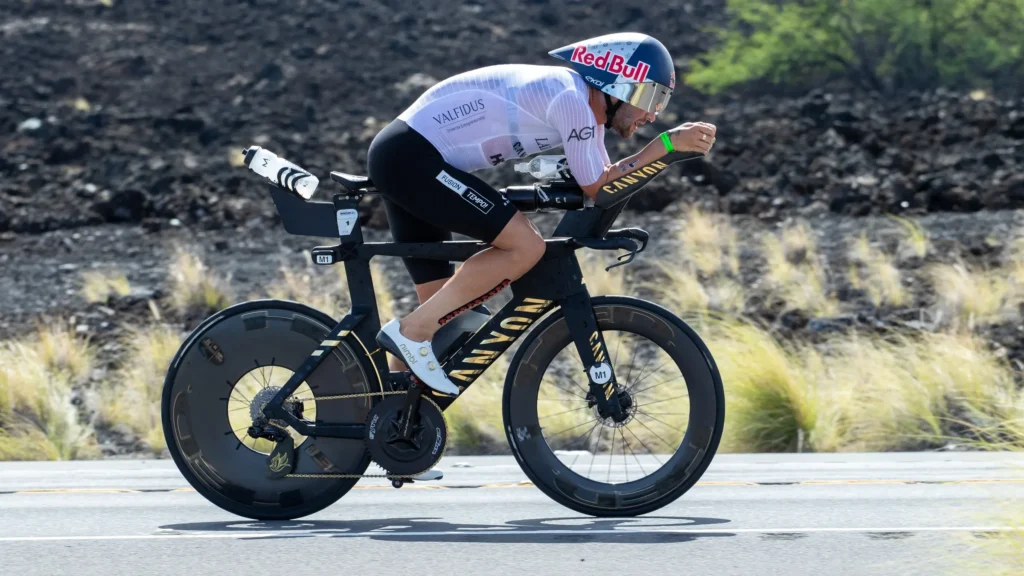
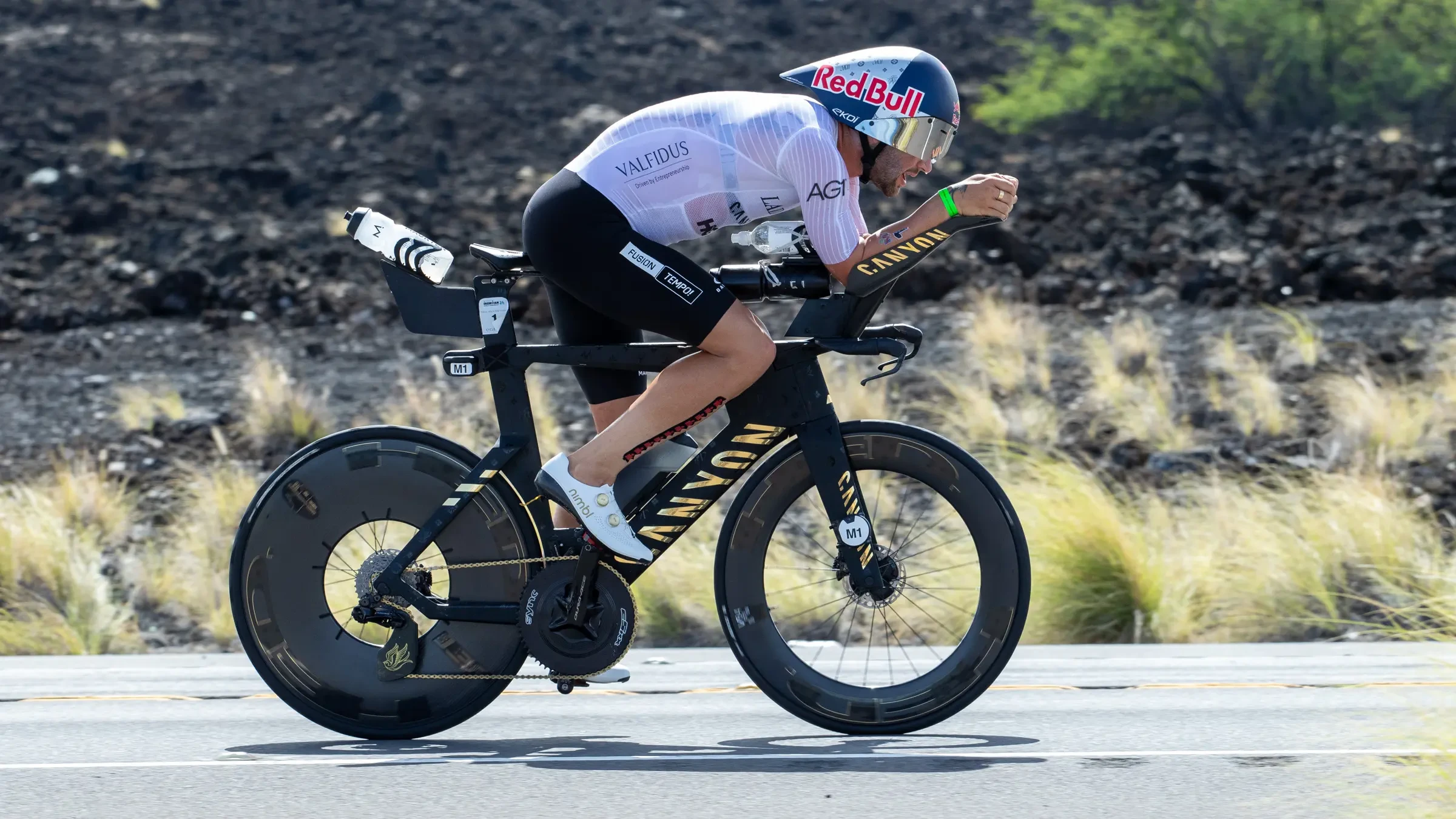
I’ll be honest. Watching the pros race at Kona always makes me feel simultaneously inspired and slightly ridiculous. There I am, shouting at the telly as Kristian Blummenfelt powers up the Queen K, whilst my own bike sits in the garage with a chain that sounds like a coffee grinder because I’ve been putting off that service for three weeks.
But here’s the thing about being an age-group triathlete: we might not have the talent, time, or, let’s face it, the lung capacity of the professionals, but that doesn’t mean we can’t learn from them. In fact, some of the biggest improvements in my own racing have come from studying what the elites do differently. And more importantly, what we can actually apply to our chaotic, work-meeting-interrupted training lives.
The Training Philosophy Gap
The most obvious difference between pros and age groupers isn’t talent, it’s time. While we’re squeezing in a 45-minute turbo session between the school run and a Teams call, professionals are crafting 6-hour training days with precision that would make a Swiss watchmaker weep.
But quantity isn’t everything. What I’ve learned from watching elite training is that they’re ruthlessly focused on quality over volume when it matters. Every session has a purpose, every interval has intent, and they’re not afraid to go easy when easy is prescribed.
This is where we age groupers often get it wrong. We think harder is always better, that every session needs to hurt to be worthwhile. The pros understand that understanding your FTP and training zones isn’t just data for data’s sake. It’s the foundation of smart training.
Recovery: The Secret Weapon
Here’s something that took me years to understand: professionals are better at recovery than they are at training. They sleep 9-10 hours a night, nap in the afternoon, and treat massage and physio like we treat Netflix subscriptions, absolutely essential.
As age groupers, we often wear our tiredness like a badge of honour. “I only got four hours of sleep, but still smashed that brick session!” we proclaim, as if sleep deprivation is somehow noble. The pros would look at us like we’ve lost our minds.
What we can learn is that recovery doesn’t have to be complicated, but it does need to be prioritised. Even if we can’t manage 10 hours of sleep (thanks, toddlers), we can focus on sleep hygiene, proper nutrition, and saying no to that extra session when our bodies are screaming for rest.
The Mental Game
Watching professionals race, you notice something fascinating. They rarely look like they’re suffering, even when they’re going at speeds that would have me calling for an ambulance. It’s not because they don’t hurt; it’s because they’ve mastered the art of managing discomfort.
This mental resilience doesn’t come naturally. Pros work with sports psychologists, practice visualisation, and develop race strategies that account for when things go wrong. They expect problems and have solutions ready.
For us age groupers, this might mean having a solid race-day checklist to reduce anxiety or practising positive self-talk during training. It’s about building confidence through preparation, not just hoping for the best on race day.
Nutrition and Fuelling Strategies
Professional triathletes treat nutrition like a fourth discipline. They know exactly what they need, when they need it, and they’ve tested everything multiple times in training. They understand their sweat rates, their carbohydrate requirements, and they never, ever try something new on race day.
Compare this to the average age grouper who rocks up to a 70.3 with whatever energy gels were on offer at the local bike shop, having never calculated their actual energy requirements or tested their fuelling strategy beyond “it didn’t make me sick in training.”
The lesson here isn’t that we need to become nutrition scientists, but that we should treat fuelling with more respect. Understanding basics like proper fueling strategies for long-course events can make a massive difference to our performance and enjoyment.
Data-Driven Decision Making
Professionals are swimming in data: power meters, heart rate monitors, GPS watches, lactate testing, and regular blood work. But here’s the crucial difference: they use data to make decisions, not to show off on Strava.
When a pro sees their power dropping during a race, they adjust their strategy. When their heart rate suggests they’re overreaching in training, they back off. They let the data guide their decisions rather than their ego.
As age groupers, we often collect data but don’t act on it. We know we should be training in zone 2 for base fitness, but zone 4 feels more “proper.” We see our resting heart rate creeping up, but ignore it because we don’t want to miss that group ride.
The Specialisation Spectrum
Here’s where the gap between pros and age groupers gets interesting. Professionals often come from single-sport backgrounds – they were swimmers, cyclists, or runners who transitioned to triathlon with one massive strength and two developing weaknesses.
Most age groupers, myself included, are mediocre at all three disciplines. This is actually an advantage in some ways – we don’t have to overcome years of sport-specific training that might not translate well to triathlon. But it also means we need to be smarter about how we allocate our limited training time.
The pros teach us that it’s often better to focus on improving your weakest discipline rather than polishing your strongest. My cycling might be decent for an age grouper, but my swimming still looks like I’m drowning with style. Guess which one deserves more attention?
Race Execution and Pacing
Professional triathletes race with a plan and stick to it, even when their competitors do stupid things around them. They know their target splits, they understand negative splitting, and they race their own race rather than getting drawn into battles that serve no purpose.
Watch any age group race, and you’ll see the opposite – people going out like they’re being chased by angry wasps, only to shuffle through the second half looking like extras from a zombie movie. We get caught up in the excitement, the adrenaline, the competitive spirit, and completely forget everything we know about pacing.
The solution isn’t complicated: train your pacing in practice, know your target times for different race distances, and have the discipline to stick to your plan when Karen from your tri club goes charging past you at mile 2 of the marathon.
Equipment and Marginal Gains
Professionals obsess over equipment, but not in the way you might think. Yes, they have the best kit, but more importantly, they know exactly how everything works, they’ve tested it thoroughly, and they maintain it meticulously.
Age groupers often fall into two camps: those who think expensive kit will automatically make them faster (guilty), and those who think equipment doesn’t matter at all. The truth, as usual, is somewhere in the middle.
The pros teach us that equipment should be reliable first, fast second. That £8,000 tri bike is useless if you don’t know how to change a tyre or if your chain sounds like a bag of spanners because you never clean it.
Learning from the Learning Process
Perhaps the biggest lesson we can learn from professionals is how they approach learning itself. They work with coaches, analyse their performances honestly, identify weaknesses without ego getting in the way, and are constantly looking for ways to improve.
Most age groupers, myself included, are stubborn about getting help. We’ll spend hours on YouTube trying to self-diagnose our swimming stroke problems rather than booking a lesson with a qualified coach. We’ll stick with training plans that clearly aren’t working because we don’t want to admit we need guidance.
The professionals remind us that even the best athletes in the world have coaches and support teams and are always learning. There’s no shame in admitting you don’t know everything – there’s only shame in being too proud to get better.
Bridging the Gap
The gap between age groups and professional triathlon will always exist, and that’s perfectly fine. We’re not trying to become pros; we’re trying to become the best versions of ourselves within the constraints of our real lives.
But by studying what the elites do well – their approach to training, recovery, nutrition, and race execution – we can steal the strategies that work and adapt them to our chaotic schedules. We might not be able to train 30 hours a week, but we can make our 8 hours more effective.
The beauty of age group triathlon isn’t that we’re chasing professional times; it’s that we’re chasing personal progress. And sometimes, the lessons we learn from watching the best in the world can help us find that little bit extra that turns a good race into a great one.
So the next time you’re watching Kona from your sofa, don’t just marvel at the superhuman performances. Study them, learn from them, and then get out there and apply those lessons to your own training. Who knows? You might just surprise yourself with what you’re capable of achieving.