It starts with a message in the club WhatsApp group. You know the one:
“Advice needed please. I’m looking at making my next investment and don’t really know where to start. I have my bike (no computer), running shoes and wetsuit — where do I go from here? Heart rate monitor? Cleats? Bike computer? Other things I don’t know about? What would people recommend? Thanks”
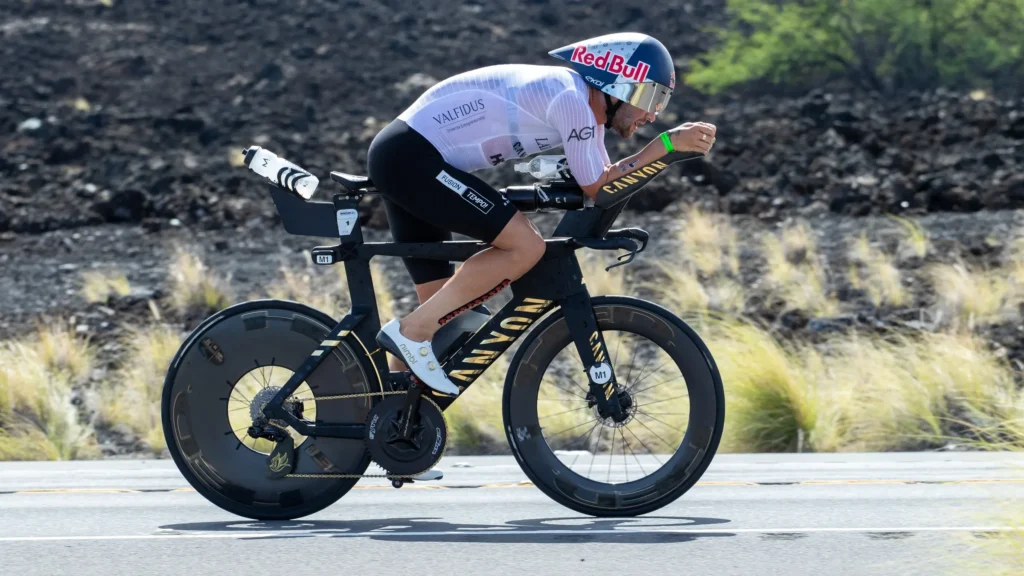
Within minutes, the replies flood in. Someone says, “bike computer, definitely.” Someone else says “proper tri shoes.” A third person sends a link to a £13,000 Canyon. The original poster is now more confused than before.
Sound familiar? I’ve been that person. I’ve also been the one firing off enthusiastic recommendations without thinking about budget, priorities, or the fact that the person asking has only done one sprint tri.
So let’s do this properly. Here’s an honest breakdown of triathlon kit — what’s truly essential, what’s a genuine upgrade, and what’s firmly in “nice if you’ve got the cash” territory. I’ve split everything by budget tier so you can build your kit at your own pace, not someone else’s.
Where You’re Starting From
If you’ve got a bike, running shoes, and a wetsuit, you’re already ahead of where most people think you need to be. You can race a triathlon right now. Seriously. No clip-in pedals, no aero helmet, no GPS watch required at the start line.
The question isn’t “what do I need before I can race?” It’s “what will make the biggest difference to my experience, safety, and performance — in that order?”
That’s the lens I’m using here.
The Kit Breakdown
Bike Computer
Verdict: Essential (get one early)
Without a computer, you’re riding blind. You don’t know your speed, distance, cadence, or — most importantly — your effort. A basic bike computer gives you data you actually need to pace correctly and train with any kind of structure. This should be your first purchase.
Low budget (under £50): A basic Garmin or Wahoo ELEMNT Mini gets the job done. GPS, speed, distance. That’s enough to start.
Mid budget (£150–£300): Wahoo ELEMNT Bolt or Garmin Edge 530. Structured workout support, mapping, sensor integration. This is what most club-level athletes ride with.
High budget / no limit: Garmin Edge 1050 or Wahoo ELEMNT Ace. Touchscreen, full mapping, power meter integration, and advanced training metrics. Brilliant, but only worth it once you have a power meter to pair with it.
I loved my Wahoo ELEMNT. There’s nothing better when it comes to usability. However, it lacked features and was far behind Garmin. I have the Edge 130 for race day, small and displaying what I need: power, speed, and time. And I have the Edge 1040 Solar for training and navigating.
Clipless Pedals and Cycling Shoes
Verdict: Early priority — makes a real difference
If you’re still on flat pedals, this is the upgrade that gives you the most bang for your buck. Clipless pedals improve power transfer and reduce fatigue on the bike. The efficiency gains are immediate and noticeable, even for beginners.
For triathlon specifically, you want tri-specific cycling shoes — they have a single velcro strap or BOA dial for fast transitions, drainage holes, and stiffer soles than road shoes. But standard road cycling shoes are a perfectly fine start.
Low budget: Van Rysel Aptonia from Decathlon (around £80) — solid performance and great value. Pair with budget SPD-SL or Look Kéo pedals.
Mid budget: Mavic Cosmic Elite Tri (around £165) — comfortable, reliable, fast-transition setup.
High budget / no limit: DMT KT1 (around £249) or Fizik Transiro — phenomenal stiffness and breathability. Worth it when you’re doing half and full Ironman distances.
Some of the difficulty here is not getting some clipless pedals, but getting used to them. I loved my SpeedPlay as it clips up or down, so it doesn’t really matter how your pedal is positioned. But moved to the Look Keo pedals as they are the ones everyone uses. I’m curious to see where the PW8 would land.
GPS / Multisport Watch
Verdict: Essential for training, important for racing
If you’re training consistently for a triathlon, a GPS watch isn’t a luxury — it’s how you manage effort, track load, and avoid going out too hard on the run off the bike. A heart rate monitor strap is a cheaper entry point if the budget is tight.
Low budget (under £250): Coros Pace 3 (~£219) — excellent GPS accuracy, fantastic battery life, heart rate monitoring, and multisport mode. Genuinely impressive for the price.
Mid budget (£300–£500): Garmin Forerunner 265 or Suunto Race. AMOLED displays, detailed training load metrics, and recovery data. This is where most serious age-groupers land.
High-budget/no-limit: Garmin Fenix 8 (~£950) or Apple Watch Ultra 2. Tracks everything, looks great at a dinner party. The Fenix is genuinely excellent. The Apple Watch Ultra is excellent if you’re already in that ecosystem — but check triathlon-specific features before committing.
Suunto is the best-looking GPS watch, but it is far behind Garmin in features. The Garmin Fenix range has kept me going for years.
Heart Rate Monitor (Chest Strap)
Verdict: Good to have, especially if you don’t have a quality GPS watch yet
Wrist-based heart rate is fine for casual training but less reliable at high intensities and during cycling. A chest strap gives you accurate data for zone training. If your watch supports it (most Garmin and Wahoo devices do), pair a Wahoo Tickr or Garmin HRM-Dual with your existing setup.
Low budget: Wahoo Tickr (~£40) — solid connectivity, accurate, pairs with basically everything.
Mid budget: Garmin HRM-Pro (~£100) — adds running dynamics data if you’re on Garmin.
No limit: Garmin HRM-Pro Plus (~£119) — stores data and syncs after the session. Useful for open-water swims when your watch loses signal.
To be honest, since being hit by a car, I’ve been off wearing my HR monitor. I’ve tried a few over the years, and my favourite remains the Wahoo; Garmin didn’t last too long. The Polar H10 seems to be the best-in-class, according to most reviews.
Pool Goggles
Verdict: Essential
You almost certainly already have these if you’re training for a triathlon. But if you’re swimming in whatever you grabbed off the shelf, get a proper fit. Leaking goggles mid-race is a very specific kind of miserable.
Low budget: Orca Killa Speed (~£17) — great options with a choice of nose bridges. Excellent entry point.
Mid budget: Zoggs Predator or Tri-Fit Rapid-X (~£25–£30) — popular with club swimmers for comfort and optics.
High budget / no limit: Form Smart Swim 2 (~£229) — heads-up display showing lap count, pace, and stroke rate in your field of vision. Useful for longer sessions, genuinely impressive tech.
I had the Form for a while. It’s been really good to track lengths. But mentally depressing seeing my time per 100m.
Open Water Goggles
Verdict: Essential once you start racing in open water
Pool goggles and open water goggles are different. OW goggles have mirrored or polarised lenses, a wider field of vision, and larger frames. Don’t race in pool goggles if you can help it.
Low budget: Orca Killa Comfort (~£24) — good visibility and well-priced.
Mid budget: Zoggs Predator Ultra (~£38) or TheMagic5 Blue Mirror Gold (~£75 — custom fit made from a 3D scan of your face). The Magic5 is legitimately worth it if you’ve ever had goggle-fit issues.
No limit: Form Smart Swim 2 (~£229) works in open water too.
Trisuit
Verdict: Nice to have early, essential once you’re racing regularly
Racing in a separate cycling kit and running kit isn’t a disaster — plenty of first-timers do it. But a tri suit streamlines transitions, eliminates the “what do I wear under my wetsuit” question, and keeps you comfortable across all three disciplines. The chamois pad is thinner than a cycling pad, so you can run without waddling.
Low budget: Zone3 Activate+ (~£115) — breathable, well-constructed, and genuinely decent at the price.
Mid budget: Raceskin Aero (~£130) or NoPinz Pro-1Evo (~£185) — both offer impressive tech for the money. NoPinz is particularly dialled for aero.
High budget / no limit: Castelli PR 2 Speedsuit (~£360) — highly technical, fast, and supple. Zoot Ultra Tri Pt1 (~£292) is also excellent if you want bigger pockets for Ironman distances.
The best one I had was a ROKA Maverick, imported from the US. Then I made the mistake of moving from HUUB. There are more holes in my £750 Brownlee wetsuit than in a slice of Gruyere. I now have a custom-made Snugg wetsuit. Very comfy, very warm, but doesn’t get me any faster.
Race Nutrition
Verdict: Essential — and massively underestimated by beginners
You can have the best kit in transition and still blow up on the run because you didn’t fuel properly. Gels, bars, and electrolytes are non-negotiable for anything over sprint distance. Experiment in training. Never try anything new on race day.
Low budget: High5 Electrolyte Energy Gel (~£1.45 each) — great value, no frills, effective.
Mid budget: SiS Go Isotonic (~£1.67) — the original isotonic gel. TORQ Cola Caffeine (~£2.15) delivers a flavour-good caffeine hit without sacrificing performance.
High budget / no limit: Maurten Gel 100 Caf 100 (~£3.21) — the hydrogel format is easy on the stomach, which matters when you’re deep in a race.
For electrolytes and powders, Precision Hydration 1000 is a reliable mid-range choice. Styrkr SLT05 stands out at the budget end — 300mg sodium, minimal faff.
I’ve tried a lot over the years. And did my own too. There’s a summary of all the brands I’ve trialled and used in this post.
Sunglasses
Verdict: Good to have
Performance eyewear is genuinely useful — protecting your eyes on the bike and improving visibility in variable light. They don’t need to cost a fortune.
Low budget: Tifosi Vogel SL (~£55) — good contrast, stays in place.
Mid budget: Sungod Airas (~£140) — excellent field of view, class-leading in direct light.
High budget / no limit: Roka GP-1X (~£230) — outstanding for low light. Not cheap, but they earn it.
I love Sungod. I’ve got their Sunglasses for beach days, skiing, cycling, and running.
Turbo Trainer
Verdict: Highly recommended for consistent training
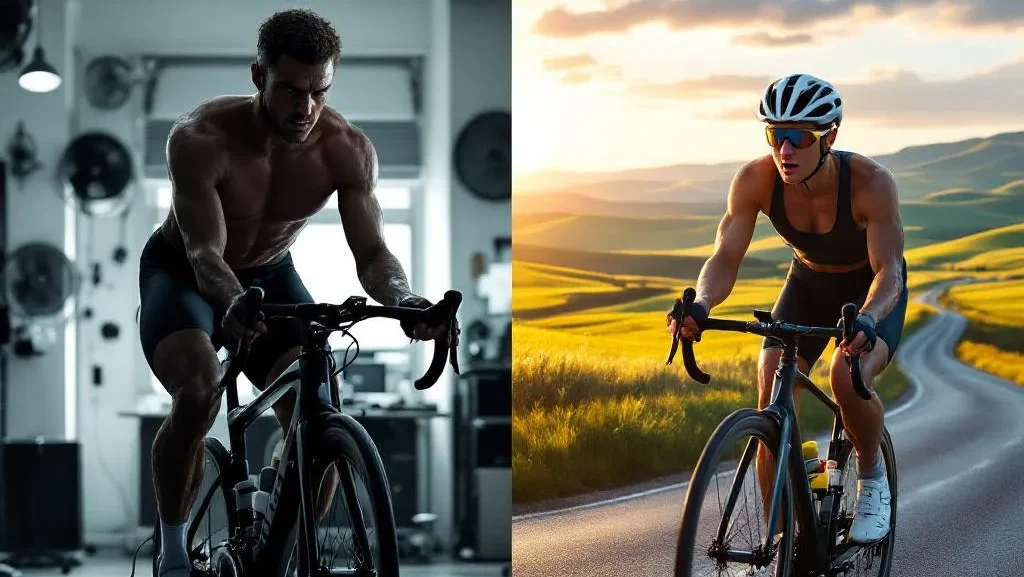
If you’re serious about improving on the bike, a turbo trainer makes consistent training possible regardless of weather. The UK in November doesn’t care about your FTP targets. A good turbo trainer does.
Low budget: Tacx Flow (~£299) — simple setup, quiet, and a solid entry-level smart trainer. Pairs with Zwift and TrainingPeaks.
Mid budget: Wahoo KICKR Core (~£649) — capable, accurate, and works beautifully with Zwift. What most club-level athletes use.
High budget / no limit: Wahoo KICKR Move (~£1,399) — adds fore-aft movement for a more realistic road feel. Brilliant, but hard to justify unless you’re spending serious hours on it.
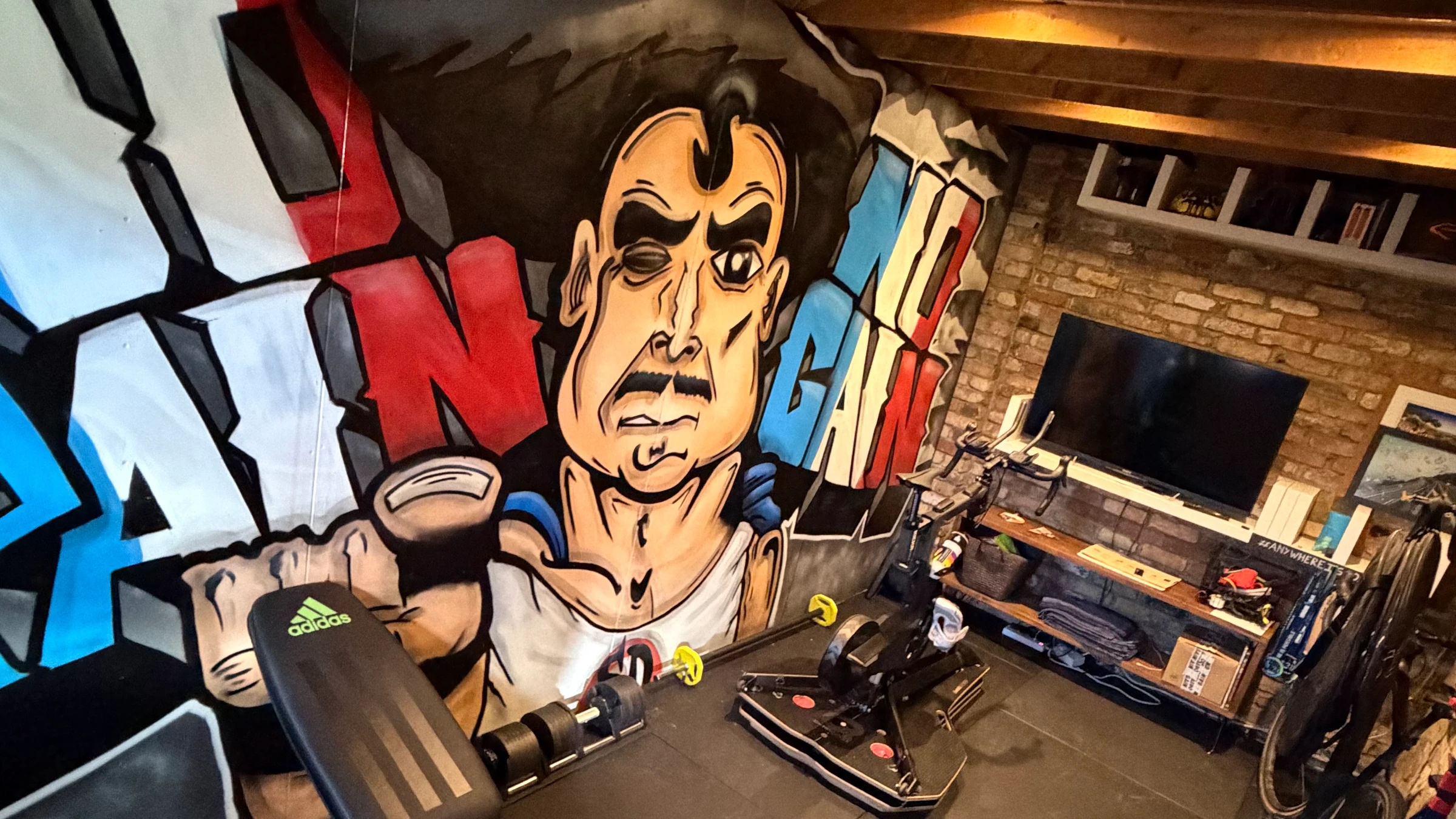
I started with a cheap Elite turbo trainer before moving to the best-in-class Kickr Core. And finally got a Kickr bike. Best investment, I’ve spent 22,000km on it so far.
Headphones
Verdict: Nice to have for training — check race rules before using in events
Most triathlons don’t allow headphones on the bike leg, and some prohibit them on the run. But for training? Bone conduction headphones are a great call — they keep you aware of traffic while letting you listen to a podcast or playlist.
Low budget: Shokz OpenRun (~£130) — the reliable, well-regarded entry into bone conduction.
Mid budget: Shokz OpenSwim (~£170) — swim-specific version with 4GB of built-in storage.
No limit: H2O Audio Sonar Pro (~£147) — swim-specific, great sound, decent comfort.
I only use headphones when running, and Shokz are the best I’ve had. And I’ve tried lots of them.
Cold Water Swim Kit
Verdict: Useful for UK winter training
If you’re swimming outdoors through autumn and winter — and you should be, for open water confidence — neoprene swim socks, gloves, and a thermal cap make the experience survivable. Not exciting, but effective.
Low budget: Lomo Open Water Socks (~£21) — good sizing range, anti-slip grip.
Mid budget: Orca Thermal Gap cap (~£35) and Zone3 Heat-Tech Gloves (~£39).
No limit: 2XU Propel Gloves (~£45) — superb grip.
Quick Reference: Where to Spend First
| Priority | Item | Low Budget | Mid Budget | High / No Limit |
| 1 | Bike computer | ~£50 | ~£150–300 | £400+ |
| 2 | Clipless pedals + shoes | ~£80–100 | ~£165–250 | £300+ |
| 3 | GPS watch | ~£219 | ~£300–430 | £800+ |
| 4 | Race nutrition | ~£1.50/gel | ~£1.70–2.15/gel | ~£3.21/gel |
| 5 | Open water goggles | ~£24 | ~£38–75 | £229 |
| 6 | Trisuit | ~£115 | ~£130–185 | £292–360 |
| 7 | Heart rate monitor | ~£40 | ~£100 | ~£119 |
| 8 | Turbo trainer | ~£299 | ~£649 | £1,3999 |
| 9 | Sunglasses | ~£55 | ~£140 | £230 |
| 10 | Headphones (training) | ~£130 | ~£147–170 | – |
Frequently Asked Questions
The Honest Take
Here’s what I’d tell anyone in that WhatsApp group: start with the bike computer and the pedals. Together, you’re probably looking at £150–200, and the improvement to your training and racing is immediate. Everything else can follow in time.
A GPS watch is worth having early if you’re serious about structured training. A trisuit matters once you’re racing regularly. A turbo trainer is a game-changer for UK athletes — but it’s a bigger investment and not urgent for your first season.
The expensive stuff — aero helmets, power meters, top-end bikes — all of that comes later. Probably much later. The biggest gains in your first few years of triathlon come from consistency, not kit. The kit just makes consistency easier and more enjoyable.
Start with the basics. Build as you go. And maybe mute the WhatsApp group for a bit when budget season kicks off.
What was the piece of kit that made the biggest difference for you early in your triathlon journey? Drop it in the comments below — I’d love to know. And if you found this useful, give me a follow on Instagram at @oli_le_triathlete for more honest triathlon content.